
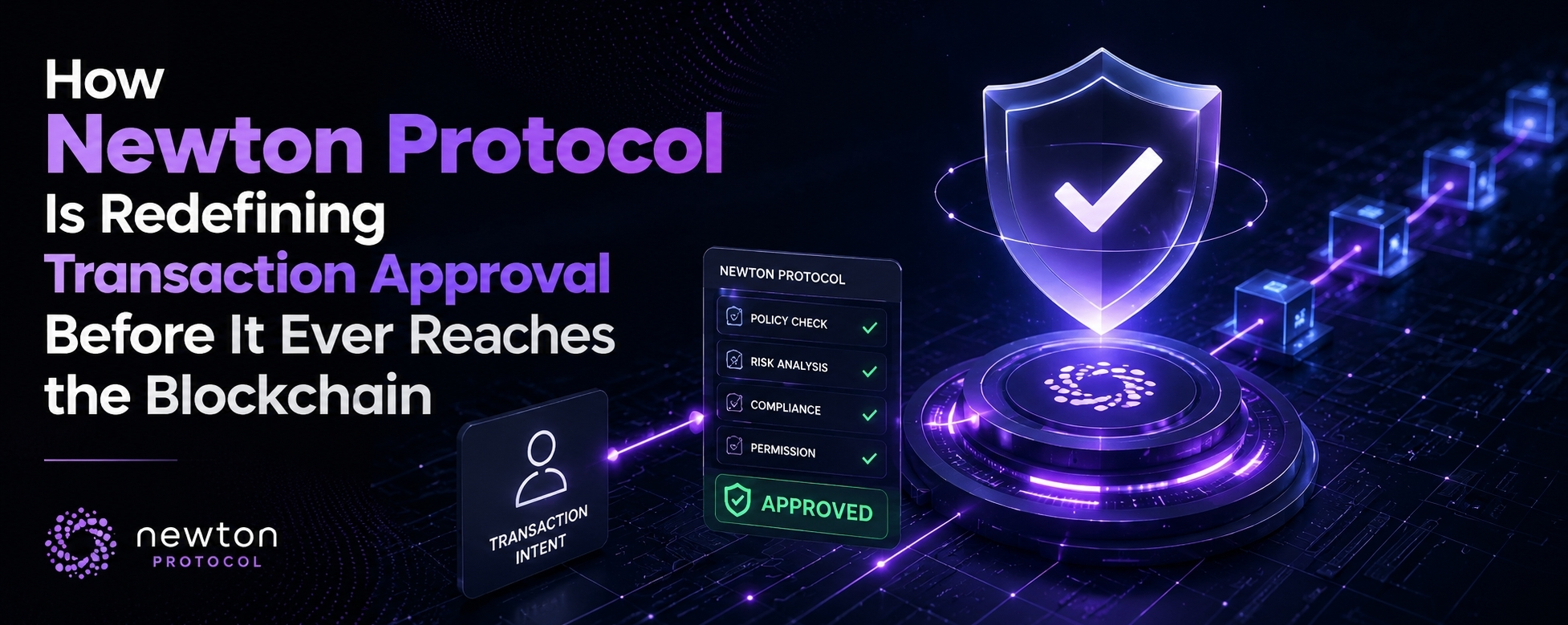
I first understood Newton Protocol when I stopped treating it like another DeFi tool. It is closer to a pre trade control layer. It checks the rule before the transaction moves. That is the part that caught my attention because most crypto systems still react after the money has already shifted. Newton is built to approve or stop an action before it reaches the chain.
I dug into the architecture next. Newton lets developers write policies in Rego. Those policies are evaluated by a decentralized network of EigenLayer operators. The output is a BLS attestation and an onchain receipt that proves the transaction was reviewed. That means the approval path is not hidden in a private server. It is something auditors and users can verify later. The official docs also say policies can stay private with zero knowledge proofs and verifiable credentials. That matters because compliance data is usually the first thing that gets exposed in normal systems.
The technical shape of it became clearer when I looked at the parts side by side.
Policies are written in Rego.
A decentralized EigenLayer operator network evaluates every intent.
The result is a BLS attestation that can be verified onchain.
Sensitive data stays private through zero knowledge proofs and verifiable credentials.
I also like that Newton is not locked into one narrow use case. The public site points to DeFi vaults RWAs stablecoins and agentic finance. In practice that means it can screen investor eligibility. It can check sanctions. It can enforce exposure limits. It can block risky payees. It can even apply prompt injection defense for autonomous agents. The team also says it can start from prebuilt templates and a drop in SDK so teams can go live faster. That makes the product feel operational instead of theoretical.
What I found most useful in my own research is that Newton is trying to close the gap between intent and execution. A normal frontend rule can be bypassed by a direct contract call. Newton pushes the policy deeper. The decision is made before settlement. That gives a vault manager a protocol team or an institutional desk a way to prove that the same rule was applied every time. In a market where enforcement often happens after the damage is done that design feels unusually practical.
Then I looked at who is around the project. The homepage says Newton is built by Magic Labs. It also lists PayPal Ventures DCG CoinFund Volt Capital Placeholder Lightspeed SV Angel Cherubic Tiger Global Social Capital Synchrony and Polygon as backers. On top of that the blog shows active integrations with Persona Human Passport Veriff Etherscan Vaults.fyi Magic Labs risk data and Massive treasury yield data. To me that says the team is trying to build a real policy network that can read identity data market data and vault data before a trade executes. I did not see a public third party audit page in the materials I reviewed so I would treat the operator design and attestations as the main trust signal for now.
My token read is more grounded than most new launches. The NEWT token has four stated roles. It is used for staking security gas for private verifiable onchain sessions and intents model registry fees and governance. That is real utility if the network keeps shipping. I pay extra attention to the staking piece because a token that helps secure the network can build demand beyond speculation. I also noticed the design includes a fee market similar to EIP 1559 which can matter for execution quality over time.
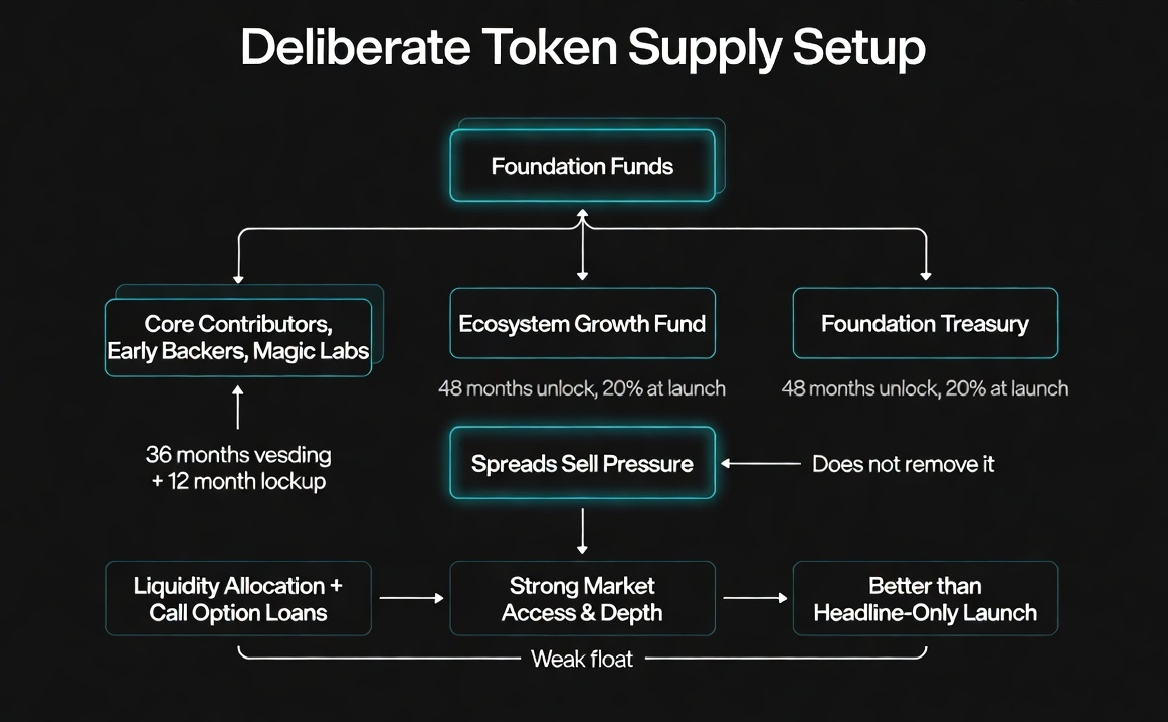
The supply setup looks deliberate. The foundation says the Ecosystem Development Fund the Ecosystem Growth Fund and the Foundation Treasury unlock over 48 months with 20 percent at launch. Core Contributors Early Backers and Magic Labs sit on 36 month vesting with a 12 month lockup. That does not remove sell pressure. Nothing does. But it does spread it out. I read the liquidity allocation and the call option loan language as a sign that the team wants market access and depth rather than a weak float. That is better than a launch built only for headlines.
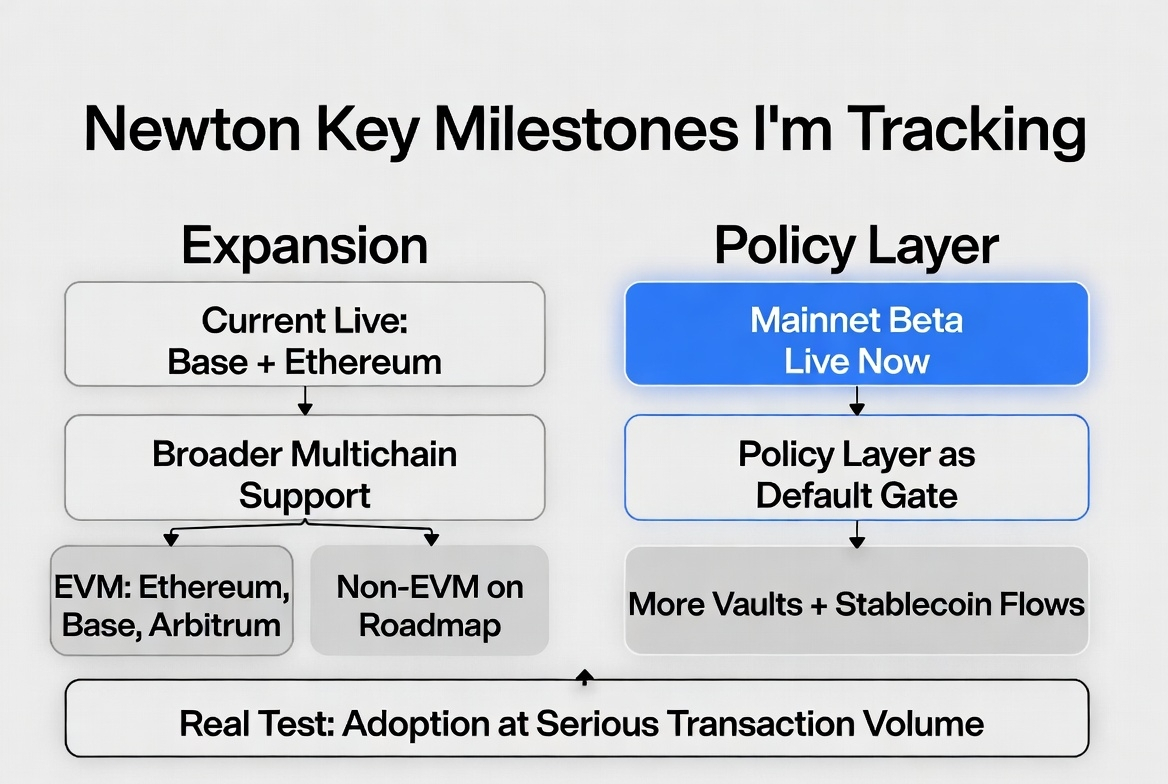
The milestones I am tracking are practical. First I want to see how far Newton expands from its current live state on Base and Ethereum into broader multichain support. The docs already say EVM support includes Ethereum Base and Arbitrum and that non EVM support is on the roadmap. Second I want to see whether the policy layer becomes the default gate for more vaults and more stablecoin flows. The mainnet beta is live now. The real test is whether teams keep choosing it when the transaction volume gets serious.
My verdict is constructive but not blind. I think Newton solves a real problem because onchain systems still have a gap between intent and execution. That gap is where bad trades bad jurisdictions bad counterparties and bad automation slip through. Newton tries to close that gap with verifiable approval before settlement. The reward case is strong if adoption keeps growing across vaults stablecoins RWAs and agents. The risk case is also clear. The product has to prove repeat usage not just a smart narrative. Right now I see a useful protocol with a credible niche and a path to become infrastructure if the market accepts the need for pre execution control.
Do you see Newton Protocol as a true authorization layer or just a compliance wrapper. I want to hear the bullish case and the bearish case in the comments. Follow and share if you track projects that solve risk before it becomes a loss. Financial disclaimer. This is my personal research and not financial advice.