
The cryptocurrency industry has entered a new chapter.
The early years were driven by curiosity and speculation. Bitcoin introduced decentralized digital money, Ethereum expanded blockchain through smart contracts, and decentralized finance demonstrated how financial services could exist without traditional intermediaries.
Today, the conversation is changing.
The focus is shifting toward practical adoption.
Instead of asking which token can generate the fastest return, investors are increasingly asking which blockchain ecosystems can support the future digital economy.
Bitcoin remains the flagship asset of the industry.
It continues attracting institutional investors because of its scarcity, transparency, and growing recognition as a global digital store of value.
Ethereum remains the backbone of decentralized applications.
Its ecosystem powers stablecoins, decentralized exchanges, tokenized assets, and thousands of blockchain-based services used around the world.
However, the industry's next phase extends beyond these established leaders.
Emerging ecosystems such as TON are demonstrating how blockchain can become more accessible for everyday users through faster applications and growing developer communities.
At the same time, tokenization is becoming one of the most significant innovations in modern finance.
By bringing traditional assets—such as real estate, bonds, commodities, and investment funds—onto blockchain networks, tokenization has the potential to improve efficiency, transparency, and accessibility across global markets.
Another rapidly expanding sector is Decentralized Physical Infrastructure Networks, commonly known as DePIN.
Unlike traditional blockchain projects focused only on finance, DePIN connects digital networks with physical infrastructure, including cloud computing, decentralized storage, wireless communication, mapping services, and artificial intelligence resources.
This represents a fundamental evolution.
Blockchain is becoming an infrastructure layer for the real economy rather than remaining exclusively within the financial sector.
Artificial Intelligence is accelerating this transformation.
AI requires secure data, decentralized computing, transparent ownership, and scalable digital infrastructure—all areas where blockchain technology can provide meaningful advantages.
The convergence of AI and blockchain may become one of the defining technological trends of the coming decade.
Institutional investors are already adapting to this new landscape.
Instead of evaluating projects solely based on market momentum, they increasingly focus on developer activity, ecosystem growth, adoption metrics, partnerships, and long-term utility.
This approach reflects the way successful technology companies have historically been valued.
Market volatility will always remain part of investing.
Interest rates, liquidity conditions, regulatory developments, and geopolitical events will continue influencing prices in the short term.
Yet over longer time horizons, utility tends to outperform speculation.
Projects that consistently solve real-world problems often build stronger communities, attract more developers, and generate sustainable demand.
For investors, the message is clear:
Focus on innovation.
Follow adoption.
Respect risk.
Because the next generation of crypto leaders may not be the loudest projects on social media.
They will be the ecosystems creating lasting value for millions of users around the world.
$BTC $ETH $TON $LINK $ONDO $FIL $AR $RNDR $BNB
#Crypto #Bitcoin #Blockchain #Web3 #FutureFinance

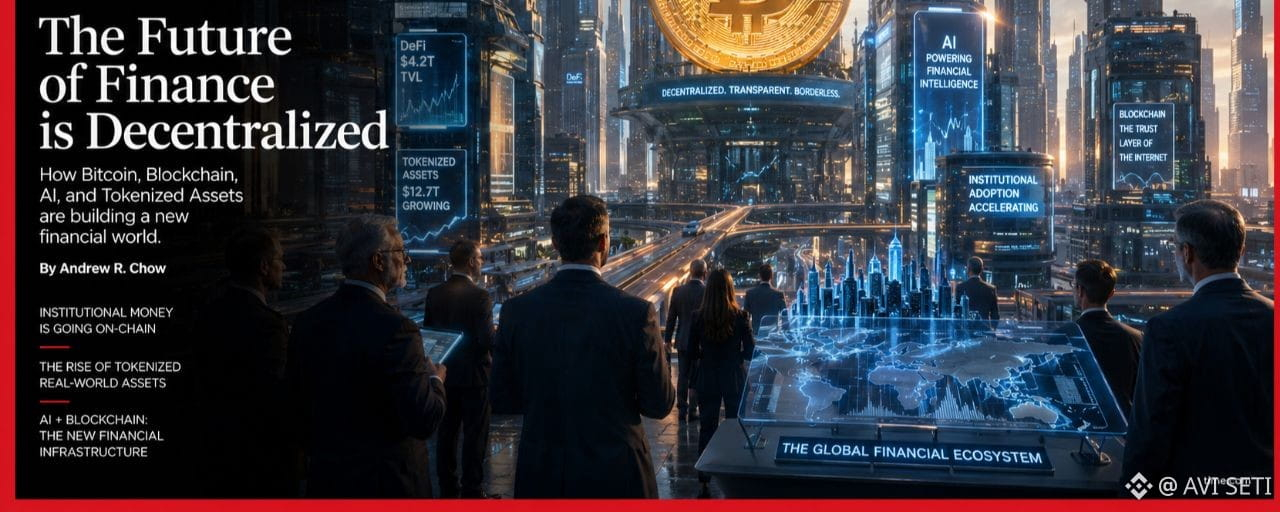
Inside a cutting-edge innovation lab, visionary economists and blockchain engineers collaborate at the frontier of the next financial revolution. Immersive holographic displays illuminate Bitcoin, tokenized real estate, AI infrastructure, DePIN networks, and global capital flows, transforming complex data into a living blueprint of tomorrow's economy. Every interaction reflects the convergence of finance, artificial intelligence, and decentralized technology, where bold ideas evolve into scalable global systems. Captured in a Bloomberg-inspired editorial style with cinematic realism, the scene embodies a future where innovation is not merely imagined—it is engineered.