Human beings rarely notice the moment a repeated action becomes automatic. The first time someone uses a contactless payment, they still think about the transaction. A year later, the movement is almost unconscious. Convenience has a peculiar effect: it does not simply save time; it rewrites attention. We stop examining processes that become reliably invisible.
That pattern matters far beyond consumer technology. Financial systems, regulatory frameworks, and digital networks gradually train people to trust routines they no longer inspect. The greatest influence of infrastructure is often psychological rather than technical. It transforms deliberate decisions into habits, until the underlying rules become as unnoticed as the rhythm of electricity flowing through a building.
Artificial intelligence is beginning to occupy that same territory. For years, AI was treated as an assistant, generating ideas that humans could accept or reject. Increasingly, however, AI is moving from recommendation to execution. An autonomous strategy can trade, coordinate, negotiate, or allocate resources without waiting for approval at every step. Once that shift occurs, the infrastructure surrounding decisions becomes more consequential than the intelligence making them. A habit executed by software can spread much faster than a habit performed by people.
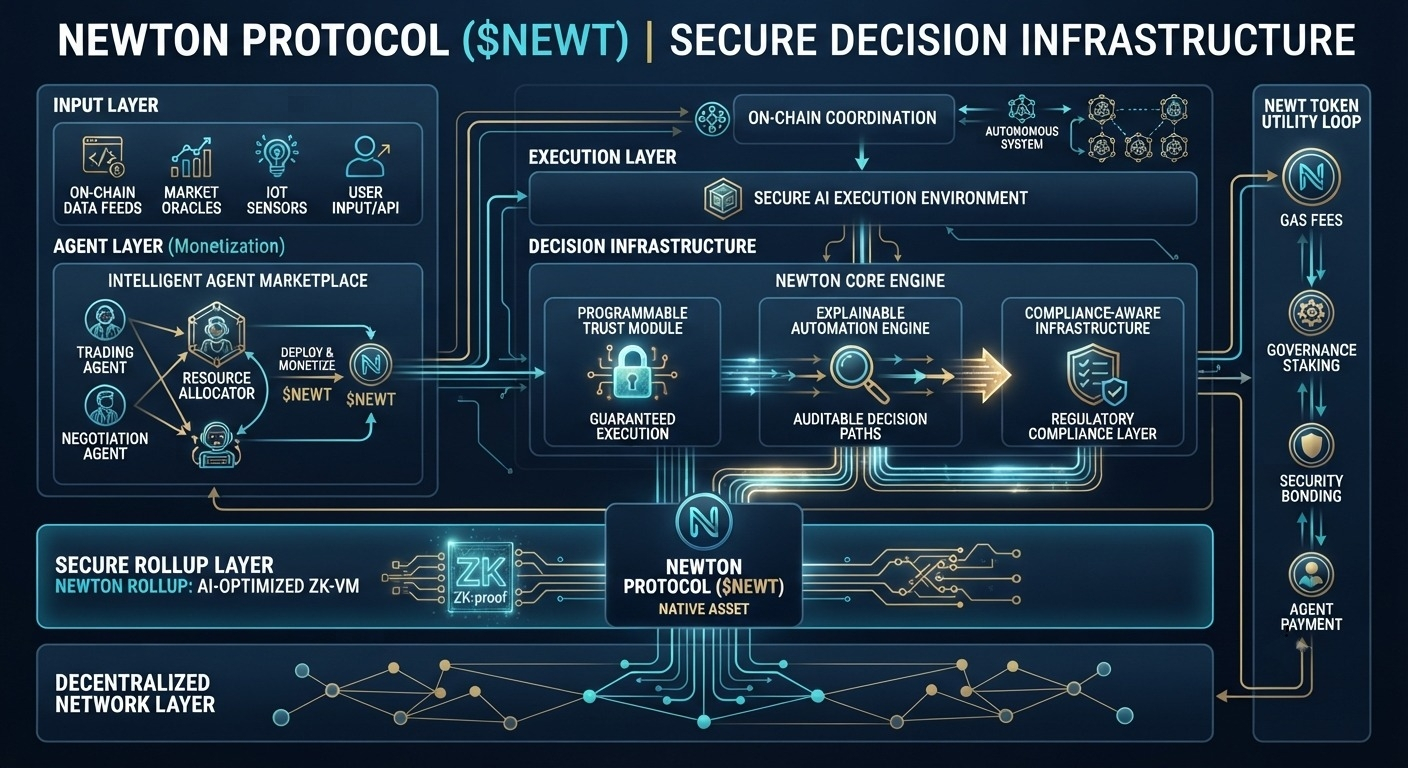
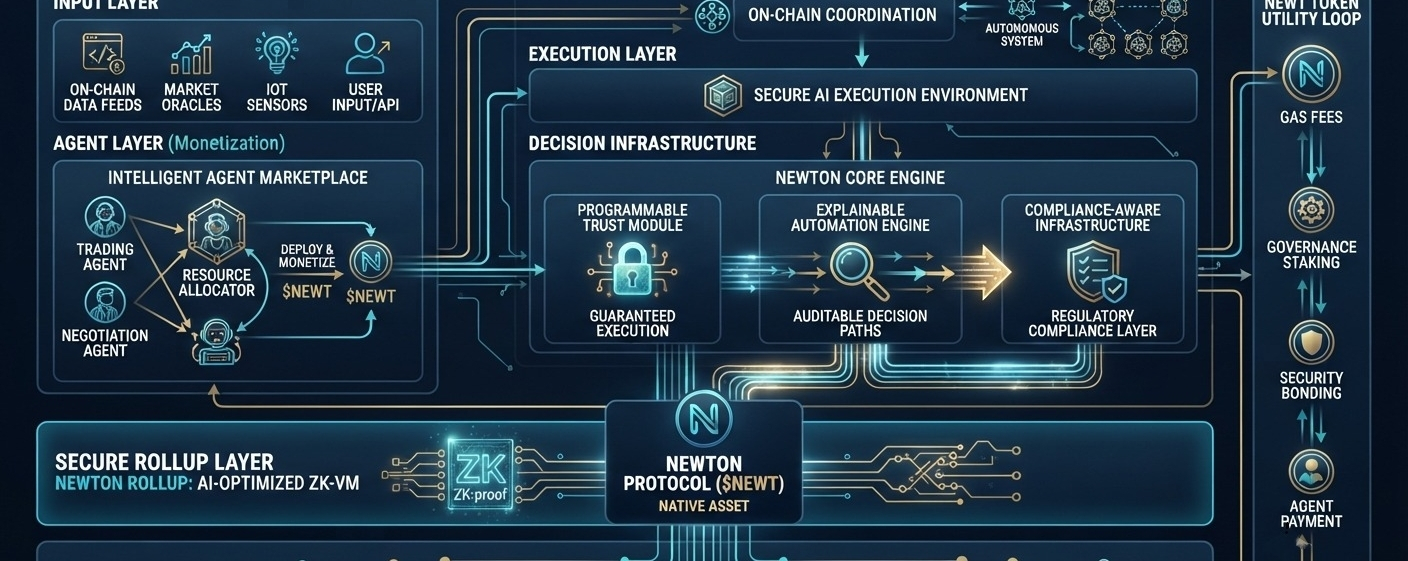
This is where Newton Protocol enters a broader conversation about decision infrastructure. Its secure rollup is designed for AI-driven strategies, automated trading, and a marketplace where developers can deploy and monetize intelligent agents. Yet the more revealing ambition lies in its focus on programmable trust, explainable automation, compliance-aware infrastructure, secure AI execution, and on-chain coordination among autonomous systems. Rather than assuming autonomous behavior deserves trust by default, it asks whether trust can be designed into the environment in which autonomous behavior occurs.
I sometimes wonder whether explainability will become a genuine social expectation or merely another feature that exists until speed becomes more valuable. Markets have long rewarded efficiency, and history suggests that people willingly exchange visibility for convenience when the trade feels worthwhile. The challenge is that lost visibility is remarkably difficult to recover once habits have formed.
Perhaps the defining question of the AI era is not whether machines will make better decisions than humans. It is whether we will continue to notice the invisible systems that quietly teach us which decisions no longer seem necessary to question.#Newt @NewtonProtocol $NEWT