

Look, I think people are still chasing the wrong thing in DeFi.
Everyone wants faster chains, cheaper transactions, or another stratgy that promses a little more yield. Sure, those things matter. But they don't fix the part that actually breaks when markets get ugly.
That's the part people don't talk about enough.
The real quastion isn't how fast a protocol executes a transaction. It's whether that transaction should've gone through at all.
Think about it. A vault strategy can look perfectly reasonable when you write it. Then a few hours later, collateral prices move, liquidity dries up, or an asset's risk profile changes completely. The smart contract will still execute exactly what you told it to do. It doesn't stop and ask whether the world has changed.
Humans usually fill that gap.
And honestly, that's where things get tricky.
Someone has to notice the change. Someone has to verify the data. Someone has to sign the transaction before the market moves again. I've seen this workflow everywhere, and it works... until it doesn't.
That's why @NewtonProtocol caught my attention.
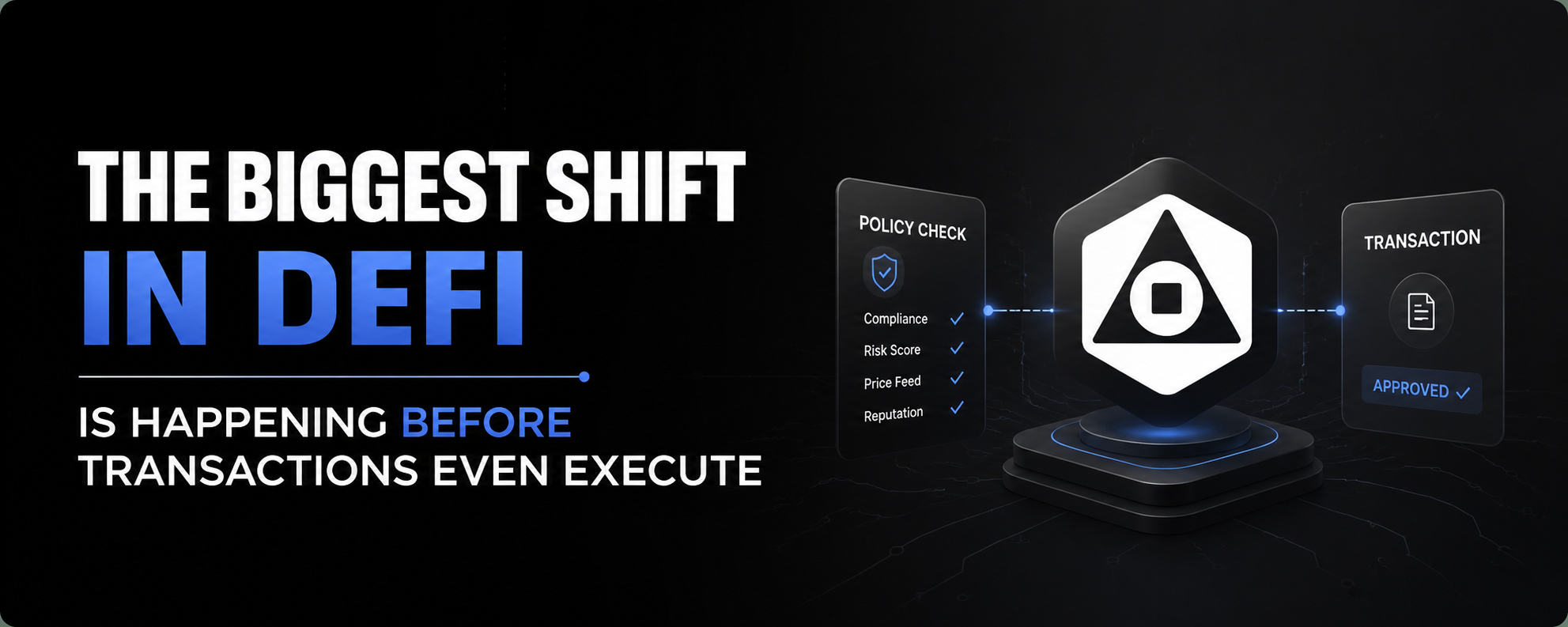
Not because it's trying to build another chain. We've already got plenty of those. What stood out is the authorization layer that checks predefined policies before a transaction reaches final settlement.
That sounds like a small architectural detail.
I don't think it is.
Once policy becomes part of execution, risk management stops living in dashboards, Slack channels, or operating manuals. The protocol starts enforcing the rules itself, using verified market data, risk ratings, wallet reputation, and other trusted inputs before capital moves.
That's a completely different way of thinking about infrastructure.
And that's where I think value is starting to shift.
Reliable data providers aren't just supporting DeFi anymore. They're becoming part of the decision process. Price feeds, risk scores, compliance signals, and reputation data suddenly matter because they influence whether transactions move forward in the first place.
People keep asking when institutions will arrive.
Maybe we've been asking the wrong question.
Institutions already understand automation. What they really care about is whether they can trust automation when everything goes sideways. Can the rules still hold up when markets move faster than people can react?
That's a much harder problem to solve.
I don't think the next phase of DeFi belongs to the protocols that simply execute faster. I think it belongs to the ones that reduce the number of human decisions required during stressful moments because the important checks already happened before execution.
Maybe that doesn't create the loudest headlines.
But I wouldn't be surprised if it becomes one of the biggest reasons serious capital feels comfortable moving onchain over the next few years.