

Not just the "checks before settlement" pitch everyone repeats.
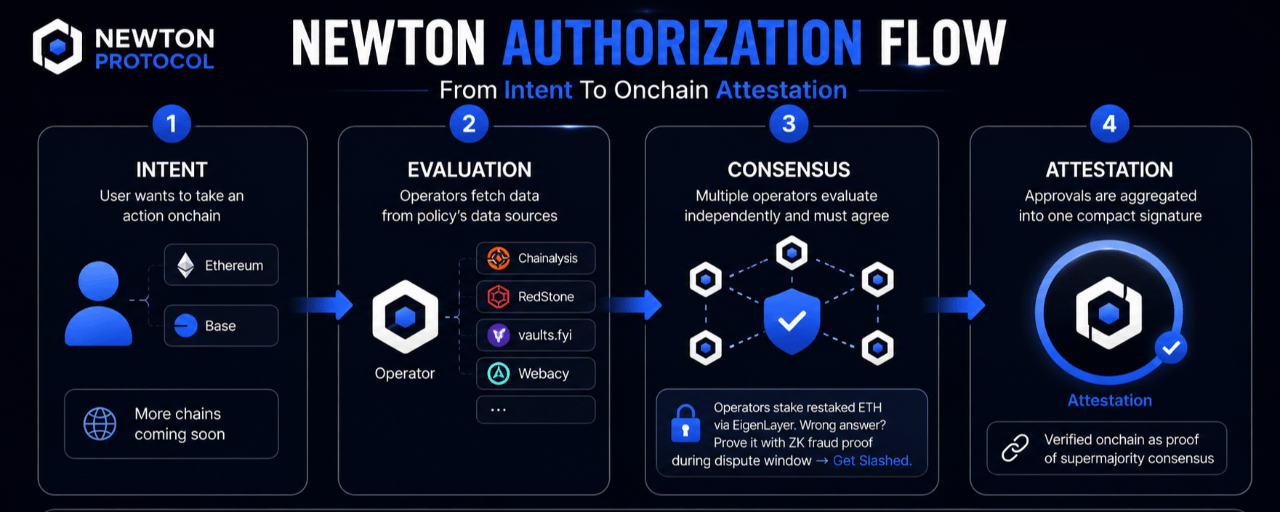
its four steps. Intent — user wants to do something on Ethereum or Base (more chains coming, not live everywhere yet). Evaluation — each operator gets the transaction plus the policy, and pulls whatever data the policy calls for, could be Chainalysis for sanctions, RedStone for pricing, vaults.fyi for vault history, or Webacy for wallet risk. Consensus — this is the part that actually got my attention. once Newton's out of beta, no single operator decides anything. multiple operators evaluate the same proposal independently, and the network only issues an authorization once enough of them agree.
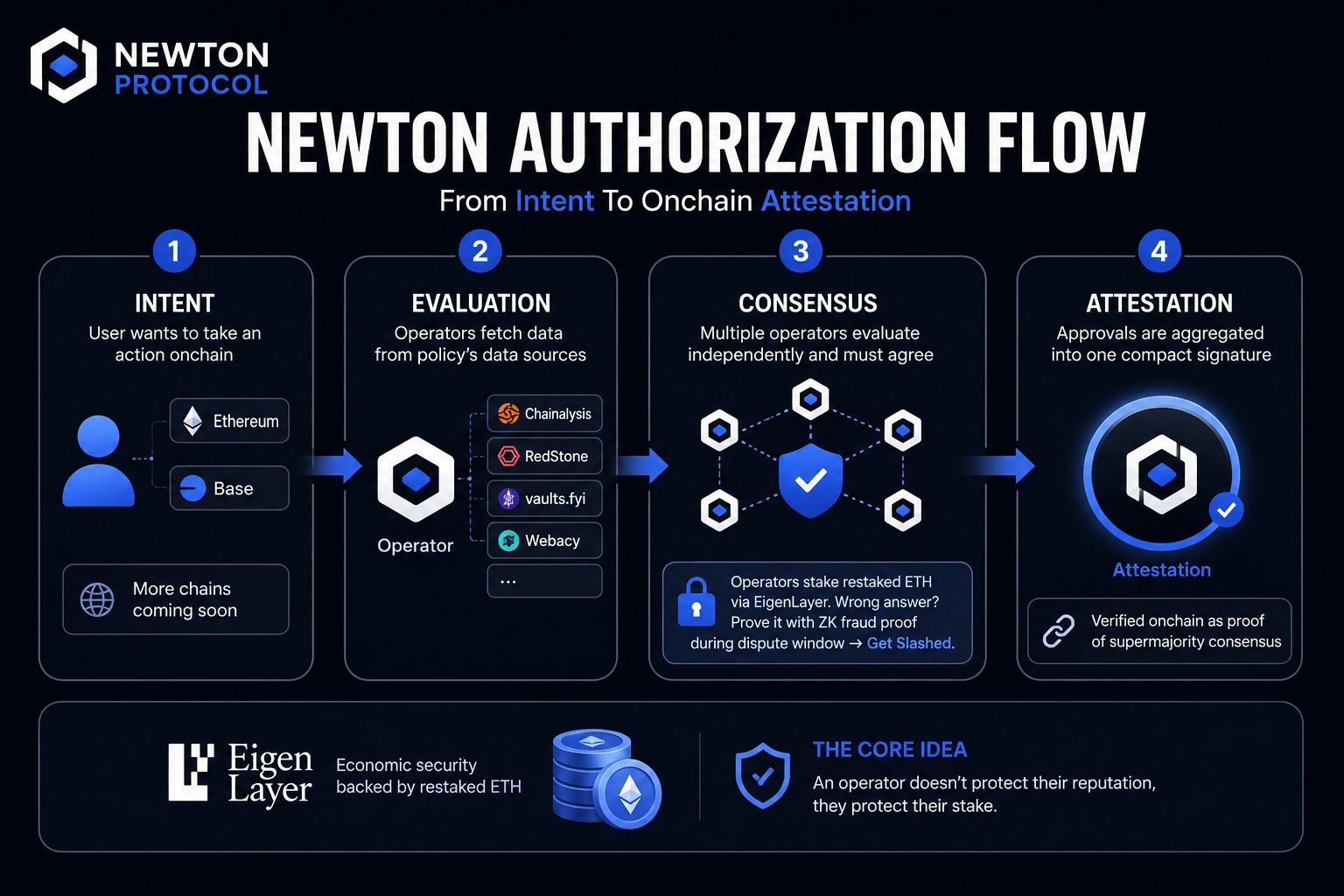
heres the bit most explainers skip. what makes an operator actually tell the truth isnt reputation, its money. operators back their work with restaked ETH through EigenLayer. if one signs off on a wrong answer, anyone can challenge it during a dispute window and prove it with a zero-knowledge fraud proof. get caught, and you lose part of your stake. thats slashing.
why that matters to me specifically: i tell traders constantly that an opinion without risk behind it means nothing. anyone can say "this trade looks good." the discipline only shows up when your own capital is on the line for being wrong. Newton's operator network runs on the exact same logic, except its enforced by code instead of self-discipline. an operator that lies isnt losing reputation points, its losing actual staked ETH.
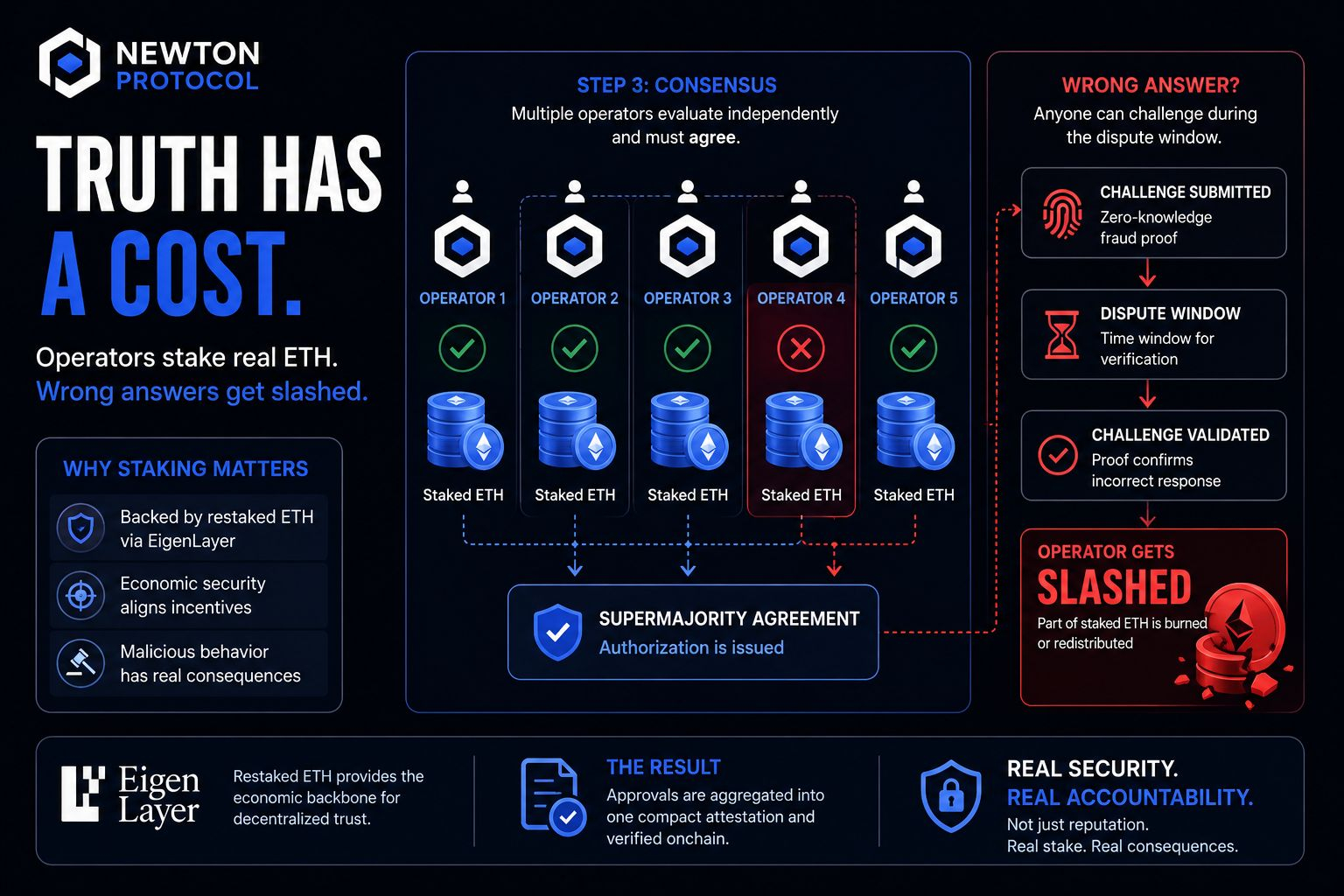
last step is attestation. once enough operators agree, their approvals get combined into one compact signature, basically proof that a supermajority independently checked the same thing and landed on the same answer. thats what gets verified onchain.
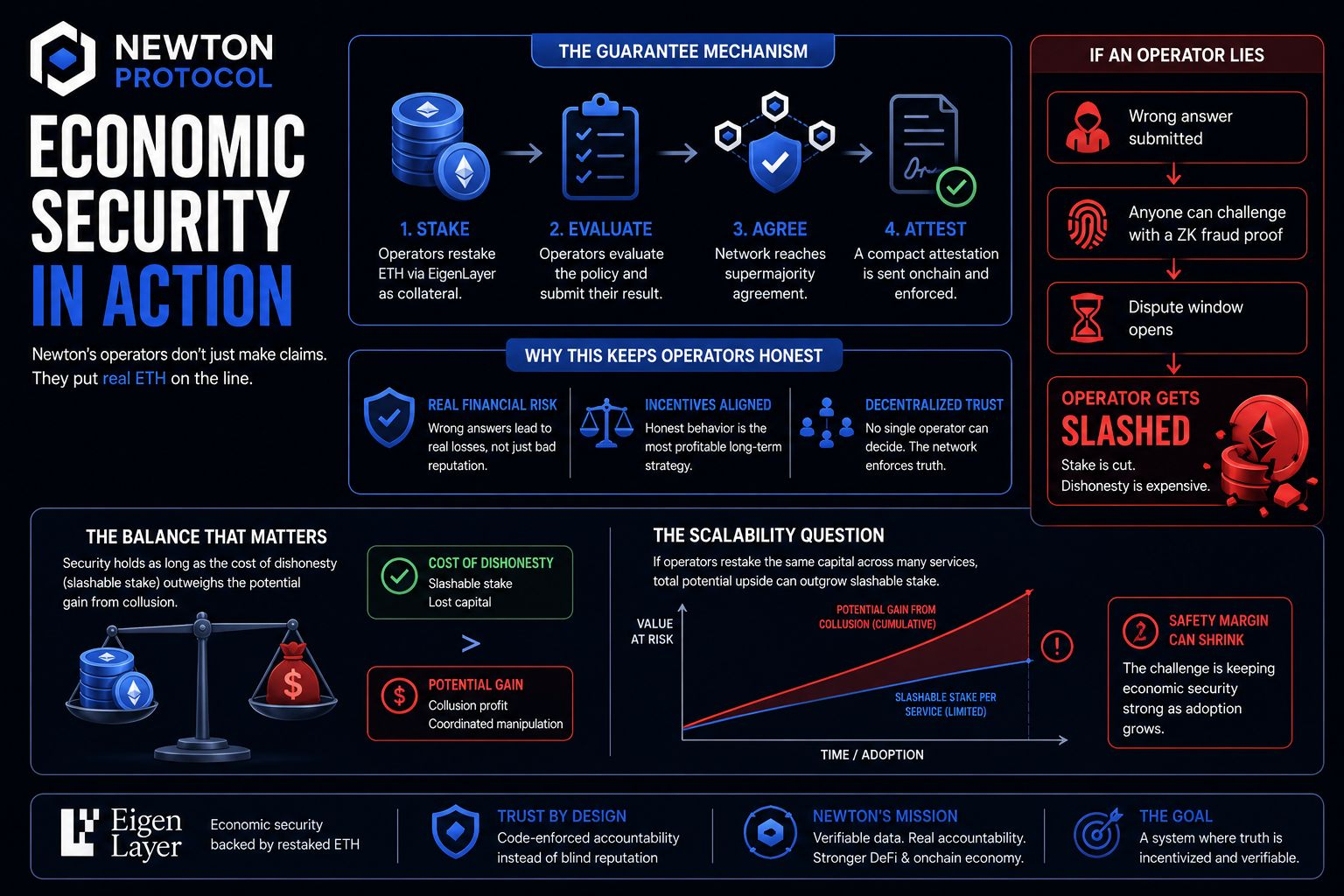
what i keep going back and forth on: the security model assumes slashing losses outweigh whatever an operator could gain by colluding or lying. that holds up fine at current stake levels. but EigenLayer research itself flags a real tension, if operators are restaking the same capital across many different services, the total potential upside from coordinated dishonesty can outgrow the slashable stake tied to any one of them. doesnt mean Newton's broken, just means the security guarantee is a function of how concentrated operator stake gets over time, not a fixed constant.
worth saying directly since i always look at this side too: NEWT is still trading near its lows, supply still under 25% circulating, more unlocks ahead. interesting mechanism design and token performance are two different conversations and i try not to blur them.
does an operator's economic stake actually stay large enough to keep this honest as adoption grows, or does that safety margin shrink exactly when the system starts handling more value?
$NEWT @NewtonProtocol #Newt $ETH
