

when I was using a protocol that had recently added new features on top of its original design. At first, it felt exciting more options, more things to do. But then I noticed something small. Actions that used to feel simple started taking a bit longer. Some needed extra steps. Others behaved in ways I couldn’t immediately understand. Nothing was broken, but it didn’t feel as clear as before. That experience stayed with me.
After seeing this happen a few times, I started to realize that growth in crypto systems isn’t just about adding more. It changes how the system behaves underneath. What I noticed is that once a system expands into something more like an ecosystem, the real challenge becomes coordination. Not just processing actions, but deciding how those actions interact with each other.
From a system perspective, it reminds me of a small delivery service that grows into a full logistics network. In the beginning, it’s simple you send something, it arrives. But as it scales, new layers appear: sorting centers, routing priorities, storage points. Suddenly, it’s not just about movement anymore. It’s about who decides where things go, how they’re handled, and what gets priority when everything arrives at once.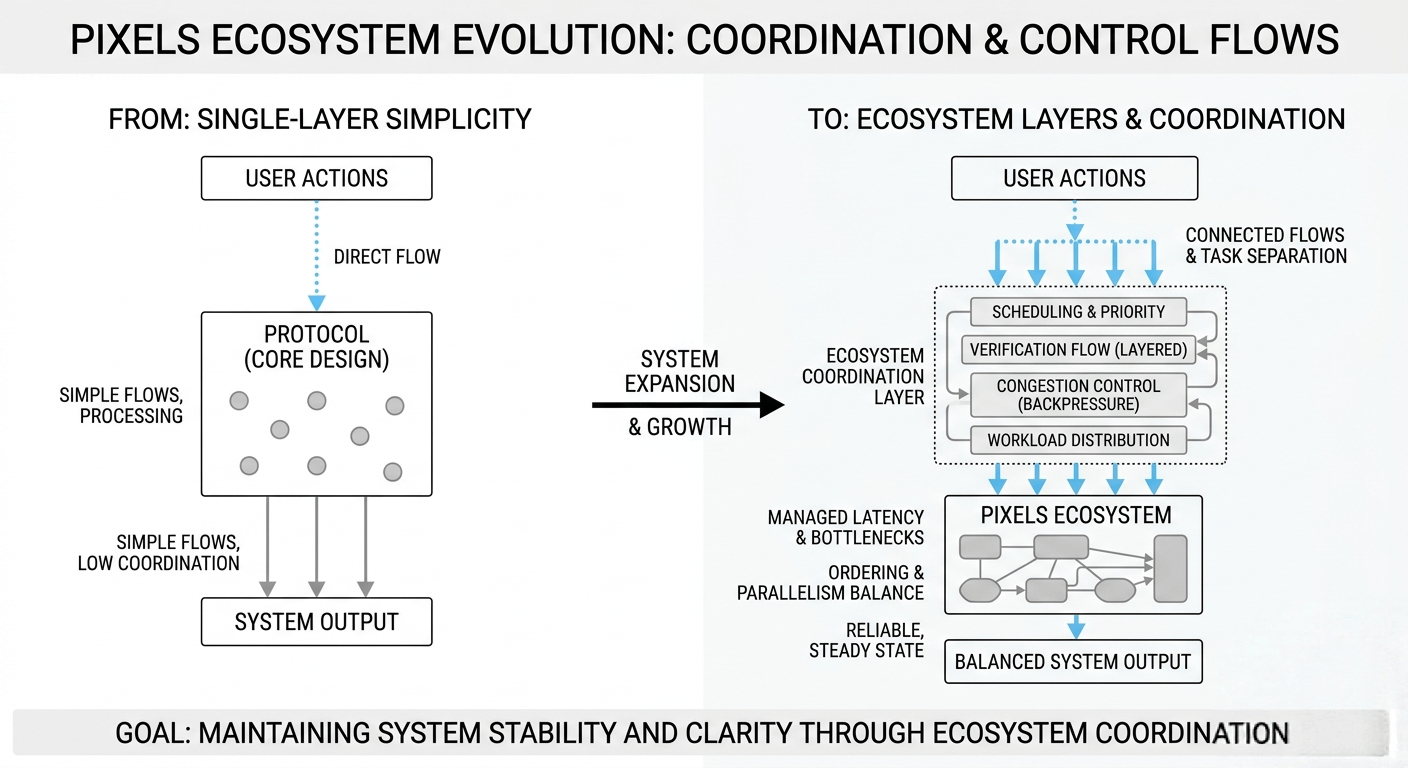
In my experience watching networks, this is where things quietly shift. Latency, verification, and congestion don’t disappear, they just become harder to see. Instead of one bottleneck, you get many smaller ones spread across the system. And that’s where the question of control starts to feel more real, even if it’s not obvious at first glance.
When I look at how @Pixels approaches this, what caught my attention is how the system seems to be moving beyond a single layer experience. It doesn’t feel like just isolated actions anymore. It feels more like a set of connected flows, where different activities exist side by side but still influence each other.
What interests me more is how those flows are handled. Scheduling starts to matter a lot more here. It’s no longer just about doing something instantly, but about when and how that action fits into everything else happening at the same time. If too many things try to happen at once, the system needs a way to stay balanced.
Task separation is another thing I pay attention to. Different activities shouldn’t all compete for the same path. When they do, even simple actions can feel delayed. But when they’re separated properly, the system feels smoother, even if it’s just as busy underneath.
Verification flow also becomes more layered. Some actions need deeper checks, especially when they connect different parts of the system. In my experience, this is often where subtle delays come from not because something is wrong, but because the system is trying to stay consistent across everything it manages.
Then there’s congestion control. What matters in practice is not avoiding pressure, but handling it well. Systems that last don’t try to process everything instantly. They absorb the load, spread it out, and keep moving. Backpressure, in that sense, is not a weakness. It’s part of how stability is maintained.
Worker scaling and workload distribution also play a role, but only if they’re designed carefully. Adding more capacity doesn’t help if everything still flows through the same narrow path. And then there’s the balance between ordering and parallelism. Too much structure slows things down. Too little creates confusion. Finding that middle ground is where systems start to feel reliable.
What stands out to me is that Pixelsseems to be reaching this point where the system isn’t just about what users do, but how those actions are organized behind the scenes. And naturally, that brings up a deeper question. As the ecosystem grows, what actually shapes the flow of activity?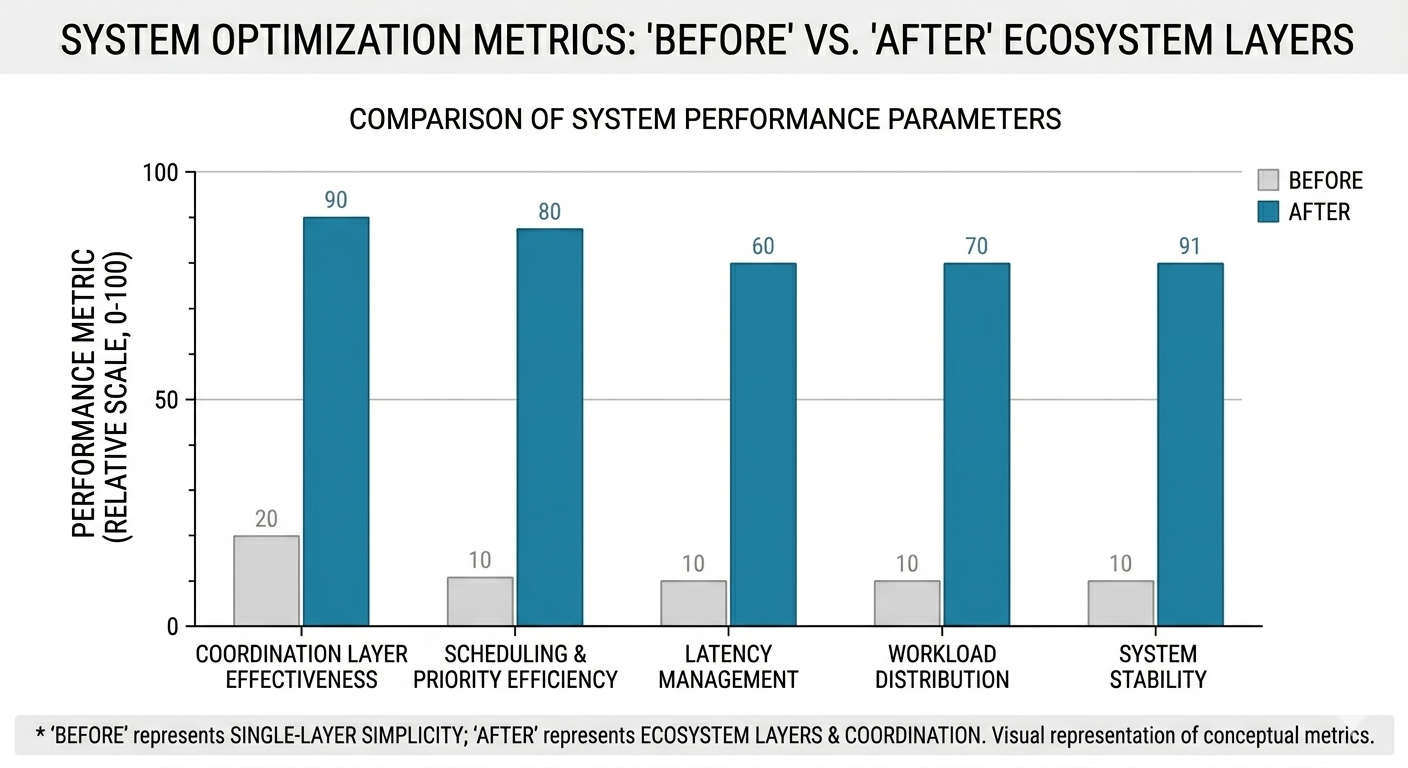
From a broader perspective, the systems that hold up over time are not the ones that grow the fastest, but the ones that stay understandable as they become more complex. Growth adds power, but it also adds responsibility in how that power is structured.
A reliable system is not the one that feels the most active, but the one that remains steady when everything around it becomes more demanding. Good infrastructure doesn’t try to stand out. It just keeps things working in a way that still makes sense, even as the system evolves.