I’ve spent enough time around Web3 games to notice a pattern. Something new launches, rewards look good, people rush in, and for a while it feels like momentum is real. Then slowly, things start breaking. Not because people leave, but because the system was never built to handle real usage.
That’s why I didn’t expect much when I first looked into @Pixels.
On the surface, it’s just a farming game. You plant, harvest, explore, craft, talk to other players. Nothing about that sounds groundbreaking. But after spending some time with it, it starts to feel different in a way that’s hard to explain at first.
It doesn’t push you to think about crypto all the time.
You’re not constantly calculating rewards or looking for the fastest way to extract value. You’re just playing. And that alone already separates it from most GameFi projects.
A big part of that comes from where it’s built. Pixels runs on Ronin, which is actually designed for games. So things feel smooth. You’re not dealing with constant friction, and that changes how long people are willing to stay inside the system.
But the real shift shows up when you look at how the economy is structured.
The $PIXEL token exists, but it’s not forced into every single action. It shows up where it makes sense. Crafting, upgrades, progression, access to certain systems. It feels like part of the game instead of something sitting on top of it trying to extract value.
That design choice matters more than people think.
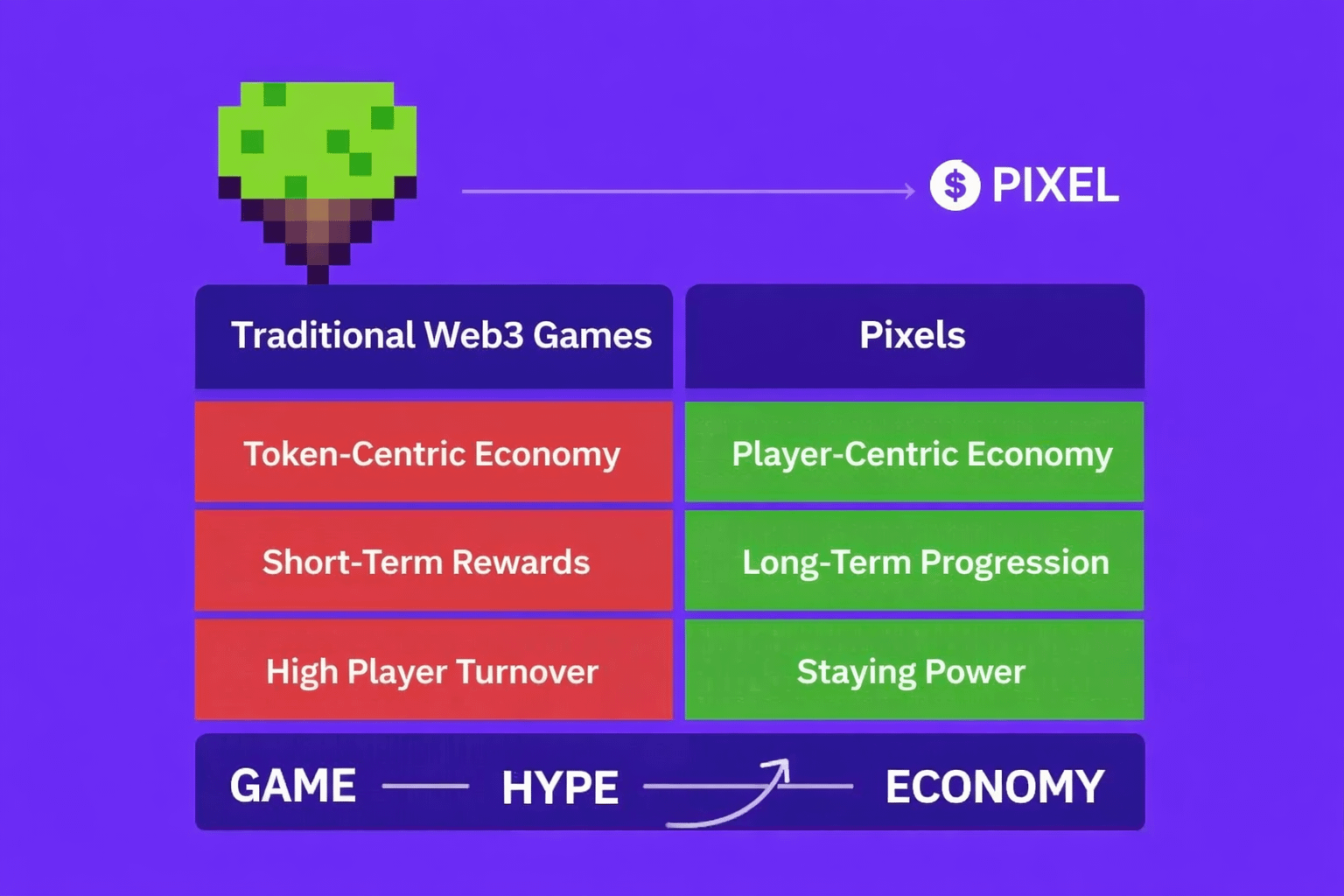
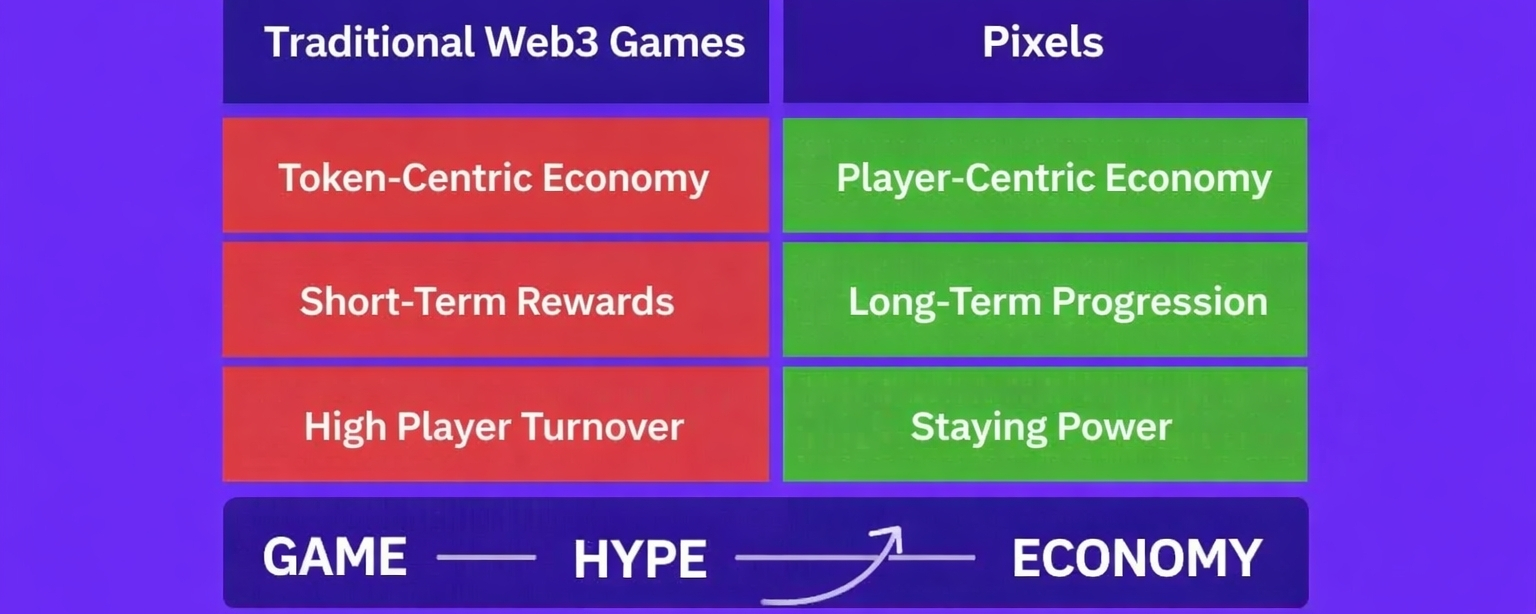
Because most Web3 games start with the token and try to build gameplay around it. Pixels feels like it did the opposite. It built something people would actually play, then slowly layered the economy in.
And now you can see where it’s going with the whole Stacked direction.
It’s not just about adding more features. It’s about connecting everything. Your progress, your assets, your time inside the game… it all starts carrying forward instead of resetting every time something new is introduced.
That kind of continuity is rare in this space.
Then there’s land, which I think a lot of people still underestimate.
There are only a limited number of plots, and they’re not just there for flex. They act like production hubs. If you own land, other players can use it, and you earn from that activity. So now you have different roles forming inside the game.
Some people grind daily. Others position themselves to benefit from that grind.
And that’s where it starts feeling less like a game and more like a small economy.
Access becomes valuable. Time becomes valuable. Even positioning starts to matter.
The recent Tier 5 update pushes this even further.
Before, progression was mostly about effort. You play more, you unlock more. Simple. Now it’s different. Access is gated through things like Slot Deeds, and those aren’t permanent. They expire, they need to be managed, and suddenly you’re thinking about timing and strategy instead of just repeating the same loop.
That one change shifts how you approach the game.
You’re not just grinding anymore. You’re making decisions.
And what I find interesting is how quietly all of this is happening.
Pixels isn’t trying to shout that it’s changing everything. It’s just adjusting the system step by step. Making it more structured, more connected, and honestly, a bit more serious.
There’s still risk, of course. Every game economy eventually gets tested when more people join and try to pull value out at the same time. That’s where most projects fail.
But Pixels feels like it’s at least aware of that problem.
It’s not trying to win with hype. It’s trying to hold together when things actually get busy.
And right now, that alone makes it stand out.