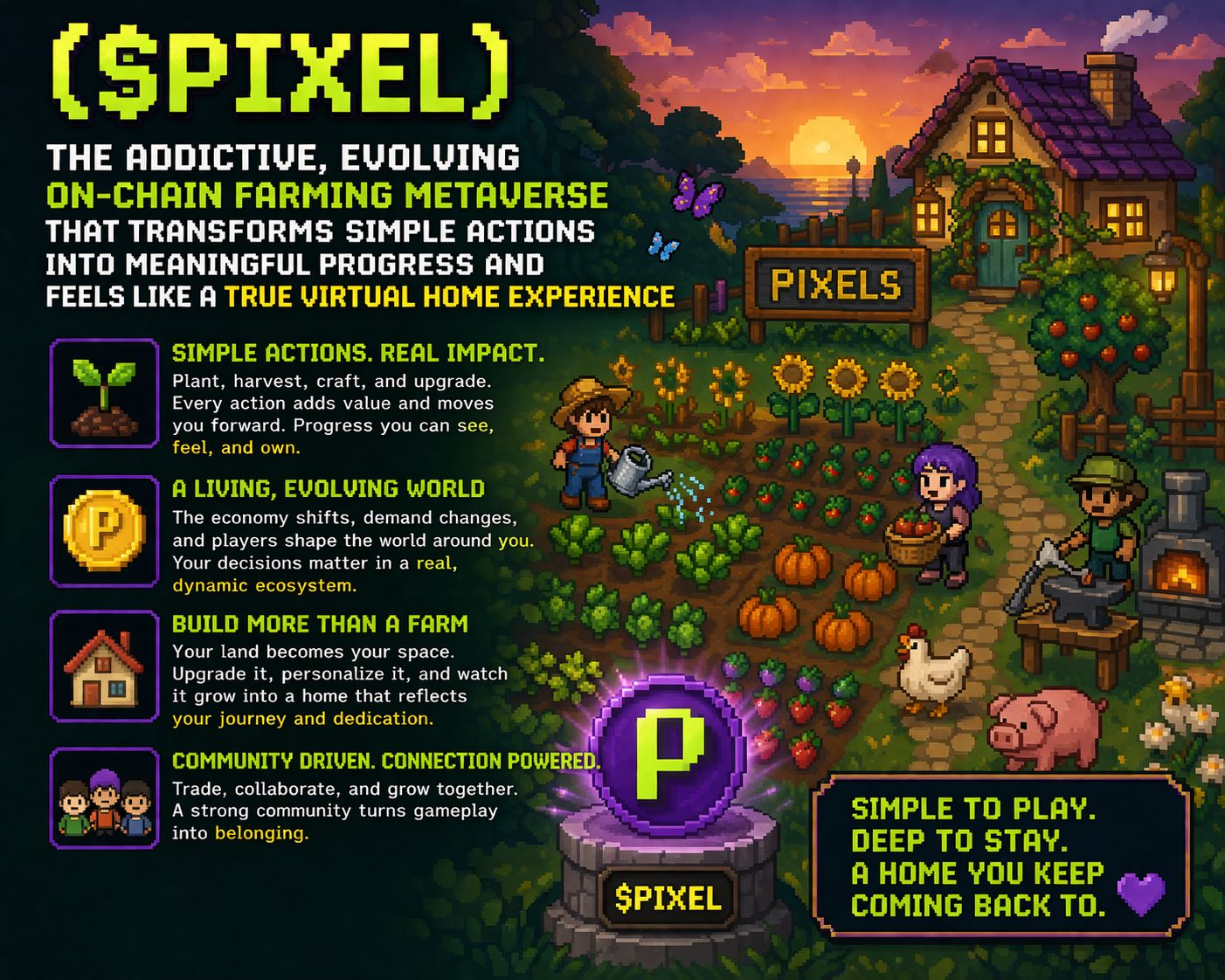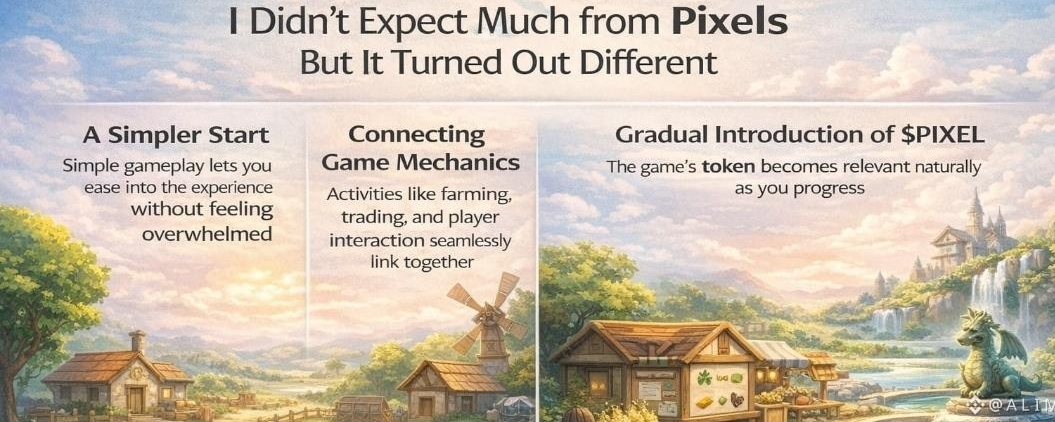
Pixels doesn’t feel like a typical Web3 game that tries to impress you with surface complexity but lacks substance underneath. Instead, it builds its identity through repetition that gradually develops meaning. Planting, harvesting, crafting, and upgrading aren’t just mechanics; they create a rhythm that keeps drawing you back without forcing you. Every small action contributes to something bigger, and over time that fosters a sense of ownership that most digital worlds fail to provide.
What makes the experience stand out is how naturally it combines economy and gameplay. You don’t constantly think about optimizing every move like a spreadsheet simulation. Instead, you start responding to the environment, demand, and available resources in an organic way. The in-game world also feels dynamic; it shifts with player activity, making your decisions feel significant in a living system rather than a closed loop intended only for rewards.
There’s also a subtle emotional layer that develops the longer you play. Your land stops feeling like just an asset and starts feeling like a place you want to return to. Even small upgrades or changes matter because they reflect time invested rather than just efficiency gains. That’s where Pixels sets itself apart from most play-to-earn models it doesn’t just reward participation, it builds familiarity, and familiarity turns into attachment over time.
At its core, Pixels succeeds because it values simplicity while still creating depth. It doesn’t overwhelm you with unnecessary systems, yet it never feels empty or aimless. Every session feels like a continuation rather than a restart, and that continuity creates a strong loop of engagement. In a space where most games chase hype cycles, Pixels quietly focuses on consistency, which is why it feels less like a product and more like a lasting virtual home you keep returning to without even thinking about it.