
There’s a kind of infrastructure that never asks for attention.
It doesn’t show up in screenshots, it doesn’t get featured in trailers, and nobody really praises it in public threads. But it’s the reason anything else works at all.
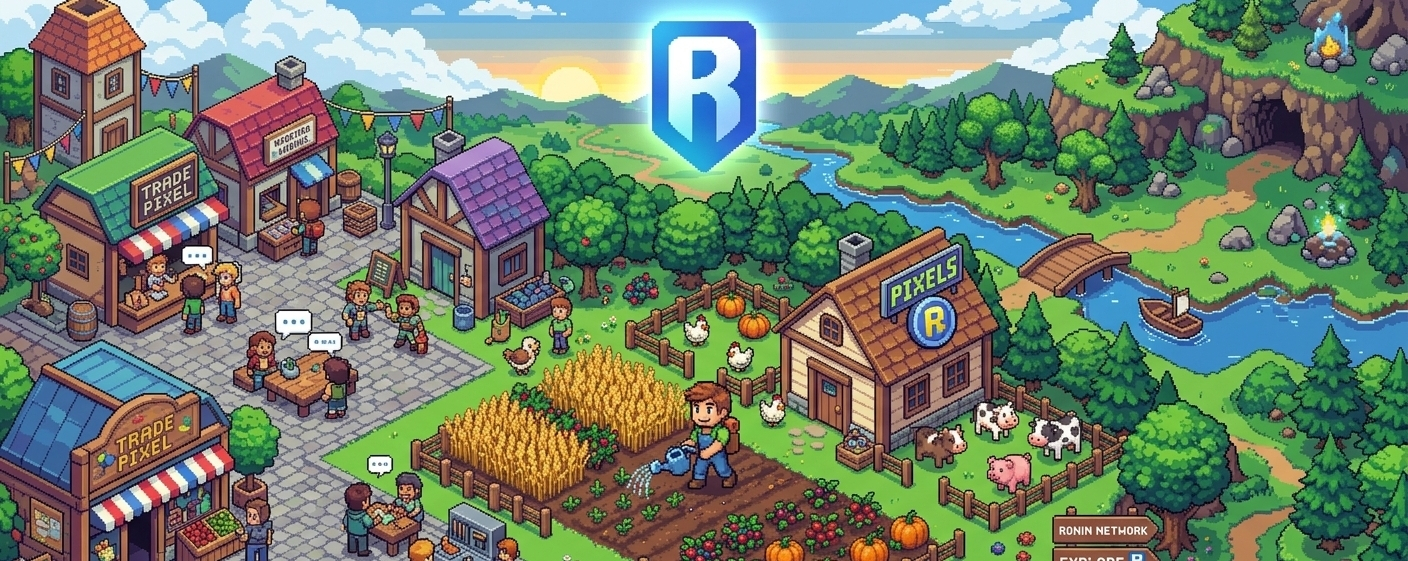
In games like Pixels—where players farm, explore, trade, and slowly build their own rhythm inside an open world—you only see the surface. A field grows, a resource is collected, an item is traded. It feels light, almost casual. But underneath that softness sits something much heavier: systems that track ownership, protect value, and make sure nothing quietly disappears when nobody is looking.
Most people don’t think about that layer. And honestly, they shouldn’t have to. That’s the point.
But someone does.
---
Building infrastructure in a system where assets actually belong to players changes the entire emotional weight of engineering. You’re no longer just writing code that “works.” You’re building something that has to stay correct even when everything around it is uncertain.
A missing transaction isn’t just a bug. A broken state isn’t just downtime. A bad assumption isn’t just technical debt—it becomes someone else’s loss.
That’s where responsibility stops being a principle and becomes a design constraint.
You start making different choices. Not because they’re exciting, but because they’re safe in the long run. You slow down in places where speed would normally feel rewarding. You question things that “usually work.” You assume less, verify more, and accept that being careful is not a slowdown—it’s part of the job.
---
Decentralization, when it’s real and not just language, is less about ideology and more about pressure distribution.
Instead of one system holding all the control—and all the failure risk—you spread it out. Not because it’s trendy, but because it’s fragile to concentrate too much trust in one place.
In ecosystems like Ronin, which support games like Pixels, that design choice quietly changes the rules. Ownership becomes persistent. Actions become harder to reverse. Control becomes shared rather than granted.
It’s not perfect. It’s not effortless. But it removes a very specific kind of risk: the kind that comes from a single decision point going wrong.
And in systems that handle real value, that matters more than convenience.
---
The part people rarely see is how much of this work is just restraint.
Not every improvement is shipped. Not every idea becomes a feature. Not every shortcut is worth taking, even if it saves weeks of effort. Because every shortcut eventually becomes someone else’s problem later.
So teams that build this kind of infrastructure start to develop a certain discipline—not loud, not performative. Just consistent.
They write things down, not because it’s formal, but because memory is unreliable. They design as if they won’t be the ones maintaining it forever. They assume someone else—someone who wasn’t there for the decisions—will eventually have to understand everything from scratch.
That changes how you communicate. It changes how you document. It even changes how you think.
---
Over time, you realize something slightly uncomfortable: most of the best infrastructure work is invisible when it succeeds.
If everything is working properly, nobody talks about it. No one notices the absence of failure. No one thanks the system for not breaking.
But that silence is the product.
And it’s not accidental. It’s earned through thousands of small decisions that all point in the same direction—toward stability, toward clarity, toward not surprising the people who rely on it.
---
The truth is, systems like this don’t become trustworthy because of one big breakthrough. They become trustworthy because they survive a long sequence of ordinary moments without losing their shape.
That takes time. It takes repetition. It takes accepting that most of what you build won’t be celebrated, only depended on.
And maybe that’s the most honest definition of success in infrastructure work:
Not being noticed when things go right—and not being the reason things go wrong when they don’t.
