I used to think everything in Pixels stayed inside it.
you log in, move around, run your loops, Coins circulate, tasks complete everything feeds back into itself. nothing feels disconnected when you’re inside it.
it’s smooth enough that you don’t question it.
but after a while, something starts to feel off.
not broken.
just uneven.
i was doing the same things every day.
same routes, same actions, same time spent.
but the outcomes didn’t line up the same way.
nothing obvious changed inside the farm.
no visible shift in mechanics, no change in task structure or reward display.
so the difference had to be somewhere else.
that’s when i stopped looking at what i was doing
and started looking at what actually sticks.
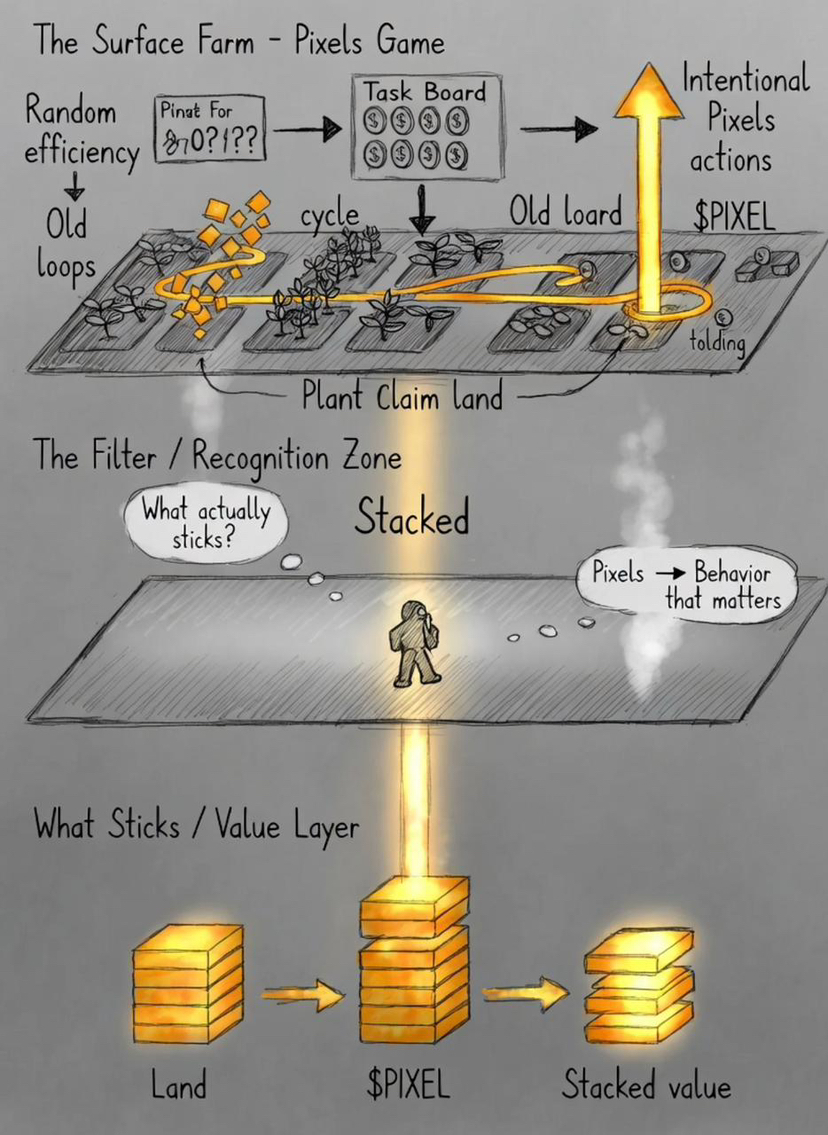
because most of what happens in Pixels doesn’t leave it.
movement doesn’t settle.
planting doesn’t settle.
Coins don’t settle.
they just circulate.
clean loops, fast cycles, everything designed to keep running without friction.
an internal economy optimized for throughput, not for final value accounting.
but some things don’t stay there.
land does.
$PIXEL does.
anything that needs to exist beyond the loop does.
anything tied to ownership, scarcity, or external demand doesn’t just circulate it has to be accounted for.
and that layer doesn’t feel like part of the game while you’re playing.
it only shows up when something gets finalized.
when value moves from flow into state.
so now the farm looks different.
it’s not where value sits.
it’s where activity gets generated.
a surface layer where behavior is produced, not where it’s ultimately recorded.
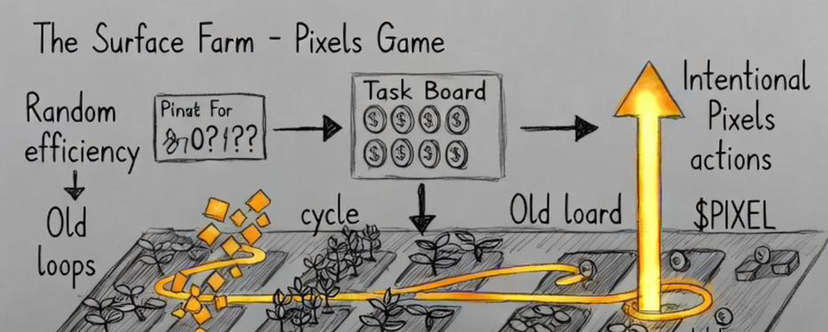
once that clicked, even the Task Board felt different.
it didn’t feel like a list anymore.
it felt selective.
not all actions are equal in how they propagate value through the system.
some actions connect upward.
some just loop back.
some interact with sinks, demand layers, or scarce resources.
others just recycle liquidity inside the game.
and there’s no indicator telling you which is which.
you only see it over time.
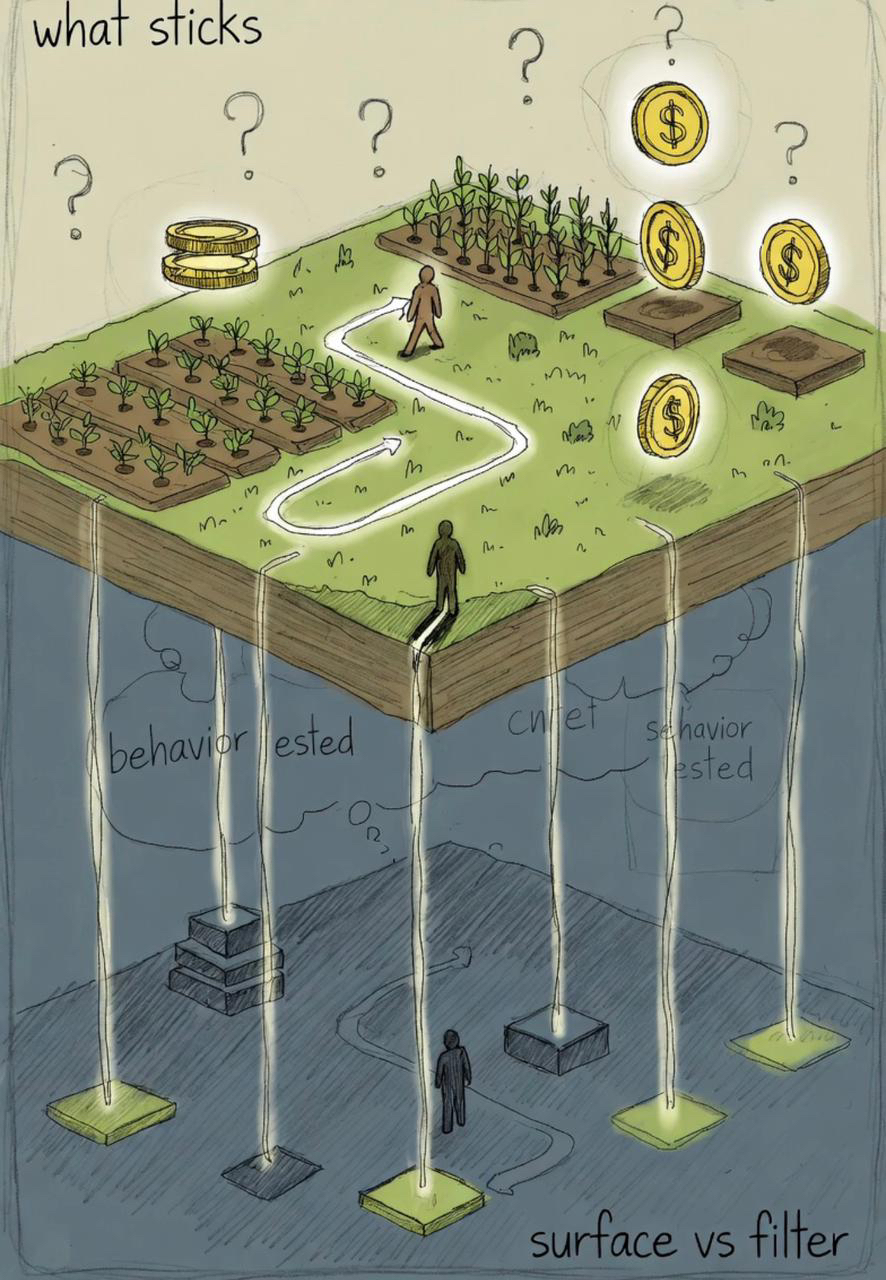
that’s where Stacked actually exists.
not inside the game.
not as something you interact with directly.
it sits outside, watching what repeats.
not everything you do just what stabilizes.
what consistently interacts with parts of the system that actually settle value.
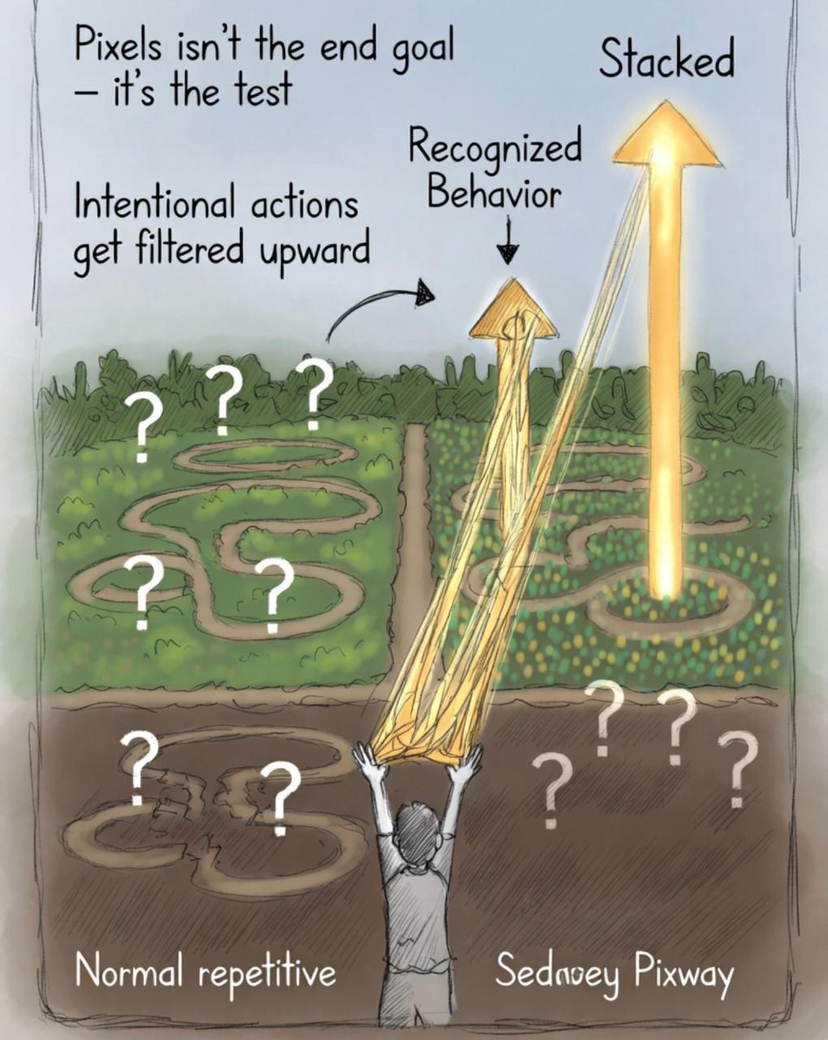
when behavior stays scattered, nothing really connects.
because the system can’t anchor inconsistent activity into persistent value.
when behavior tightens, something changes.
when actions start aligning with resource demand, sink interaction, or asset positioning.
not visibly.
but you feel it.
the same actions start leading somewhere.
not just looping.
they begin to bridge the gap between in-game flow and external value layers.
that’s when it stops feeling like gameplay.
and starts feeling like something is filtering you.
not based on effort alone, but on how your behavior fits into the economy’s structure.
so now when i’m inside Pixels, i don’t just think about efficiency.
i think about whether what i’m doing is even being recognized.
whether it interacts with parts of the system that persist beyond the loop.
because that’s the part you don’t see.
you can optimize everything inside the farm.
clean routes, perfect loops, no wasted movement.
and still.
nothing shifts where value is actually recorded.
because optimization inside a closed loop doesn’t guarantee impact outside of it.
that’s the part that changes everything.
Pixels isn’t where value is decided.
it’s where behavior is tested.
a system designed to generate data on how players act under economic constraints.
Stacked is where that behavior either gets picked up.
or ignored.
where repeated, aligned behavior is abstracted into something that can persist.
and once you see that clearly, the whole system flips.
the farm isn’t the system.
it’s the surface.