
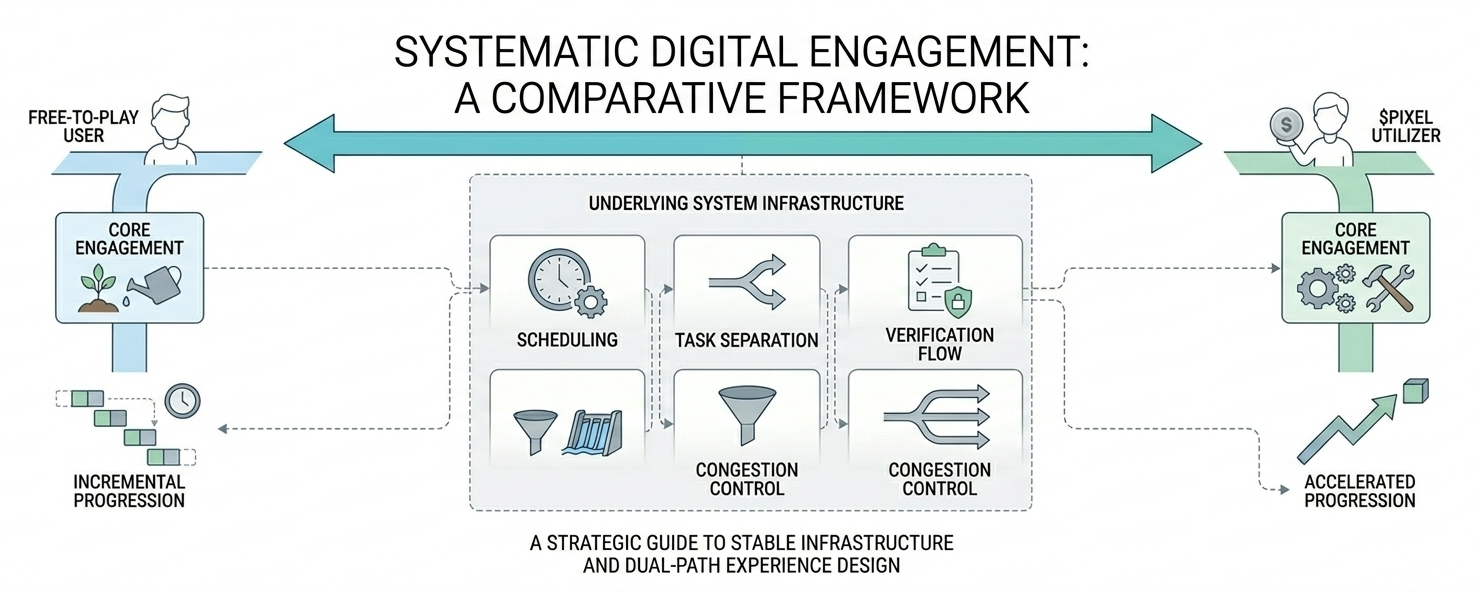
I once noticed two people using the same app at the same time. We were both doing something simple just trying to move forward with a basic action. One of us moved on instantly. The other had to wait, refresh, and quietly wonder if it even worked. Nothing failed, nothing crashed… but the experience wasn’t the same. That small difference stuck with me more than I expected.
After seeing this kind of thing happen again and again, what I noticed is that in crypto, access is usually open but experience isn’t always equal. Everyone can enter, everyone can interact, but the system still has to decide how things move when too many actions happen at once. And that’s where subtle differences start to appear.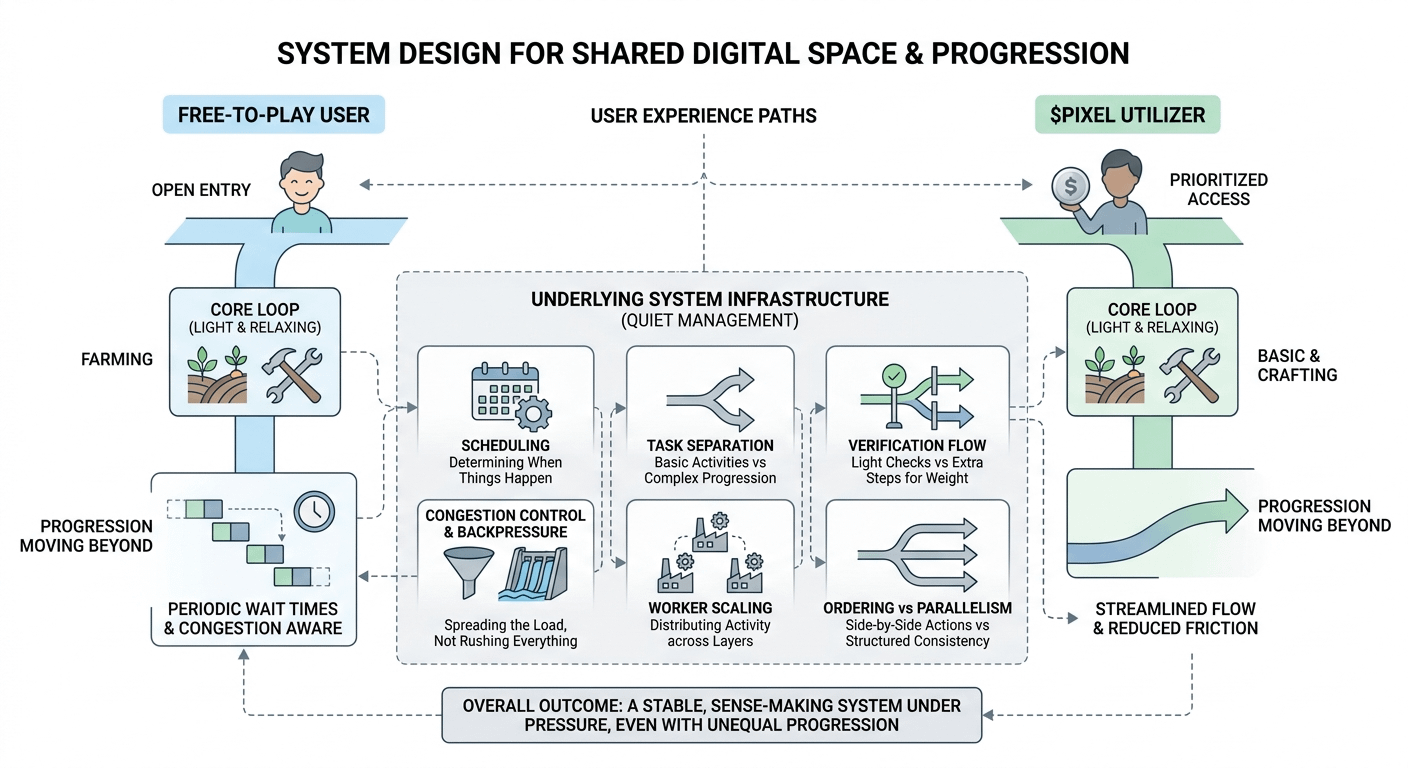
In my experience watching networks, it’s not really about speed alone. It’s about how systems handle pressure. When demand increases, they don’t just process everything equally. They organize it. Some actions move forward quickly, others slow down a bit, not randomly, but because the system is trying to stay stable.
It reminds me of a busy roadside where everyone is allowed to drive, but traffic doesn’t flow the same for everyone. Some lanes move faster, some slow down, even though the road itself is open to all. The structure is shared, but the movement isn’t identical.
When I look at how @Pixels approaches this, what caught my attention is how easy it feels at the beginning. You can just start. No heavy friction, no complicated entry. The core loop feels light, almost relaxing. But after spending more time with it, I started to feel that progression isn’t exactly the same for everyone.
What interests me more is how quietly that difference is built into the system.
From a system perspective, scheduling seems to play a role. Not everything moves at the same pace. Some actions feel immediate, while others take a bit longer not in a frustrating way, but in a way that feels… structured. Like the system is deciding when things should happen instead of trying to do everything at once.
Task separation is another thing I noticed. The basic activities feel smooth and unaffected, even when the system is busy. But once you move deeper, it feels like you’re interacting with a different layer one that carries more weight. That separation keeps the simple experience stable while still allowing more complex progression to exist.
Verification flow also feels different across actions. Some things happen almost instantly, while others seem to go through extra steps behind the scenes. In my experience, that’s usually how systems avoid getting overwhelmed by not treating every action as equally heavy.
Then there’s congestion control. What matters in practice is not avoiding pressure, but handling it without breaking the experience. Good systems don’t rush everything. They spread the load. Backpressure becomes part of that balance, slowing things just enough to keep everything else working smoothly.
Worker scaling helps, but only when the workload is actually spread out. If everything still goes through the same path, more capacity doesn’t change much. What makes a difference is how the system distributes activity across different layers.
And then there’s the balance between ordering and parallelism. Simple actions can happen side by side without issues. But deeper progression often needs more structure to stay consistent. Finding that balance is what makes a system feel steady instead of unpredictable.
What stands out to me is that Pixels doesn’t make any of this obvious. It just feels like a calm, free to play experience. But underneath, there’s a structure shaping how quickly you move beyond that starting point. And that structure doesn’t feel forced it feels like a way to manage shared space without breaking the flow.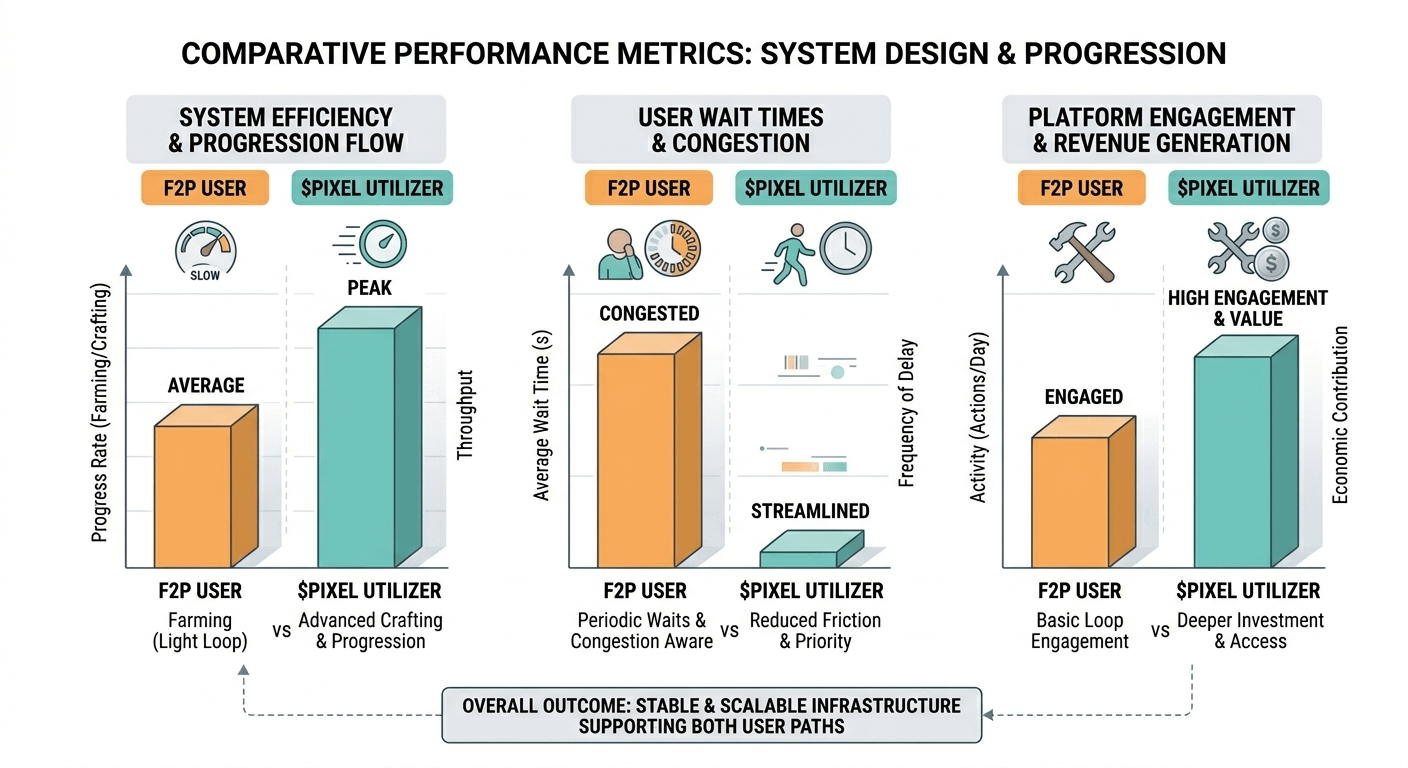
Over time, I’ve started to see “free” in a slightly different way. It doesn’t always mean equal outcomes. It means open entry. What happens after that depends on how the system handles time, attention, and priority.
A reliable system isn’t the one where everything feels instant. It’s the one where things continue to make sense, even when more people show up. Good infrastructure doesn’t try to show itself. It just quietly keeps everything moving, even when the system is under pressure.