
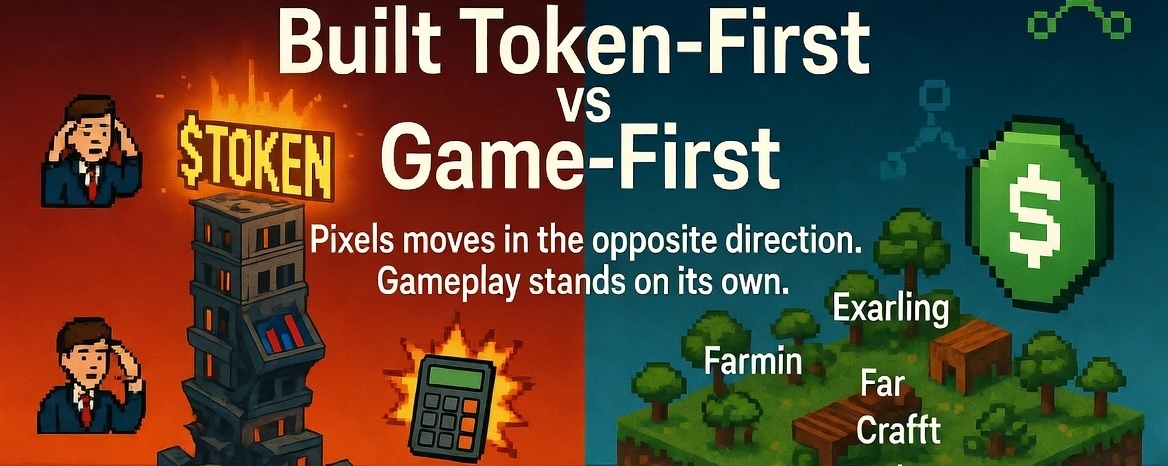
There is something unusually revealing about the way Pixels separated Coins from $PIXEL
At first glance, it can look like a simple economic adjustment. A balancing decision. A cleaner structure. But I think it says something deeper about how the team understands the tension inside blockchain games.
Because most Web3 economies try to solve problems by adding more structure on top of the same foundation. New sinks, new reward layers, new staking mechanics, new emissions logic. The assumption is usually that the model itself is fine, it just needs tuning.
But moving from BERRY toward an off-chain Coins system feels more like questioning the model itself.💪💪
That is what makes it interesting to me.
It quietly asks whether every game currency actually needs to live on-chain at all.
And that is a much bigger question than it sounds.
For years, blockchain gaming carried this almost ideological belief that putting more assets on-chain automatically made the game stronger. More ownership. More transparency. More player control. But that idea often ignored what game economies actually are.
They are unstable systems shaped by behavior.
Players optimize faster than designers predict. Inflation appears where loops repeat too cleanly. Scarcity breaks when rewards are too generous. Entire economies drift because thousands of small incentives start interacting in ways no one modeled in advance.
And when all of that is tied too directly to a tradeable token, the instability becomes harder to manage.
Because every economic adjustment stops feeling like game balancing and starts feeling like financial intervention.that can be dangerous.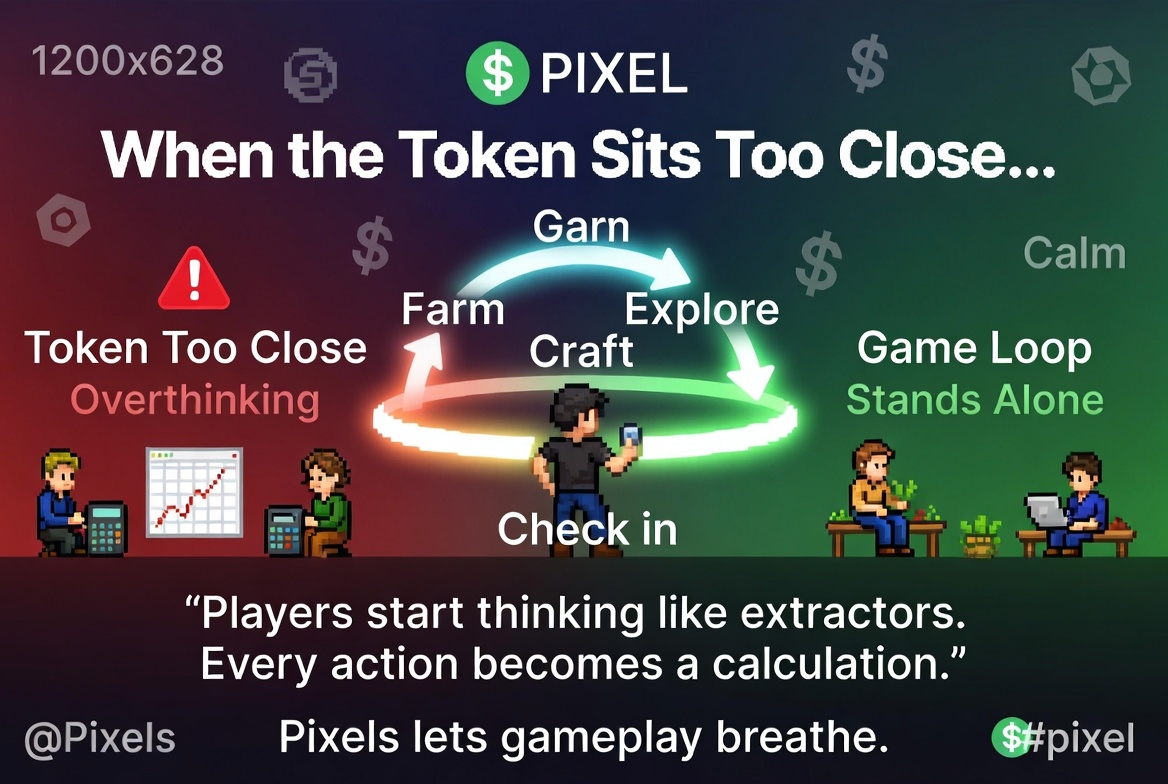
Pixels seems to have recognized some of that.🫡
By moving the softer, routine layer of value into Coins, while keeping $PIXEL as the more premium on-chain layer, it created separation between motion and memory.
And I keep coming back to that distinction.
Motion is the everyday activity of a living game. Farming. Crafting. Repeating loops. Adjusting progression. Balancing sinks. Repairing unintended exploits.
Memory is what ownership preserves. Scarcity. Assets. Identity. Things meant to persist.
Those two functions do not always belong in the same place.
In fact, forcing them together may be what broke many earlier models.🤔🤔
Because when every small routine action becomes tied to a visible, extractable market instrument, players stop interacting with the world as players. They start interacting with it as operators.
And that changes everything.
Routine becomes labor.
Progress becomes yield.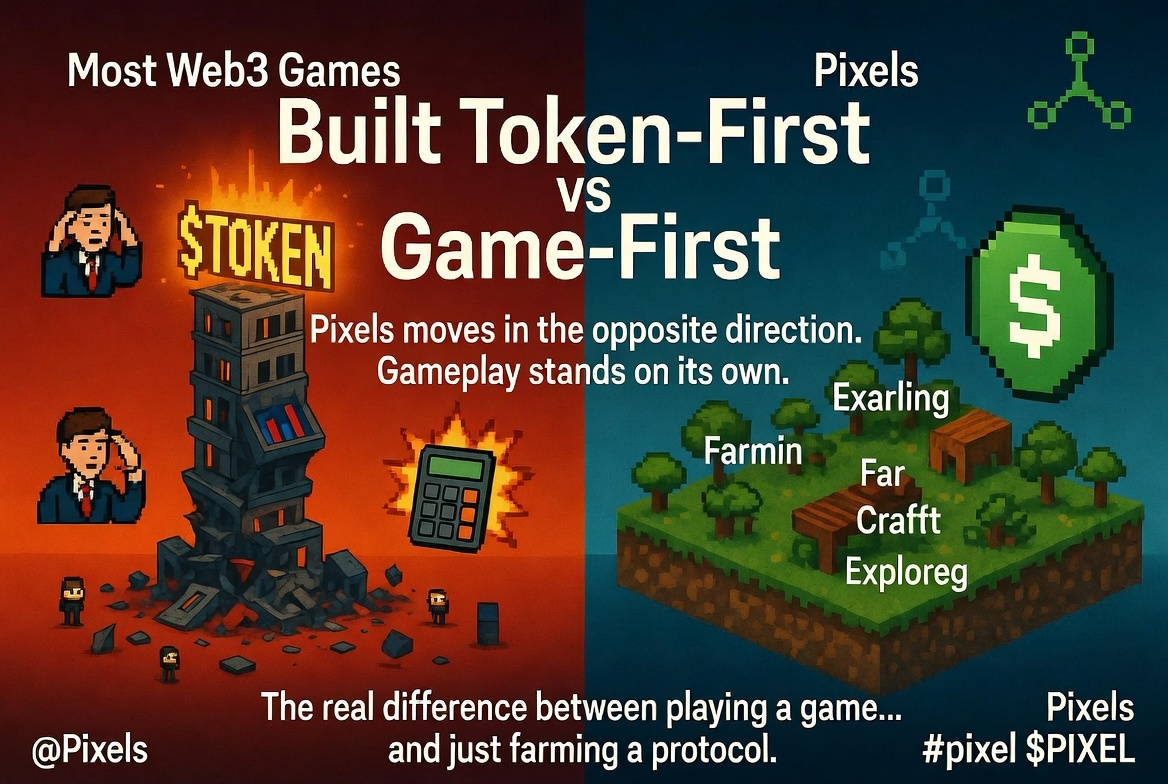
Gameplay becomes throughput.that is usually where the game starts becoming less alive.
So to me, the interesting part about Pixels is not simply that it moved one currency off-chain.
I think 🤔 it is that the move suggests a deeper principle:
Not everything valuable inside a game has to be financialized.
That sounds obvious when stated directly.But Web3 gaming spent years acting as if the opposite were true.
As if turning every system into a market would somehow make the world richer.
Sometimes it just makes the world harder to balance.
And maybe harder to enjoy.😊
Of course, this separation is not a perfect solution.
Off-chain systems bring their own trade-offs.
They require trust.Yhey centralize some control.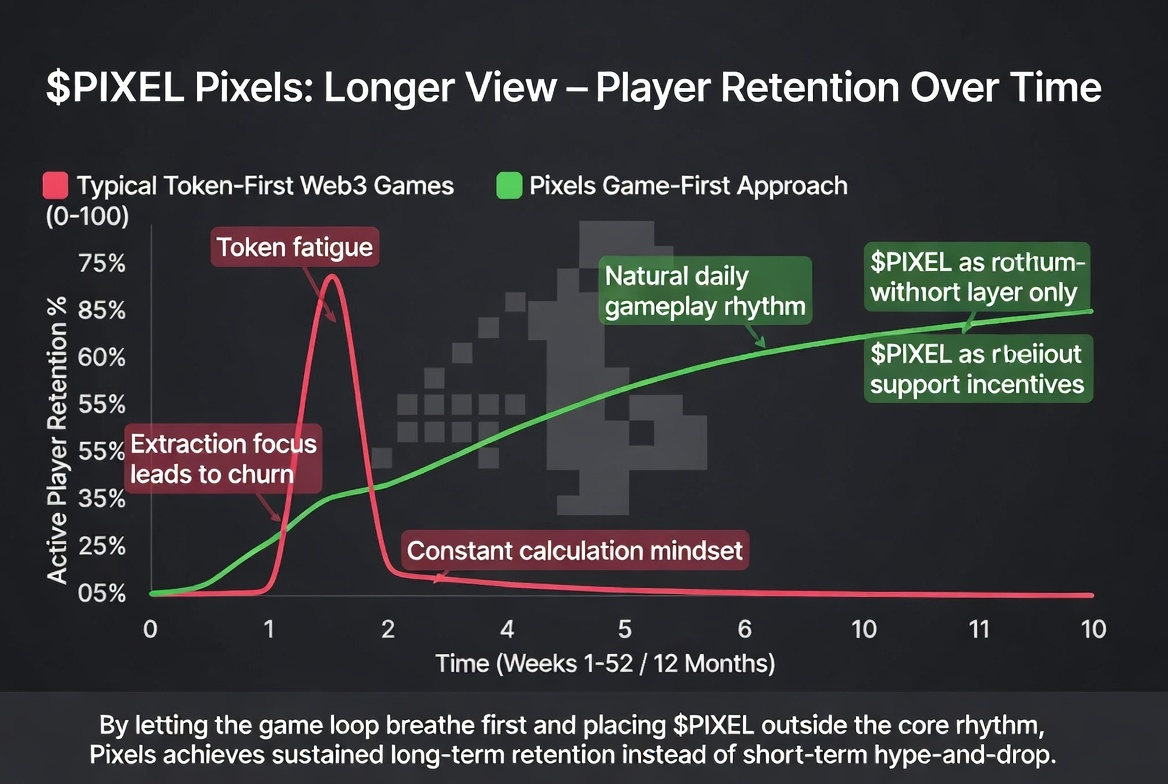
They mean designers can intervene, rebalance, and alter mechanics in ways pure on-chain systems often resist.
Some people see that as compromise.
Maybe it is.
But I think games have always been compromise.
The idea that a living game could function like a permanently settled economic protocol may have been the fantasy all along.
Games mutate.🫣
Players stress-test systems.
Economies need correction.
Worlds need room to move.
And perhaps Pixels is interesting precisely because it seems willing to admit that.
That sometimes flexibility is not a weakness in design.
It is the condition for survival.
I do not think this settles the bigger question of sustainable blockchain economies.
That question probably stays open.
But I do think Pixels forces a better version of it.