


Global capital flows are undergoing a massive realignment. As geopolitical instability rocks traditional financial markets, foreign investors are piling into Chinese onshore bonds at an unprecedented rate. Driven by the search for a new safe haven amidst the ongoing Iran War, trading volumes for Yuan-denominated debt have shattered previous records, signaling a structural shift in global asset allocation.
❍ A Historic Surge in Trading Volume
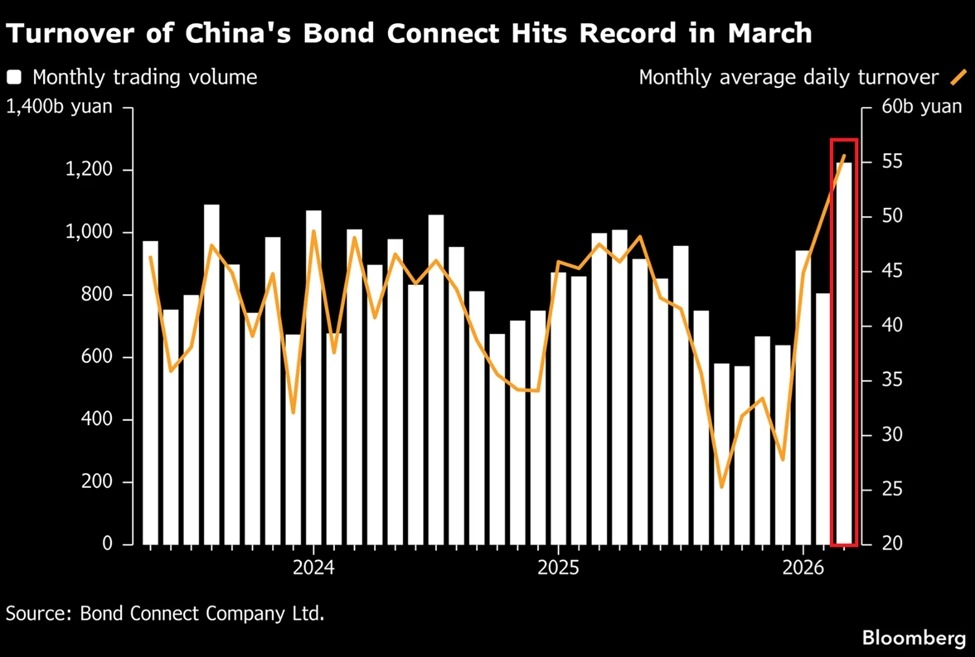
The rush into Chinese debt is reflected in staggering new metrics out of the Hong Kong trading link.
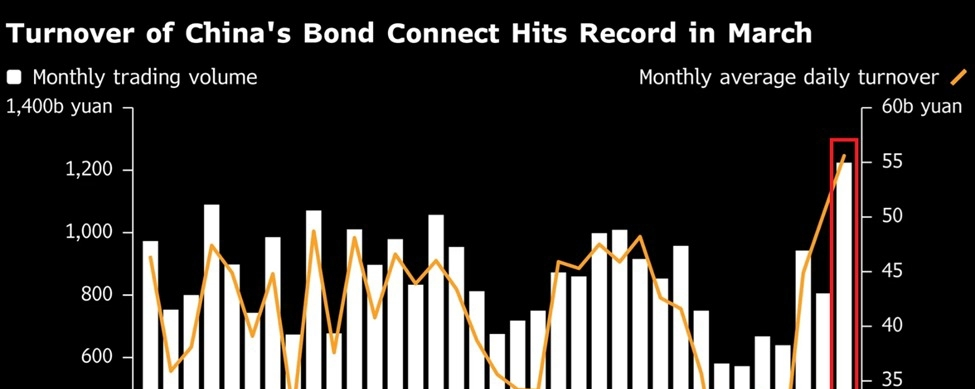
$179 Billion Record: The trading volume of Chinese onshore bonds by overseas funds jumped to an all-time high of $179 billion in March.
Daily Turnover Peaks: Average daily turnover simultaneously surged to a record $8.1 billion.
100% Growth: To highlight the velocity of this trend, trading volume has more than doubled since October 2025.
❍ Geopolitics Drive the Pivot
The primary catalyst for this massive capital rotation is the macroeconomic fallout from the Iran War.
Shunning Traditional Havens: The conflict has driven global investors to actively seek alternatives to traditional safe-haven assets, particularly US Treasuries, which face their own inflationary and deficit pressures.
The China Advantage: Chinese onshore bonds, which consist of government and state-backed Yuan-denominated debt, have significantly outperformed their global peers since the conflict began.
Insulated from Shocks: This outperformance is heavily supported by China's abundant domestic liquidity and its relatively limited exposure to the global energy shock triggered by the war.
Some Random Thoughts 💭
This data illustrates a profound fracture in the global financial system. Historically, whenever war or crisis struck, capital blindly fled into US Treasuries. Today, that automatic reflex is changing. The Iran War has exposed the vulnerabilities of Western debt, pushing international funds to treat Chinese government bonds as a legitimate, insulated safe haven. When foreign trading volume doubles in just five months during a major geopolitical crisis, it proves that the multipolar financial order is fully operational. Investors are prioritizing liquidity and energy security over traditional geopolitical alliances, cementing the Yuan's role as a formidable crisis hedge.