
I’ve been spending more time watching how @Pixels actually plays out, and one thing keeps standing out the more I observe it.
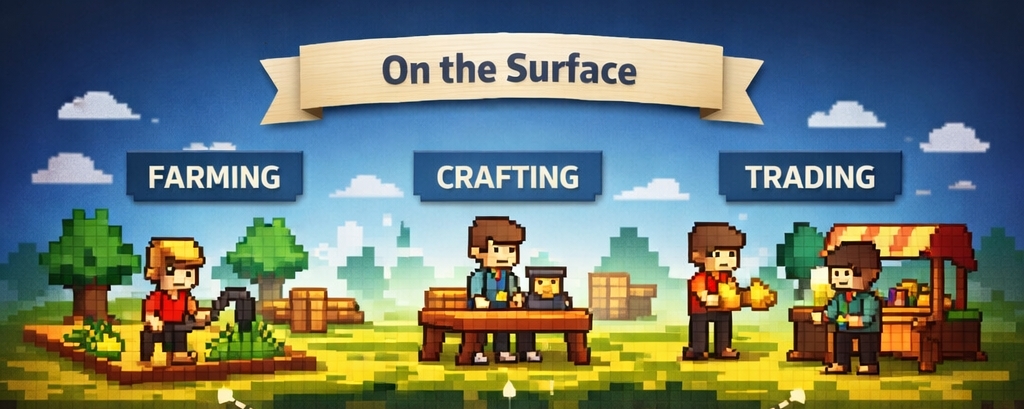
On the surface, the game looks active. Players are farming, crafting, trading, and interacting across different layers of the ecosystem. There’s always movement happening, which makes it feel like the system is healthy.
But when you look closer at how those actions connect, the picture changes slightly.
A large part of the current activity still feels driven by rewards. Players are not just engaging with systems because they naturally depend on each other, but because incentives make each step individually valuable.
That creates a specific pattern. Farming happens consistently, but it doesn’t always create pressure for crafting in a meaningful way. Crafting exists, but it doesn’t always feed directly into trading demand unless rewards are involved. Each layer works, but the dependency between them feels partially external rather than fully internal.
This is where the real difference shows up.
A strong system usually builds interaction loops where one action naturally creates demand for another. Not because of rewards alone, but because the structure forces or encourages interdependence. That’s what turns activity into a self-sustaining loop.
Right now, Pixels still feels like it’s in between those states. The activity is strong, but the internal linkage between systems is still forming.
That doesn’t make it weak—it just means the system is still evolving around how long-term behavior will settle once incentives are no longer the primary driver.
The real test will be whether these actions start to hold value for each other even when external rewards aren’t the main reason people participate.