


The idea of Bitcoin reaching $1 million per coin sounds outrageous until you stop thinking in terms of price and start thinking in terms of global capital flows, monetary systems, and trust.
This isn’t about hype cycles or short-term speculation. It’s about where value moves when confidence in traditional systems weakens.
Scarcity in a World of Expansion
Modern economies are built on expansion. Governments print, central banks adjust, and currencies gradually lose purchasing power over time. That’s not a bug it’s part of how the system functions.
Bitcoin breaks that pattern.
With a hard cap of 21 million coins, it introduces something financial markets haven’t had in a long time: absolute scarcity. Not “limited in practice,” but limited by design.
If even a small percentage of global wealth currently parked in assets like gold, bonds, and real estate shifts into Bitcoin, the price implications are enormous. A $1 million valuation doesn’t require global dominance. It only requires meaningful adoption.
Survival Is Signal
Since its creation by Satoshi Nakamoto, Bitcoin has faced constant scrutiny. Governments have tried to regulate it, critics have dismissed it, and hackers have targeted everything around it.
Yet the core network has never been compromised.
That distinction matters. Exchanges have failed. Individuals have lost funds. But the protocol itself continues to function exactly as designed.
In an industry where most technologies fade within years, Bitcoin’s persistence is not just survival it’s validation.
The Centralization Paradox
Bitcoin is built on decentralization, but ownership is not evenly distributed.
Large institutions, funds, and early adopters hold significant portions of the supply. That creates a subtle but important tension: while no one can change the rules of Bitcoin, large players can influence its market behavior.
This doesn’t invalidate Bitcoin—but it complicates the narrative.
Markets driven by concentrated capital can behave unpredictably. Price movements may reflect strategy and liquidity dynamics as much as organic demand.
Decentralized protocol, centralized influence. Both realities exist at the same time.
Markets Driven by Leverage
Today’s crypto markets are no longer purely spot-driven. Leverage plays a major role.
Derivatives, futures, and margin trading amplify volatility. Price swings are often intensified not by fundamental shifts, but by cascades of liquidations.
This creates an environment where short-term price action can feel disconnected from long-term value. It’s less about what Bitcoin is worth—and more about positioning, risk, and timing.
For long-term investors, this noise is a distraction. But it still shapes perception.
The Miner Question
Bitcoin’s security depends on miners. Right now, they’re incentivized through block rewards and transaction fees.
Over time, those block rewards decline. Eventually, fees will need to carry the system.
That raises an open question: will transaction fees alone be enough to sustain a robust and secure network?
Technologies like the Lightning Network improve scalability and reduce costs but they also reduce on-chain fee volume.
Bitcoin may need to evolve economically, even if its core rules remain unchanged.
Store of Value, Not Daily Currency
Bitcoin’s role has become clearer over time.
It’s not competing with payment apps or traditional currencies for everyday transactions. Its base layer is too slow and too costly for that purpose and that’s fine.
Instead, it’s positioning itself as a store of value.
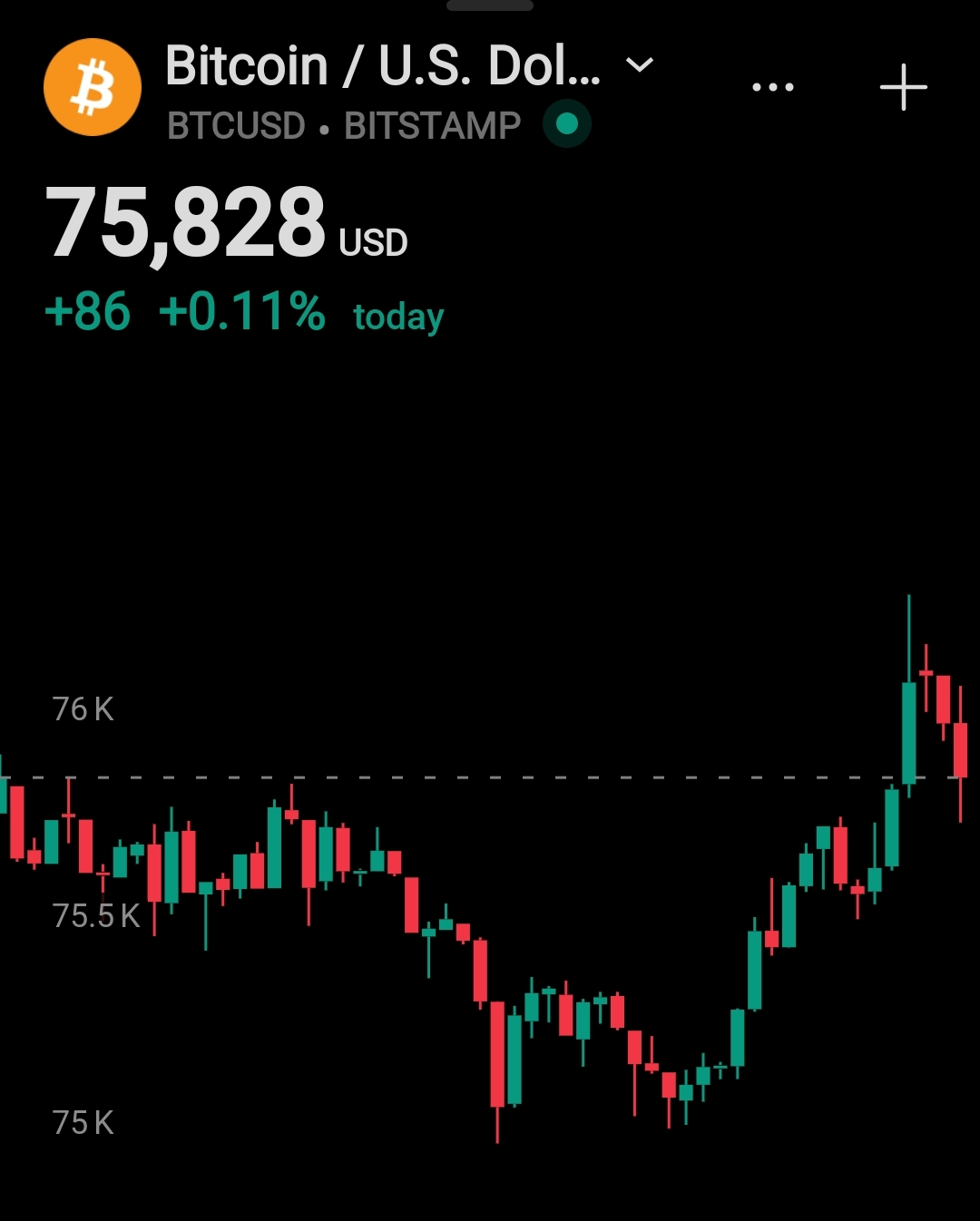
In that role, it competes directly with gold. And unlike gold, it’s portable, verifiable, and resistant to physical constraints.
If Bitcoin continues to gain acceptance as “digital gold,” its upside isn’t just speculative it’s structural.
A Multi-Asset Crypto Future
The crypto ecosystem isn’t a winner-takes-all game.
#Bitcoin excels at security and long-term value storage. Other networks focus on speed, scalability, or programmability.
Projects like Kaspa aim to optimize transaction speed and usability. Rather than replacing Bitcoin, they can complement it—serving as transactional layers while Bitcoin anchors value.
This mirrors older financial systems, where different assets served different roles.
The Real Bet
A $1 million Bitcoin isn’t a prediction—it’s a scenario.
It depends on several factors aligning:
Continued distrust in fiat systems
Increasing adoption as a store of value
Sustained network security
Manageable levels of centralization and market manipulation
If those conditions hold, the case becomes less extreme.
If they don’t, the ceiling lowers.
Final Thought
Bitcoin doesn’t need to be perfect to succeed.
It just needs to offer something the current system struggles to provide: predictable scarcity, resistance to control, and global accessibility.
Whether it reaches $1 million or not, the real shift is already happening not in price, but in how people think about money.
And once that changes, everything else tends to follow.