
i have been in DAOs that claimed to be decentralized while one team made every meaningful decision and honestly the moment i read this line in the Pixels litepaper i felt that same feeling 😂
"the allocation of these daily rewards is decided off-chain but approved on-chain"
kept re-reading it. not because it is wrong. because it is unusually honest.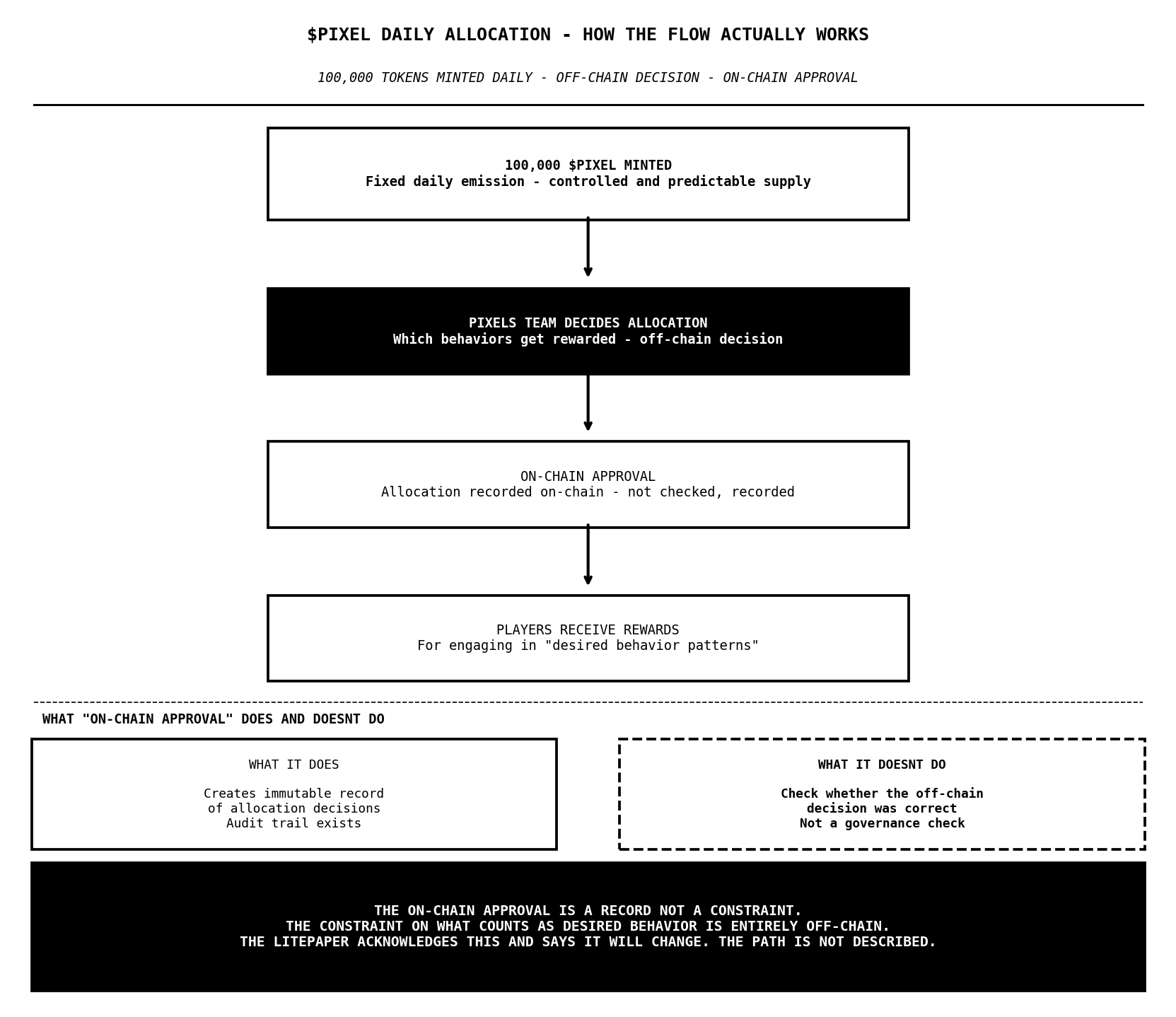
every day 100000 new pixel get minted. that is the fixed emission. controlled. predictable. the litepaper is clear about that and it is genuinely well-designed supply management.
but then all 100000 of those tokens have to go somewhere. to players who are engaging in desired behavior patterns that benefit the ecosystem. and the decision about what counts as desired behavior - that decision happens off-chain.the Pixels team makes it. the on-chain approval that follows is not a check on that decision
it is a record of it
the litepaper says this directly. it does not hide it. and then it says something i found even more interesting - this is a perfect example of decision-making that will move to be more decentralized.
And i want to sit with what that actually means.
decentralizing the definition of desired behavior is not a simple governance vote. it is one of the hardest problems in token economics.if you let token holders vote on what behaviors get rewarded you create immediate incentive misalignment.every holder votes for the behavior they are already doing.whales vote for whale behaviors.casual players vote for casual player behaviors. the reward definition becomes a reflection of whoever has the most voting power not whoever contributes most to ecosystem health
the current centralized model avoids that problem by having the team decIde. the team can change the definition based on what the ecosystem actually needs. that flexibility is real and valuable especially in an early-stage game where the right behaviors are still being discovered
actually let me push on the transition problem specifically
moving from team-decided to communIity-decided reward allocation requires a governance structure sophisticated enough to make good decisions about game economics under adversarial conditions. token-weightd voting is not that structure. it requires something more like a council of game economists, a weighted signals system,or a delegated expertise model where the people making reward decisions are accountable to both the community and ecosystem outcomes.
the litepaper describes the destination - decentralized allocation - without describiNg the path. and for a system where 100000 tokens flow daily based on whoever defines desired behavior,the path matters as much as the destination.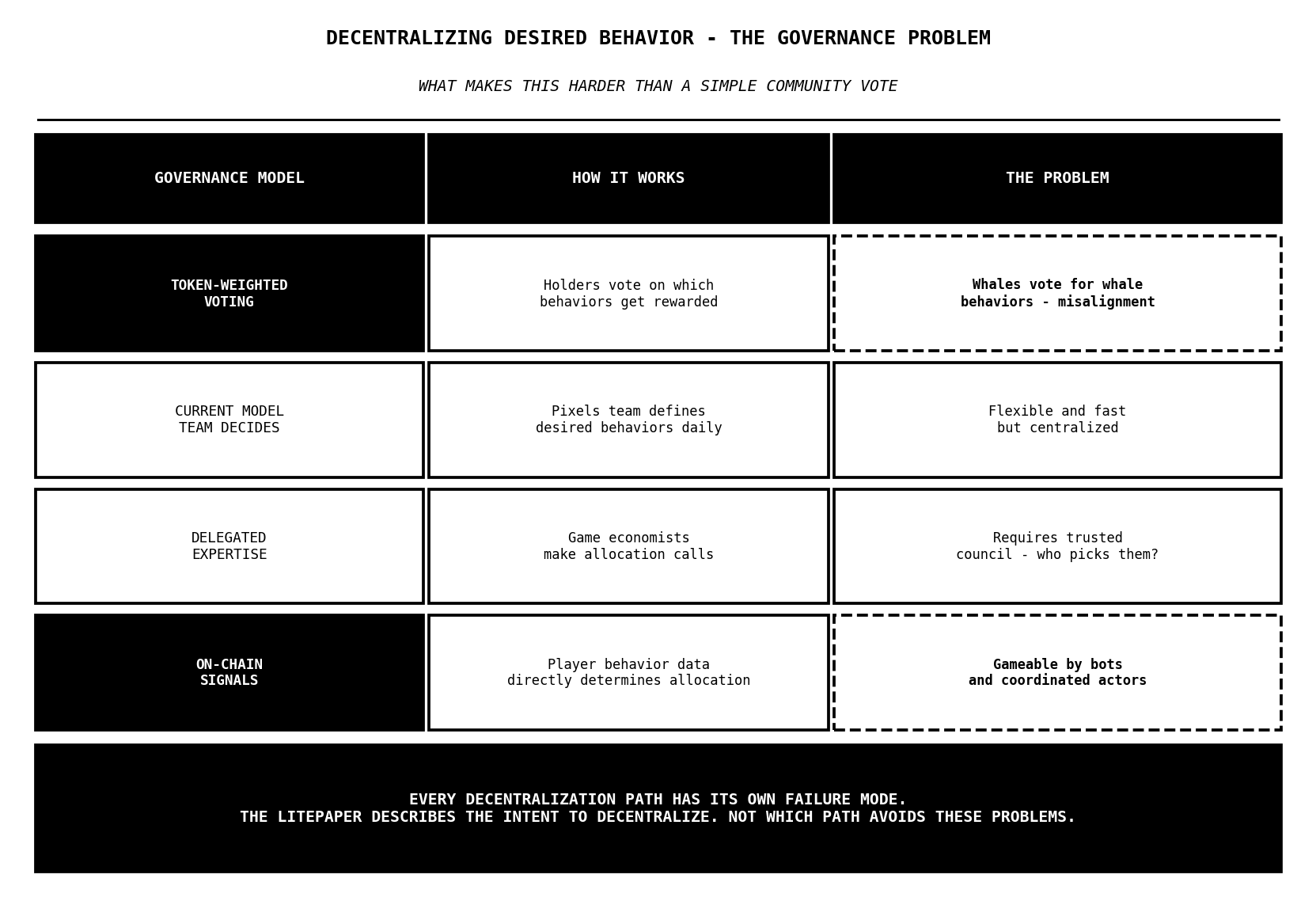
honestly dont know if the off-chain allocation model is a sensible temporary design that buys time to build proper governance or a centralization point that becomes harder to give up the longer it runs in production?? 🤔
