
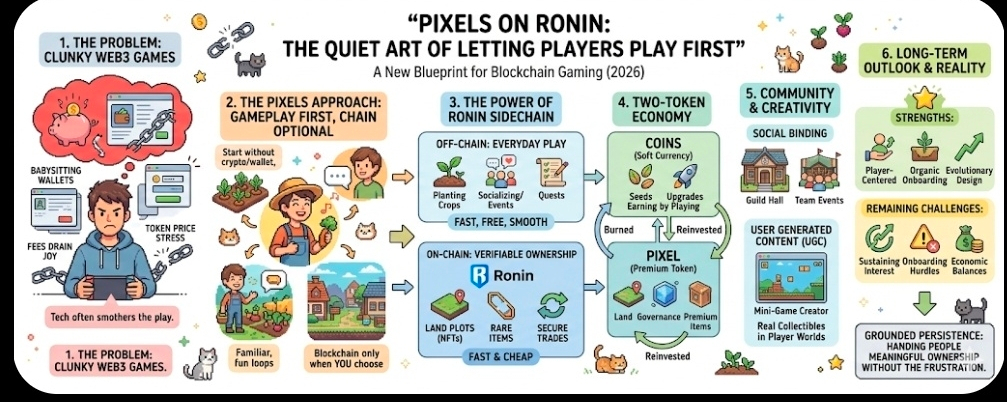

I've been watching blockchain games rise and fall for years now, and the pattern that always sticks with me is how the very things that should make them special—true ownership, real stakes, player-run economies—too often suck the joy right out of the experience. Wallets you have to babysit, tiny fees that add up, token prices that crash and leave casual players feeling burned. It ends up feeling less like play and more like a side hustle for a small crowd of crypto folks chasing numbers. What keeps drawing me back to Pixels is how it quietly refuses to play that game. Instead of forcing the tech front and center, it tucks the blockchain away until you actually want it in your hands, solving the one problem that has quietly killed more Web3 titles than anything else: making people regret logging in.
The game itself is the kind of thing you could lose an afternoon in without thinking twice. It's that cozy pixel-art open world where you plant crops, raise animals, craft tools, wander around, chat with neighbors, and join little community events. Started in 2022, it found its stride after moving to Ronin, the sidechain built for games. You don't need a wallet or any crypto knowledge to get started—just open it in your browser, pick an avatar, and start farming. The blockchain only shows up when you decide to claim a plot of land as an NFT, mint a special pet, or dip into the deeper layers. That choice feels intentional, like the team looked at all the failed onboarding attempts in the space and said, "What if we just didn't make that the first thing people see?"
Underneath, the setup is straightforward and practical. Most of the day-to-day stuff—growing crops, finishing quests, hanging out in the shared world—runs off-chain so it feels instant and smooth, the way a regular game should. The on-chain part handles the things that actually matter for ownership: land plots, rare items, trades that need to be verifiable. Ronin keeps those moves fast and cheap, so they don't break the flow. Economically, they've learned from their stumbles. They dropped the old inflationary BERRY token a while back and settled on a cleaner split: regular "Coins" you earn just by playing for everyday upgrades and seeds, and PIXEL as the premium on-chain token for land, staking rewards, guild stuff, and bigger perks. Some PIXEL gets burned or funneled back into the ecosystem when spent, which adds a gentle check on supply. It's not perfect, but it feels like the kind of evolution that comes from actually listening to players instead of chasing hype.
What lingers with me most is how this setup hints at something bigger without ever shouting about it. By making blockchain feel optional and friendly, Pixels quietly becomes an on-ramp for people who have never touched crypto before. The social side—guilds, shared towns, those team-based events they added late last year—turns solo farming into something you do with others, building little persistent communities. And the longer-term idea of letting anyone create and share their own mini-games with real collectibles attached? That reminds me of the wild creative energy you used to see in places like Roblox, except here the ownership is transparent and portable instead of locked in some company's terms of service. In a world where so much of our digital life feels controlled and temporary, that feels quietly meaningful.
It fits into the bigger story of blockchain in a way that feels earned. We saw programmable money and NFTs prove they could work, but games exposed how clunky general-purpose chains could be when you need speed and low friction. Ronin and projects like Pixels show a maturing step: build the rails for what people actually want to do, rather than making them fight the system. Even in this tougher 2026 climate, with so many other titles fading, Pixels has stuck around by keeping the focus on the play first.
Of course, it's not without its rough edges. A big surge in players could still strain things if the patterns change. Getting into the premium layers means bridging or buying PIXEL at some point, which can still feel like a small hurdle for absolute newcomers. Keeping people around long-term, through quiet periods when token prices aren't exciting, is the same challenge the whole space has wrestled with. Bots, economic imbalances, regulatory gray areas—they're still out there, and no clever design erases them completely. The team's habit of tweaking things based on real feedback gives me some hope, but real staying power will show up in the slow months, not just the viral spikes.
After following this for so long, Pixels doesn't feel like another hype train to me. It feels more like a patient, ongoing conversation between game design and the limits of the tech—someone trying, step by step, to hand people meaningful digital ownership without making them pay for it in frustration. In an industry still figuring out how to reach beyond its own echo chamber, that kind of grounded persistence might matter more than any big announcement ever could. I'll keep watching to see how the balance holds.
