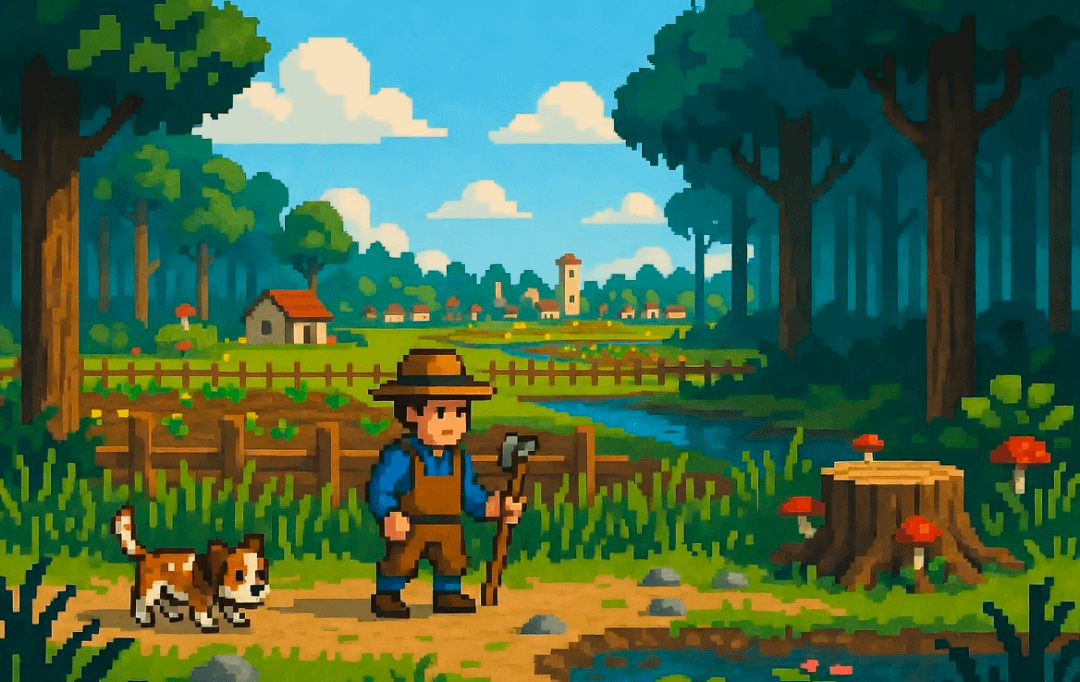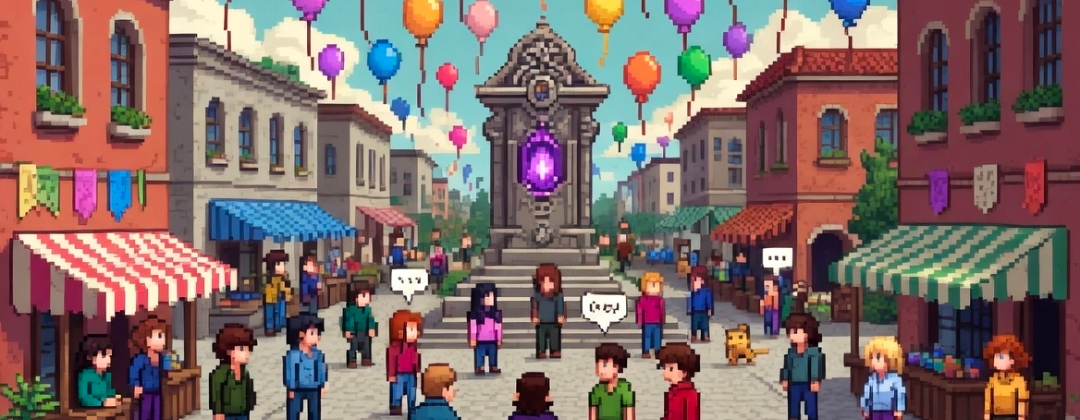
There's this weird moment that happened a few weeks ago. I was scrolling through Twitter, half-paying attention, and saw someone complaining about berry prices in Pixels. Not token prices. Berry prices. The in-game crop. They were genuinely upset about the market dynamics of virtual berries. And the replies weren't mocking them — people were actually discussing supply curves and harvest timing strategies. I closed the app and just sat there for a minute, trying to figure out what I'd just witnessed.
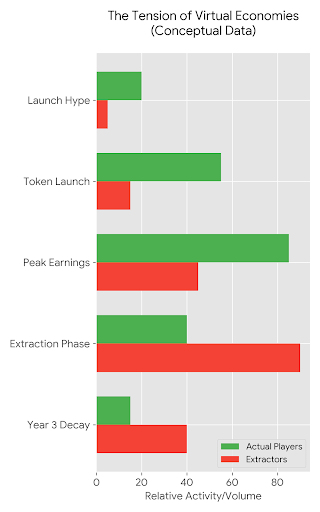
I've watched enough of these projects launch with Discord servers full of moon emojis and roadmaps that promise "sustainable economies" only to collapse within months. The pattern is familiar: initial hype, token distribution, early player earnings that feel unsustainable, then the slow decay as extractors outnumber actual players. But this felt... different? Or maybe I just wanted it to be different.
Maybe that's too harsh. But there's something uncomfortable about the whole Web3 gaming category that I can't shake. The core tension is always the same: is this a game that happens to have tokens, or a token system dressed up as a game? Most projects can't answer that honestly. They want to be both. They want the legitimacy of "gameplay" and the speculation engine of tradeable assets. Those two things pull in opposite directions constantly.
Pixels runs on Ronin, which already carries baggage. Ronin is where Axie Infinity happened — the poster child for both promise and collapse in this space. That network saw one of the largest hacks in crypto history, watched its flagship game's economy crater, and somehow survived. So when another game builds there, I don't know if that's a red flag or a sign they learned something. Probably both.
The farming mechanics seem simple enough. Plant crops, explore, build things. The kind of loop that's worked since Harvest Moon. But here's where I keep getting stuck: what does "ownership" actually mean in this context? You own your land plot as an NFT. Okay. You own the items you create. Sure. But you own them... inside a game world that could change its rules tomorrow. That could shut down. That exists entirely at the mercy of server costs and developer decisions.
I'm not saying traditional games are better on this front. When a Web2 game shuts down, all your progress vanishes too. At least here, theoretically, your assets exist independently. Theoretically. But that only matters if there's somewhere else to take them, something else to do with them. Otherwise it's just a different flavor of the same fragility.
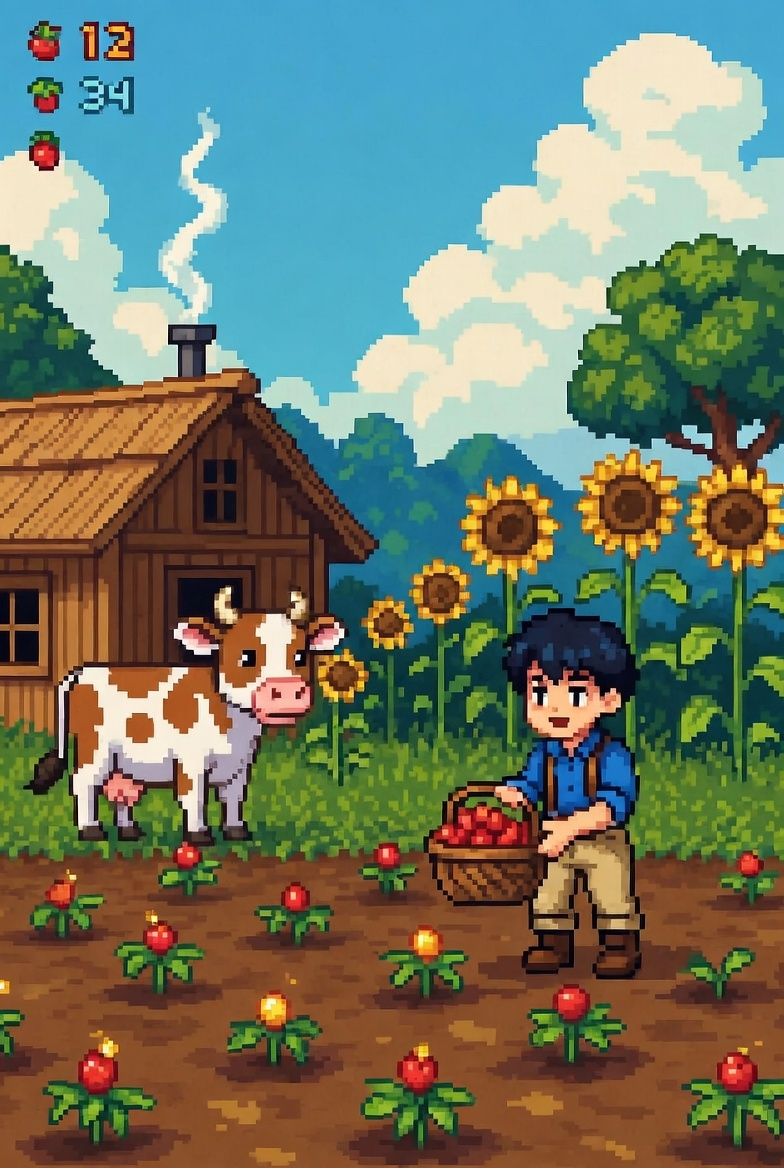
What bothers me more is the economic layer underneath. Any game where items have real trading value immediately attracts a certain type of player. The optimizers. The extractors. People who don't care about the game itself, just the arbitrage opportunities. And maybe that's fine — markets need liquidity. But it changes everything about how the space feels. You're never quite sure if the person next to you is playing or working. Or both.
I keep coming back to this question: can a game economy actually be sustainable when it's open? When anyone can enter, extract value, and leave? Traditional games control this through closed systems. They can adjust drop rates, nerf valuable items, ban bots. Web3 projects promise openness as a feature, but openness might be exactly what makes stable game economies impossible.
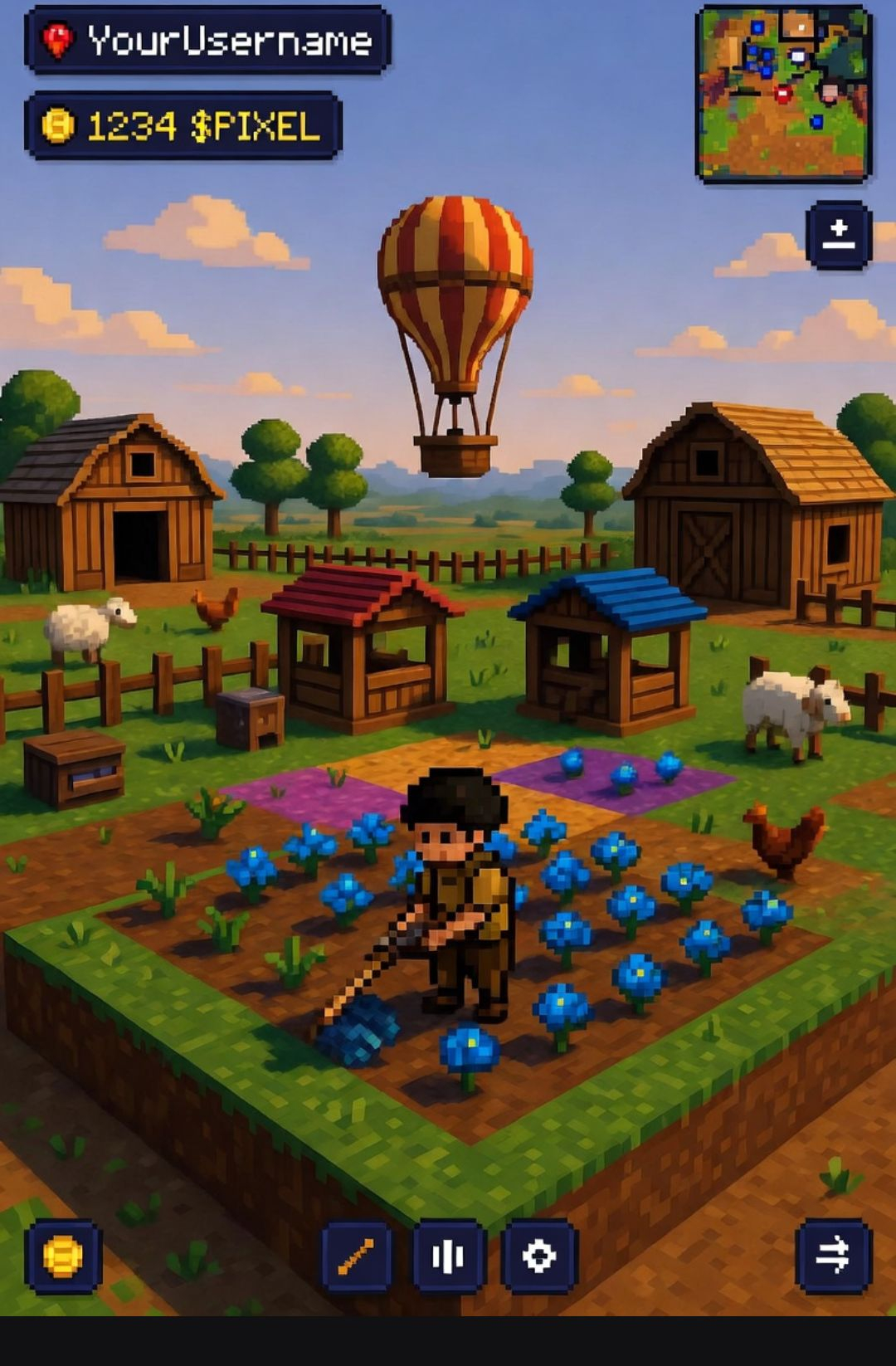
Pixels seems to be trying something with gradual unlocks and skill progression that gates certain activities. Creating friction. Making it harder to just extract. But I don't know if it's enough. I don't know if anything is enough when the underlying assumption is that everything you do should have tradeable value.
The part I find myself genuinely curious about is whether they're building for the game or for the economy. Those require different decisions. Different priorities. And I'm not sure you can optimize for both without one eventually eating the other.
Maybe the real test isn't launch, or the first few months, but year two. Year three. When the novelty is gone and only the actual structure remains. That's where things start to feel uncomfortable — when you realize most projects in this space never planned for year three.