
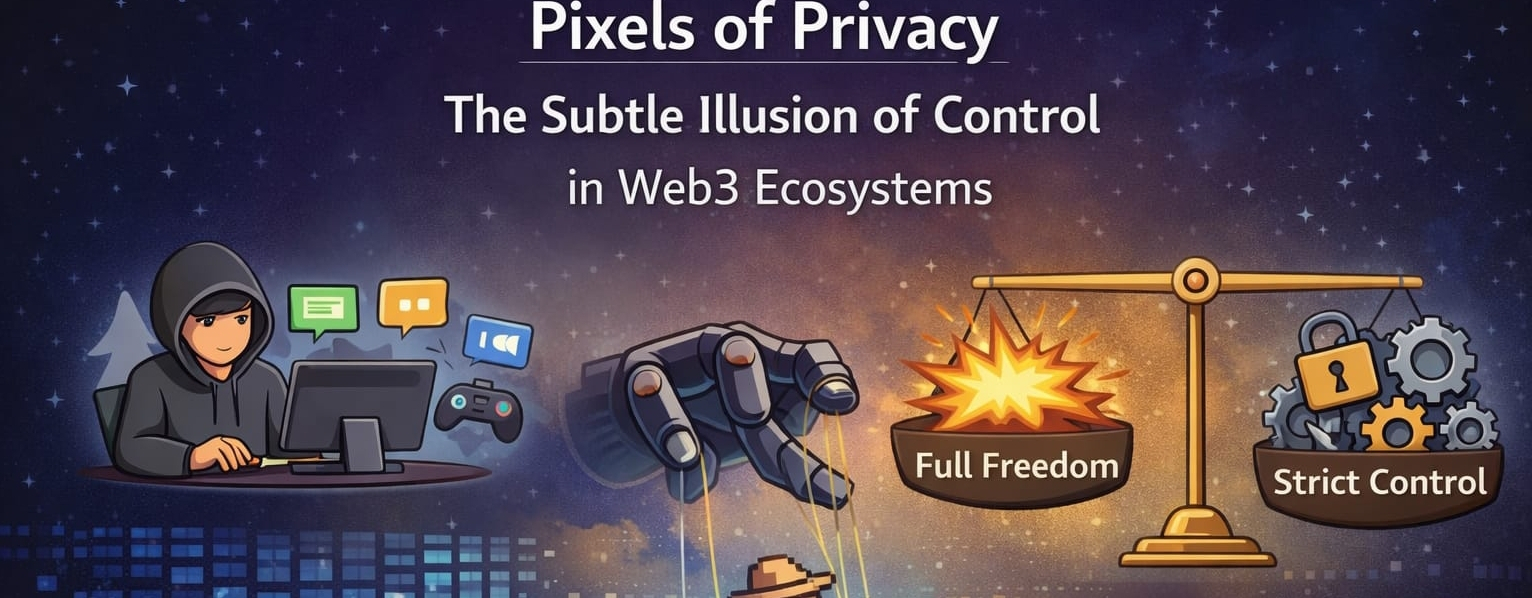

I was checking a few Web3 apps late at night. Nothing serious. Just exploring. I opened a game and connected my wallet without thinking much. Everything felt smooth. Clean interface. Easy clicks. It felt like I was in control.
But after a while I paused.
I started thinking about what control really means here. In Web3 we often say that users own everything. Their assets. Their identity. Their data. It sounds strong. It sounds different from the old systems.
But when I looked closer it did not feel that simple.
Most users do not think about what happens behind the screen. They trust the system because it looks easy. They click connect. They approve actions. They move forward. But control is not just about ownership. It is also about understanding.
And that is where things start to feel unclear.
In many cases the system still guides the user more than the user guides the system. The design shapes behavior. The rewards push decisions. The structure limits options. It feels like control. But it is often controlled in subtle ways.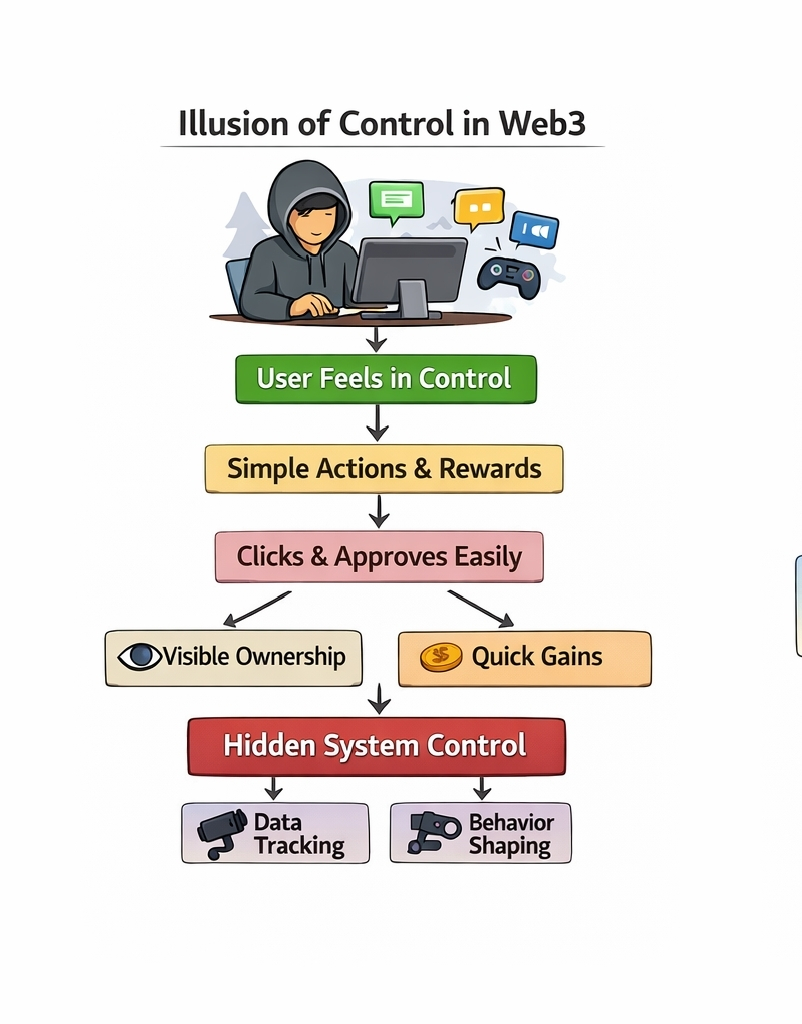
That made me look at Pixels in a different way.
At first it just felt like a game. Simple actions. Farming. trading. moving around. But over time I noticed how the system tries to shape behavior. Not in an aggressive way. More like a quiet structure in the background.
The way rewards are handled. The way activity connects to value. The way players move inside the system. It all feels guided.
And that is not necessarily a bad thing.
In fact it might be necessary.
Because full freedom without structure can break a system. If every user acts without limits the economy becomes unstable. Rewards lose meaning. Exploitation starts. And trust fades.
So systems need balance.
Pixels seems to be trying to manage that balance. It does not give full control in a raw form. Instead it builds a framework where users can act within certain boundaries. The Stacked app and reward structure feel like part of that.
It tries to guide how value flows. It tries to shape how users interact.
That creates a kind of controlled freedom.
But this also brings a question.
How much control is real and how much is designed.
If a system decides how rewards move then users are not fully in control. If behavior is guided then freedom is limited. But if there is no guidance then the system may not survive.
So there is a trade off.
This is not just about Pixels. It is about Web3 as a whole. Many projects promise full control. But in reality they build systems that need structure to function.
The illusion is not intentional. It is part of the design challenge.
Right now the market is still finding its balance. Some projects push full freedom and collapse under pressure. Others build strong control but feel restrictive. Activity moves in cycles. Growth comes and goes. Nothing feels fully stable yet.
Pixels sits somewhere in between.
It tries to give users a sense of ownership. But also keeps the system stable through design. That makes it interesting to watch. Not because it is perfect. But because it shows how complex this space really is.
I do not think full control will ever exist in a pure form. Not in systems that need to survive long term. There will always be rules. Always some level of guidance.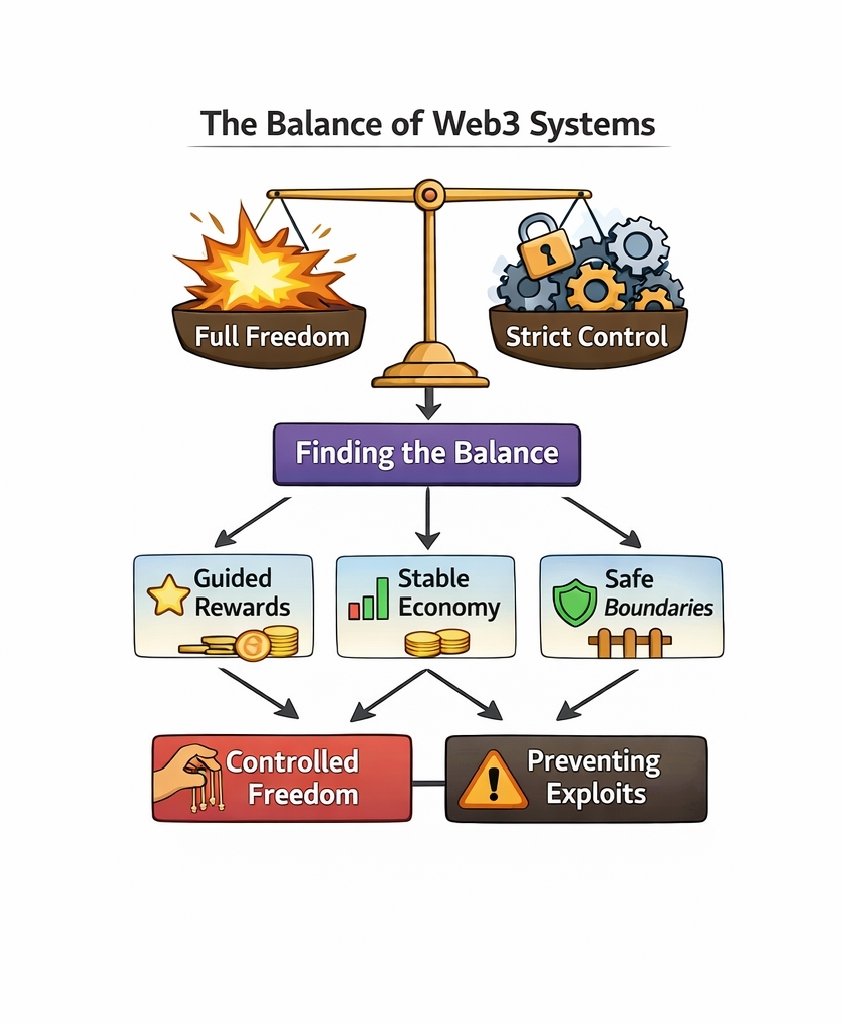
What matters is how transparent that system is. And how fair it feels to the people using it.
For now I just observe.
I do not assume that control means complete freedom. I see it more as a shared space between user and system. Where both shape the outcome over time.
Pixels is part of that experiment.
It might find the right balance. Or it might struggle like others.
But it does make me think more carefully about what control really means in Web3.
And that alone makes it worth watching.
I am still learning.
Still observing.
Still cautious.
