
The line that stayed with me from Pixels wasn’t about rewards or growth. It was “battle tested.”
At first that sounds like pure strength. And it is, in a way. But the more I sit with it, the more I feel like there’s something more complicated underneath.
Because “battle tested” doesn’t just mean a system survived pressure. It means it learned from a specific kind of pressure. It learned what to distrust, what to ignore, what not to reward too quickly. It built instincts around real damage.
And that’s exactly where it gets interesting to me.
If Stacked expands beyond Pixels, it’s not just exporting a reward engine. It’s exporting judgment. And judgment is shaped by context more than people like to admit.
Inside Pixels, those lessons probably make the system sharper. Less naive. Better at spotting farming, fake engagement, or behaviors that look valuable but aren’t. That kind of memory is hard-earned, and in GameFi, it’s usually the difference between a system that survives and one that gets drained.
So I understand why “battle tested” sounds reassuring.
But scars don’t travel cleanly.
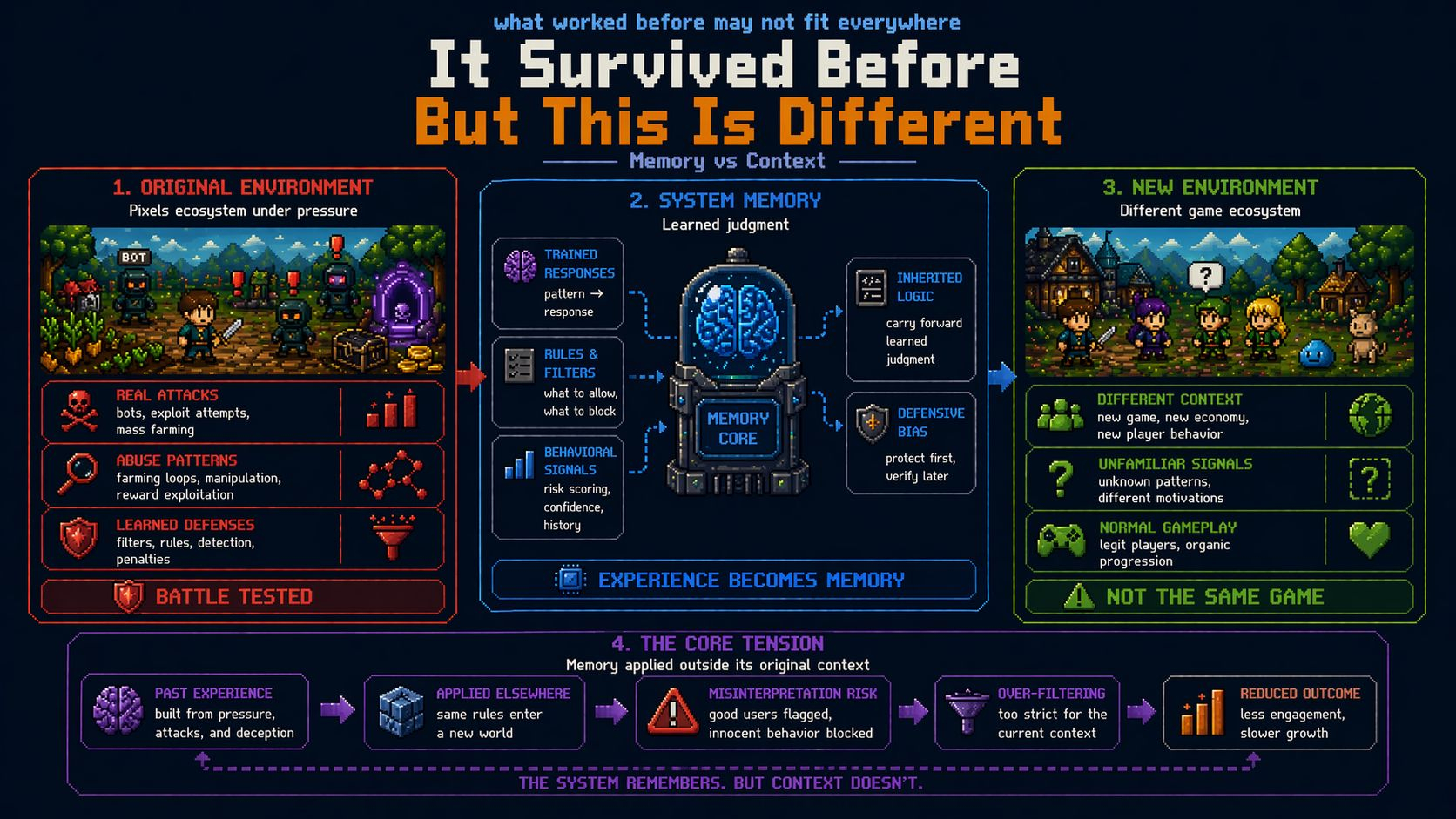
What looked like abuse in one economy might be normal behavior in another. A pattern that needed filtering in Pixels could be part of a healthy loop somewhere else. And if those same defensive rules get applied too early in a new context, they can distort things instead of protecting them.
That’s the tension I keep thinking about.
It’s not just generic bias. It’s something more specific. Inherited suspicion. A system carrying old lessons into a new environment and interpreting fresh behavior through them before that behavior has had a chance to prove itself.
And I don’t think that’s an easy problem to solve.
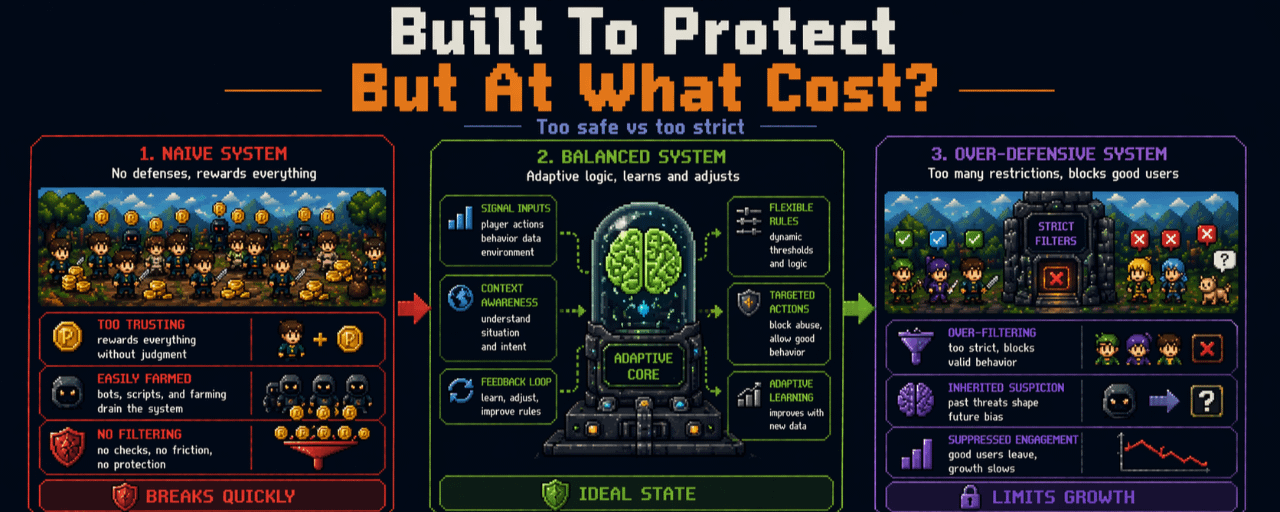
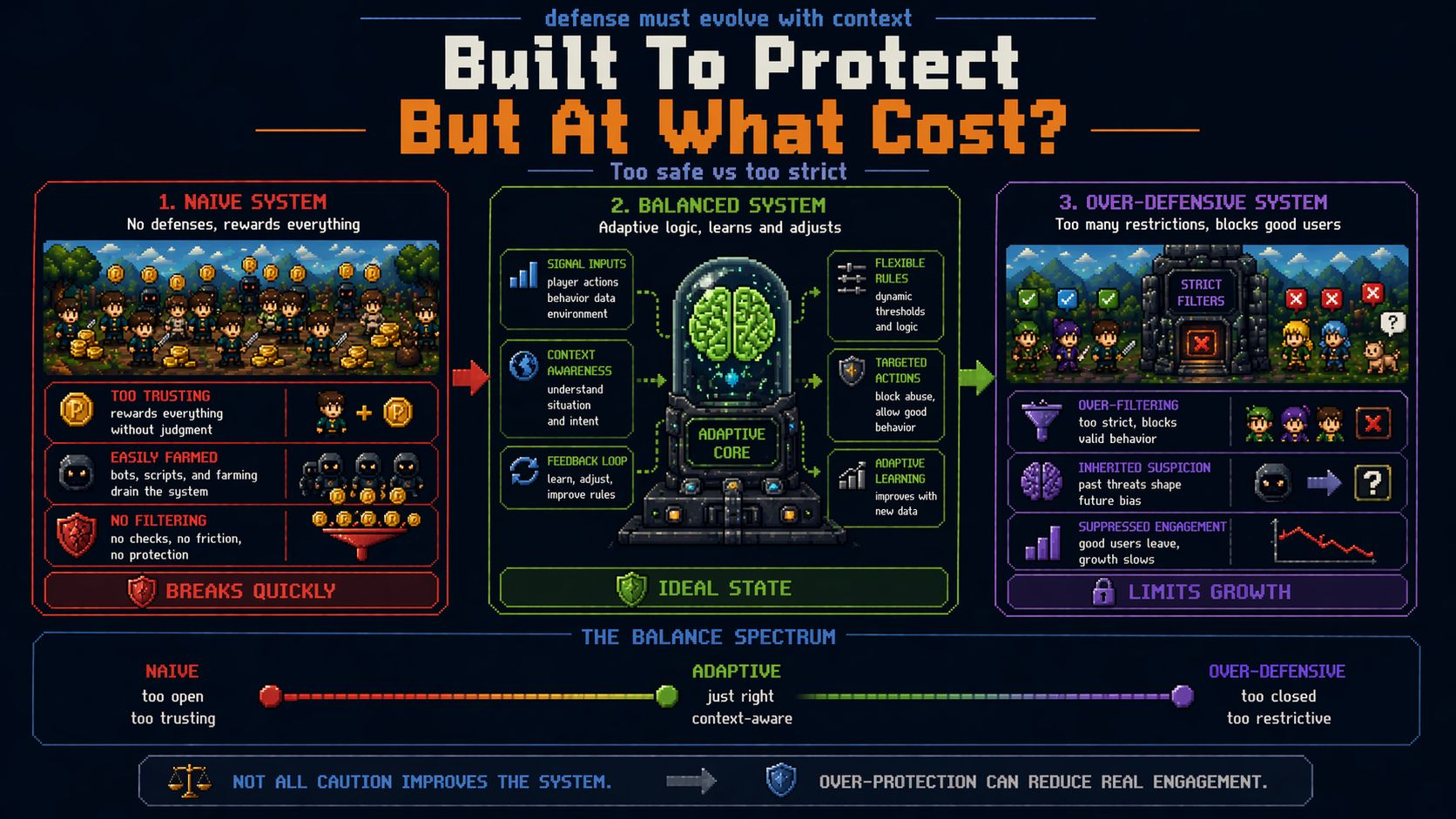
Because on one side, you don’t want a naive system. We’ve already seen what happens when reward engines trust too much. They overpay, they get farmed, and everything looks fine until it isn’t. Pixels feels more credible precisely because it has already gone through that phase.
But on the other side, maturity isn’t just about being defensive.
It’s about knowing which lessons should carry forward, and which ones belong to the environment they came from. That’s harder than building the system itself. It requires a kind of flexibility that doesn’t always come naturally to something designed to enforce rules.
So the more I think about Stacked, the less I see it as just infrastructure.
It feels more like a transfer of memory.
And memory is powerful, right up to the point where it starts acting like universal truth.
That’s why I think the real question isn’t whether Pixels has learned the right lessons. It probably has. The question is whether those lessons can adapt when they leave home. Whether the system can tell the difference between patterns that deserve skepticism and patterns that just look unfamiliar.
Because some scars make a system sharper.
And some scars just make it cautious for longer than necessary.
I’m still trying to figure out which direction this one leans.