
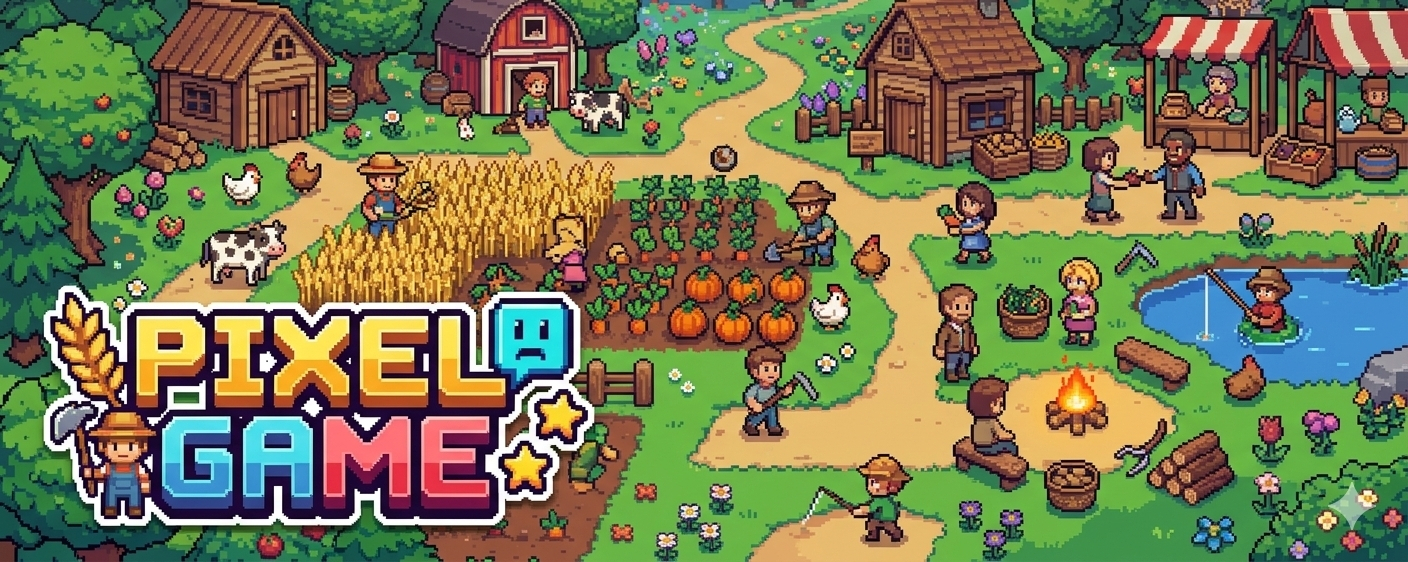

I Will Be Honest...
PIXEL GAME has been on my mind lately, Not because it is another farming game on the Blockchain, but because it touches a question I think the crypto industry still has Not Answered properly.
What are we really rewarding people for?
Yeah... For years, play-to-earn sounded like one of the Biggest promises in crypto. The idea was simple and powerful. People spend Time in games anyway, so why should that time only create value for Companies? Why should players not own part of the World they Help build?
But somewhere along the way, many projects forgot Something important. A game cannot survive if the main reason people play is money. The moment rewards become the only reason to log in, the game starts Feeling less like a world and more like a job. When the rewards slow Down, people leave. When token prices fall, communities Disappear.
I think that is why so many early play-to-earn systems felt broken. They created short-Term excitement, but not long-term loyalty. Players were farming tokens, not experiences. And once that cycle became Obvious, many people outside crypto started to see blockchain Gaming as something shallow.
That is why PIXEL GAME feels different to me.
At first glance, It still looks familiar. It is colorful, social, Easy to understand, and built around farming and progression. On the surface, it does not seem radically different from many casual Online Games people have played before.
But the real idea behind it is much deeper.
PIXEL GAME Seems to understand that rewards only work when they are connected to genuine behavior. Not every action inside a game creates real value. Some Players bring communities together. Some create activity that keeps worlds alive. Some invite friends, trade items, or Help new users stay Engaged. Others simply chase rewards in the fastest Way possible and Disappear when Conditions change.
That difference matters.
Most play-to-Earn systems have treated every player action the same way. They reward Repetition instead of meaningful contribution. Over time, that creates inflation, Weak communities, and unsustainable Economies.
PIXEL GAME Appears to be taking another route by trying to measure which actions Actually help the ecosystem grow. Instead of throwing rewards at everyone Equally, it is trying to direct incentives toward players who bring long-term Value. In simple terms, the game is not just asking, “How much time did you spend?” It is asking, “Did your actions make The game Healthier?”
I think this is One of the most important ideas in Web3 Gaming right now.
The project’s Connection with the Ronin Network also matters here. Ronin has already shown that blockchain games need more than Tokens to survive. They need a strong network, lower transaction Costs, smoother onboarding, and communities that can stay active for Years, Not weeks.
When people Hear words like “machine learning” or “data-driven rewards,” it can sound cold or overly technical. But the basic idea is Actually very human. In everyday life, we already know that not all effort Creates the same value. A teacher who inspires students, a friend who brings People together, or a community member who helps others Stay engaged Often matters more than someone who only shows up for Personal Gain.
PIXEL GAME Seems to be Applying that same logic to gaming economies.
What makes this especially interesting is that it could Go beyond gaming. If projects can truly understand which user behaviors create long-term value, then crypto systems may become more sustainable in General. We could eventually see reward systems that value trust, contribution, and retention more than simple Activity numbers.
That would Be a major shift.
Right now, Many crypto projects still reward the loudest Users, the fastest traders, or the People who know how to game the system. But in the long run, ecosystems survive because of the quiet users who Stay, build, help, and Contribute over time.
Of course, there Are still reasons to be cautious.
The hardest Part of a system like this is deciding what “valuable behavior” really means. If a game rewards only measurable Actions, players may simply find new ways to manipulate those signals. We have already seen this Happen in social media, where people chase likes and engagement Instead of authenticity.
The same risk Exists here.
A reward Model can become smarter, but players can also become smarter at exploiting it. That Means PIXEL GAME will need to constantly adapt its systems and remain careful about how it Defines value Inside its ecosystem.
I also wonder Whether players will accept a future where rewards are more selective. People naturally like systems that Feel simple and equal. If some users receive better incentives Because the system Believes they are “more valuable,” that could create tension unless it is handled Transparently.
Still, I think the Direction is worth paying attention to.
For a long time, The crypto gaming space has been stuck between two extremes. On one side, there are games that are fun but have weak blockchain Integration. On the other side, there are games built around rewards that Stop being fun. PIXEL GAME is interesting because it seems to be trying to Bridge that gap rather than choosing one side.
Maybe that is the real future of play-to-earn. Not games where everyone earns all the time, But games where rewards quietly support real communities, better experiences, And healthier systems.
What Happens if games stop rewarding pure grinding And start rewarding meaningful contribution Instead?
Can blockchain gaming Survive if fun is not the first Priority?
And if PIXEL GAME succeeds, could this idea spread beyond gaming into the wider Crypto economy?
My view is simple. The next generation of Web3 projects will not win because they promise bigger rewards. They will win because they understand people better.