I didn’t pay much attention to it in the beginning.
Pixels felt light. Almost disposable in a good way. I could jump in, plant a few crops, collect something, and leave without thinking twice. It didn’t demand focus. It didn’t try to impress me. Just a simple loop that fits into spare moments.
Do something. Get something. Come back later.
That was the whole story, or at least that’s what I thought.
But after a few sessions, something didn’t sit right. Not enough to call it a problem. Just a small inconsistency I couldn’t explain.
Some days everything clicked. Progress felt smooth, rewards felt fair, and the loop made sense. Other times, it felt slightly off. Slower. Less responsive. Even when I was doing nearly the same things.
At first, I brushed it off. Timing, maybe. Or just my own expectations shifting.
But it kept happening.
So I stopped focusing on what I was doing and started watching how the system reacted.
That’s when it changed for me.
It didn’t feel flat anymore. It felt responsive, but not in a direct way. More like it was reacting to how I moved through it over time.
Not action by action.
Pattern by pattern.
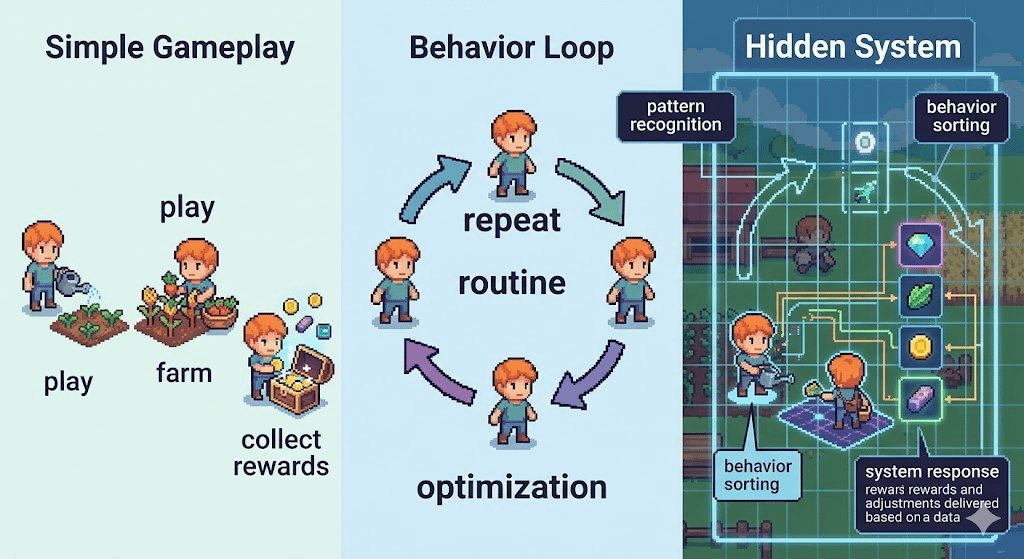
And that made me reconsider what Pixels actually is.
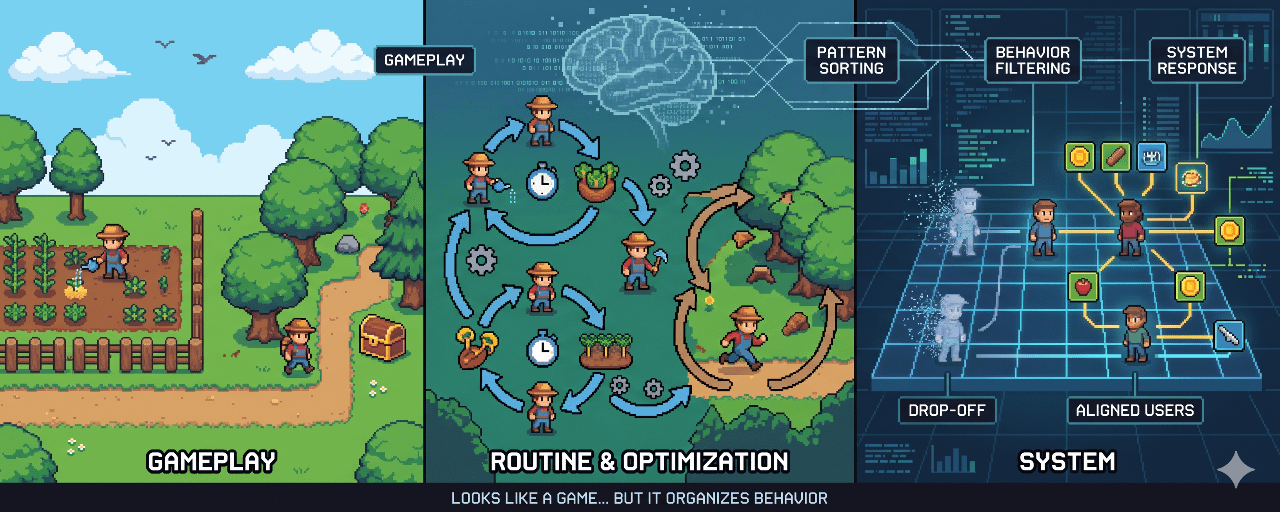
On the surface, nothing changes. It’s still farming, exploring, repeating small actions. But underneath, it starts to feel like a system that prefers certain behaviors over others.
Not by forcing anything.
Just by making some paths feel smoother.
When I fall into a certain rhythm, things line up. Progress feels consistent. The loop flows. But when I step outside that rhythm, even slightly, something shifts. It’s not broken, just less aligned.
That difference is subtle, but hard to ignore once you notice it.
It made me think that outcomes here aren’t entirely random.
They’re influenced.
And that’s where the token starts to feel different.
At first, $PIXEL is just a reward. You earn it, hold it, maybe use it or sell it. Standard flow. Nothing unusual.
But the more I paid attention, the more it felt like the token wasn’t just something I received. It was part of how the system responds.
It links what I do to what I get, but not just in quantity. In alignment.
It’s less about how much I act, and more about how well my actions fit into the system’s preferred patterns.
That’s a small shift, but it changes the role completely.
It stops being just a reward and starts acting more like a signal.
A quiet indicator that tells me, “this works here.”
And when I think about that, Pixels starts to remind me of something outside of games.
Platforms where behavior gets shaped over time. Where you’re not told what to do, but you gradually learn what works. Feeds, marketplaces, recommendation systems. You adapt without realizing it.
Some actions gain momentum. Others disappear.
Pixels feels similar, just softer. Less direct, more embedded into the experience itself.
And I can see it in my own behavior.
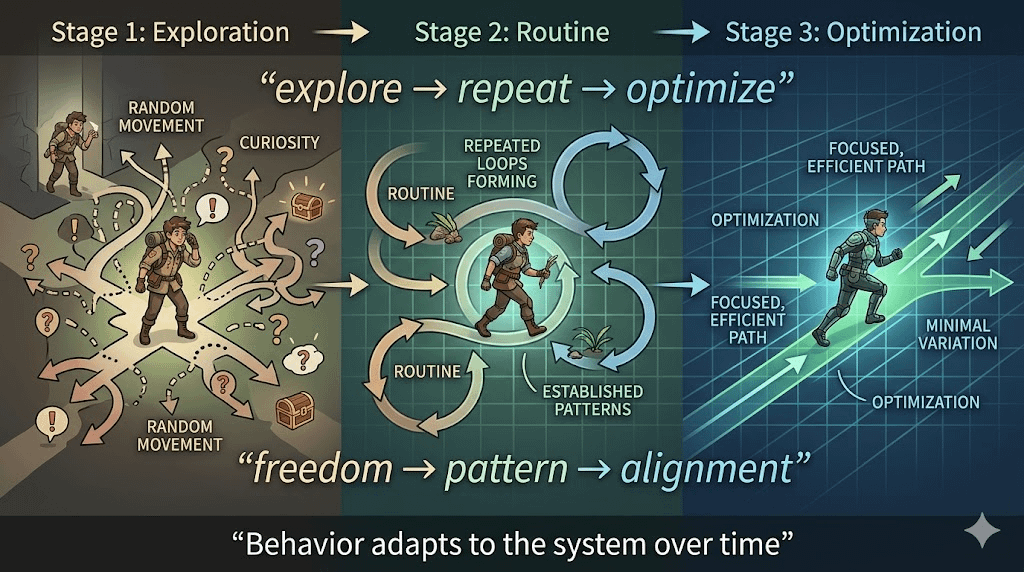
In the beginning, I moved freely. Tried different things. Didn’t care about efficiency. It was open.
But that didn’t last.
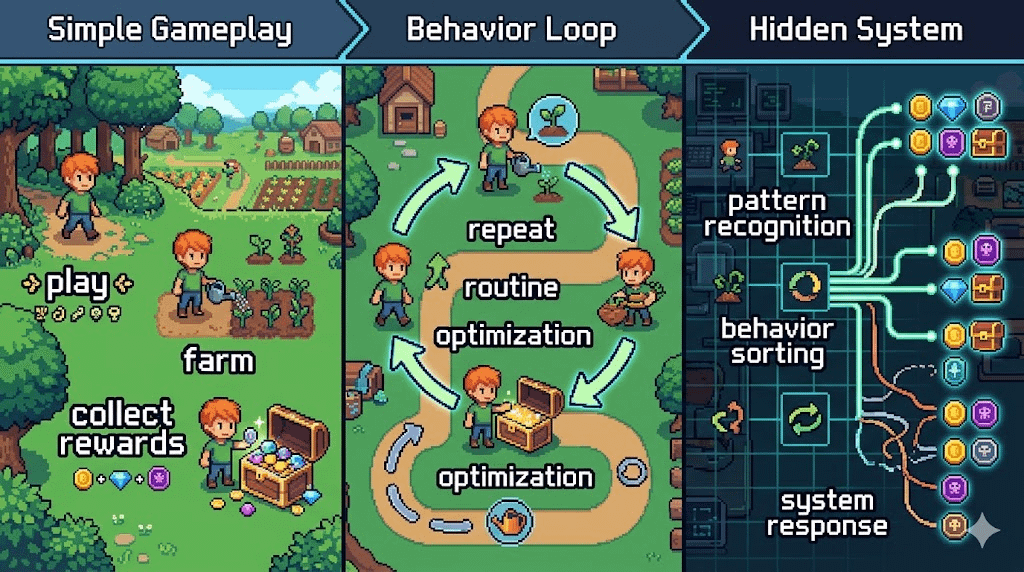
I started repeating what worked. Not consciously at first, just naturally. Then more intentionally. I refined small things. Adjusted timing. Focused on what felt smoother.
Without realizing it, I shifted.
Exploration became routine.
Routine became optimization.
And once I reached that point, it was hard to go back. Not because I couldn’t, but because it no longer made sense within the system.
That’s when it became clear to me.
Pixels isn’t just hosting activity.
It’s organizing it.
Quietly, in the background, without ever explaining itself.
And that changes how I think about everything inside it.
It’s not really about time anymore.
It’s about patterns.
Not just activity.
But the kind of activity that repeats, stabilizes, and fits.
Over time, it starts to feel like the system builds a kind of structure around how I behave. Not personal, not visible, but structural. My actions fall into patterns, and those patterns seem to influence how the system responds back.
That’s a very different dynamic. And it comes with a trade-off.
Because as I get better at aligning with what works, I also narrow my range. I experiment less. I stick to what feels efficient. The system becomes smoother, but also more predictable.
Not restrictive, exactly. Just guided.
And that guidance is enough to shape behavior over time.
What makes it harder to fully understand is the lack of clarity.
I can feel the system reacting differently. I can see patterns forming. But I don’t really know how those patterns are being recognized or prioritized.
There’s no clear rulebook.
Just outcomes.
And that creates a quiet gap between experience and understanding.
I’m inside the system, adapting to it, adjusting my behavior… but I don’t fully see how it sees me.
Only how it responds.
When I think about the token in that context, it becomes even more interesting.
Its value doesn’t feel tied only to market demand or growth. It feels connected to how well this internal system holds together. How effectively it guides behavior. How stable these patterns remain over time.
That’s not something you can track easily.
It doesn’t show up cleanly on charts.
It lives inside the way people play.
Which makes it harder to measure, but probably more important than it looks.
Still, I’m not completely sure what I’m seeing.
Maybe this is all intentional design.
Or maybe it’s just what naturally happens when enough people interact with the same system long enough.
That uncertainty doesn’t go away.
If it is intentional, then Pixels is doing more than rewarding players. It’s shaping participation in a very controlled way.
If it’s not, then it’s still revealing how these systems tend to evolve on their own.
Either way, the result feels similar.
The system produces patterns.
And over time, those patterns start to matter more than the individual actions behind them.
So I keep coming back to a simple thought that doesn’t fully resolve.
Maybe what Pixels is really producing isn’t rewards.
It’s behavior.