
I started keeping a simple log for my XAU trades a while back. Nothing fancy. Just one line after each trade: what role did Binance AI Pro play here?
Went back after a couple of months and read through it.
The pattern was… not great.
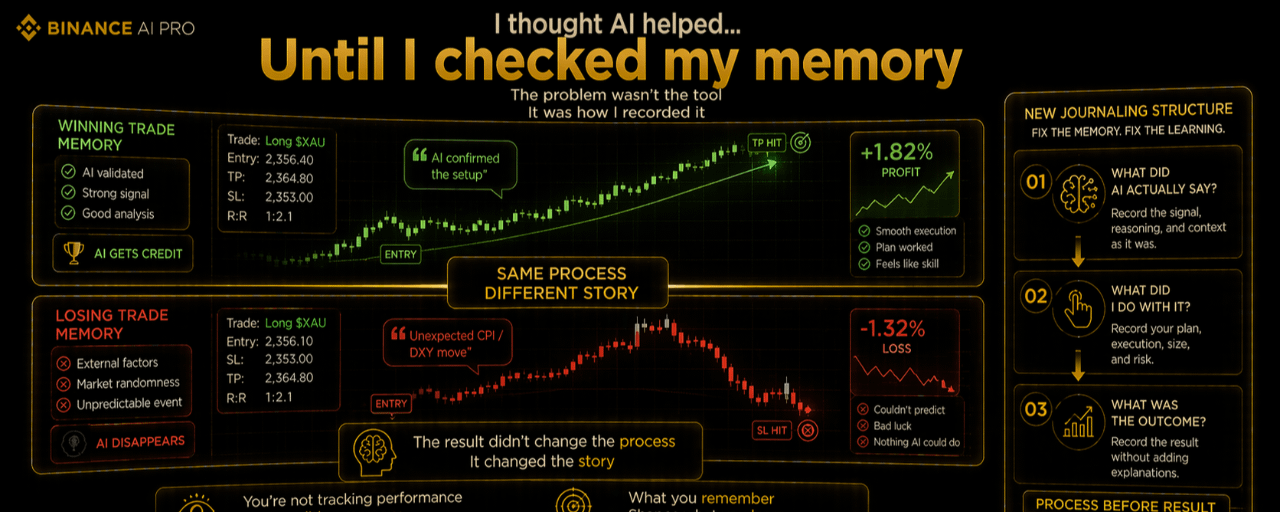
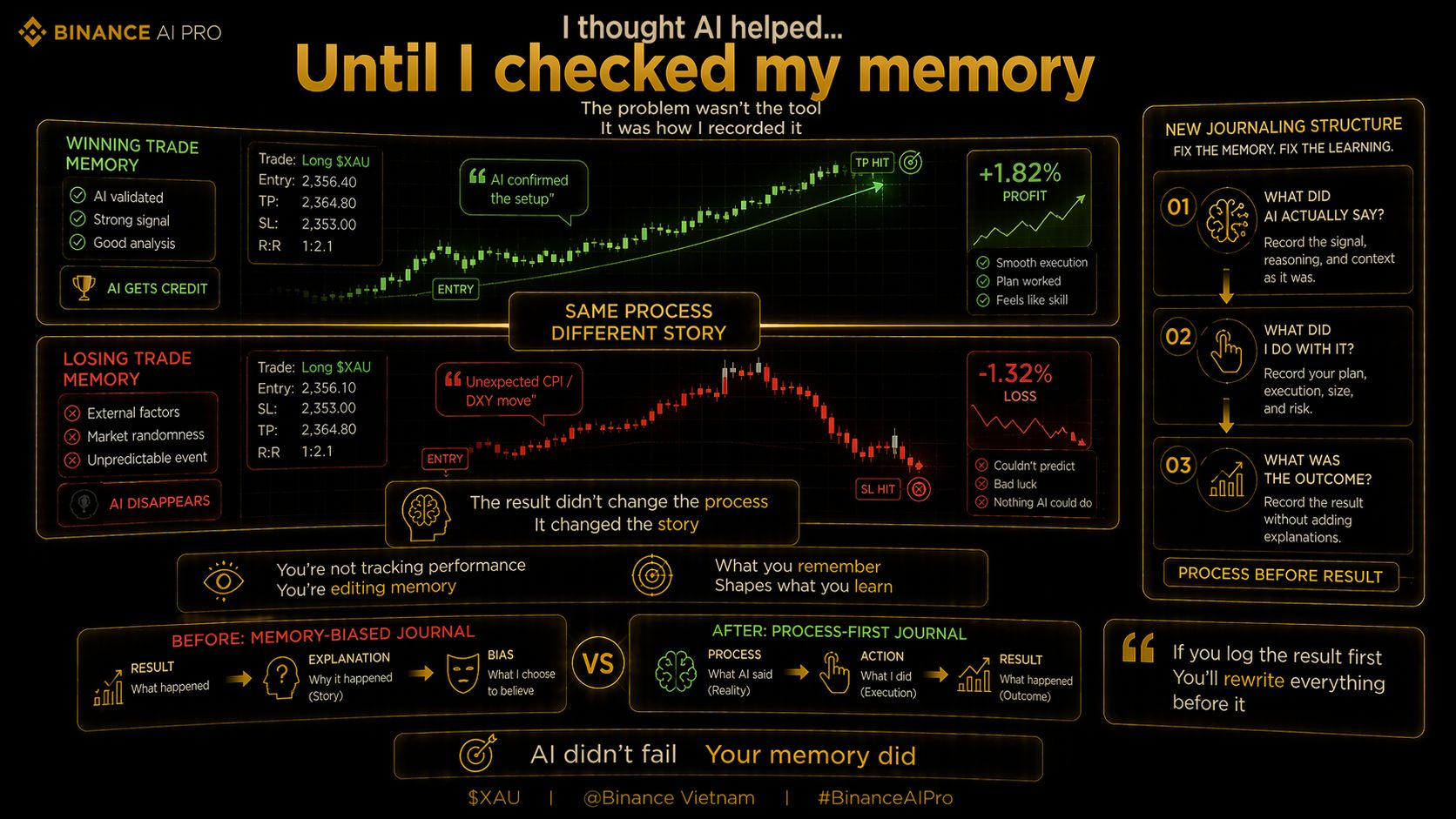
When a trade worked, I wrote things like “AI Pro confirmed the setup” or “good signal from structure analysis”. The AI was part of the reason the trade succeeded.
When a trade didn’t work, the tone changed completely. “Unexpected CPI”, “DXY spike”, “market moved against me”. Suddenly it was all external. AI Pro barely showed up in the explanation.
Same tool, same process… but two completely different stories depending on the outcome.
That’s when I realized I wasn’t really tracking anything useful. I was just telling myself a version of events that felt better.
And the problem with that is you don’t actually learn anything.
So I changed how I write it down.
Now after each trade, I go in a fixed order. First, what did AI Pro actually say? Not what I remember, but what it actually surfaced, including any risks I didn’t pay attention to.
Then, what did I do with that? Did I follow it, adjust it, or just ignore parts of it?
Only after that do I write the result.
That order matters more than I expected.
Because once you see the process before the outcome, it’s harder to rewrite the story. I started noticing that a lot of losing trades weren’t bad analysis. They were me not listening to parts of it.
Like AI flagged dollar strength as a risk… and I just didn’t weight it enough. Then when it moved, I called it “unexpected”.
It wasn’t.
Still using AI Pro the same way on XAU, more or less.
But now I’m a bit more careful about how I remember what happened.
Feels less comfortable, but probably more useful.
@Binance Vietnam #BinanceAIPro $XAU $RAVE $UAI
Trading always carries risk. AI-generated suggestions do not constitute financial advice. Past performance does not reflect future results. Please check product availability in your region.