
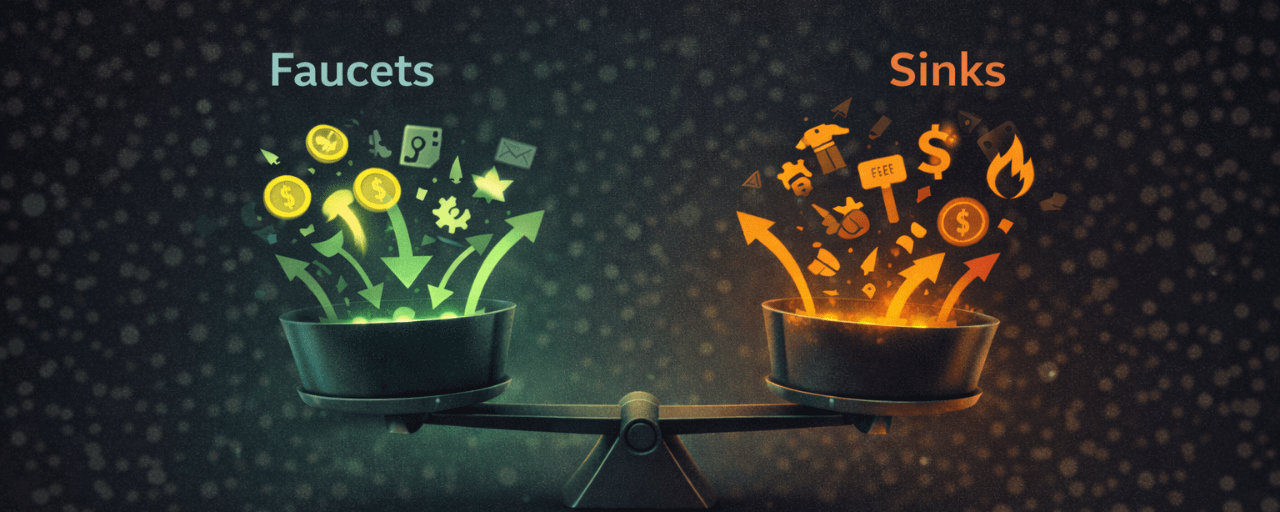
Pixels isn’t balanced — it’s constantly drifting
I used to think “sinks and faucets” was just another overcomplicated way to explain game economies… until I actually tried to map it onto Pixels. It gets uncomfortable pretty quickly. Because once you see it, you can’t unsee it.
Every system here is either pushing value in or pulling it out. Crops, quests, rewards — that’s the easy part, the inflow. Players feel it immediately. It’s visible, it’s rewarding, it’s why people show up. But the other side is quieter. Crafting costs, upgrades, land usage, small frictions that slowly remove value from circulation. That part doesn’t feel like progress, but it’s the only thing preventing the entire system from collapsing under its own rewards.
The interesting part is not that both exist — most projects claim that. The question is how they scale together. Because faucets grow naturally with player activity. More players → more rewards → more tokens entering the system. Sinks don’t scale automatically. They have to be designed, adjusted, sometimes even enforced. And that’s where most GameFi economies quietly break.
Pixels doesn’t ignore this. You can see the intent: rewards come in through gameplay, but they don’t just sit there — they get recycled through upgrades, crafting loops, and token burns. On paper, it looks balanced. In practice, it’s never stable. It’s a moving target that depends on player behavior, not just design.
And that’s the part people underestimate. An economy like this is not “working” or “broken”. It’s always drifting. Sometimes toward inflation, sometimes toward scarcity. The team doesn’t just build the system — they have to continuously correct it.
So maybe the real question isn’t whether Pixels has sinks and faucets.
It’s whether they can keep them in balance… while everything else is constantly changing.