I stumbled onto Pixels while I was actually trying to make sense of something else entirely the way liquidity has been behaving this cycle. It doesn’t move cleanly anymore. It drifts. It rotates in these half-visible waves across narratives that feel overbuilt on the surface but undercooked underneath. One week it’s AI agents pulling every speculative impulse. Then restaking comes back into focus. Then RWAs get revived like an old thesis someone refuses to let die. In that noise, gaming usually sits quietly at the edge, waiting for attention that rarely stays long enough to matter.
Pixels kept showing up in that periphery.
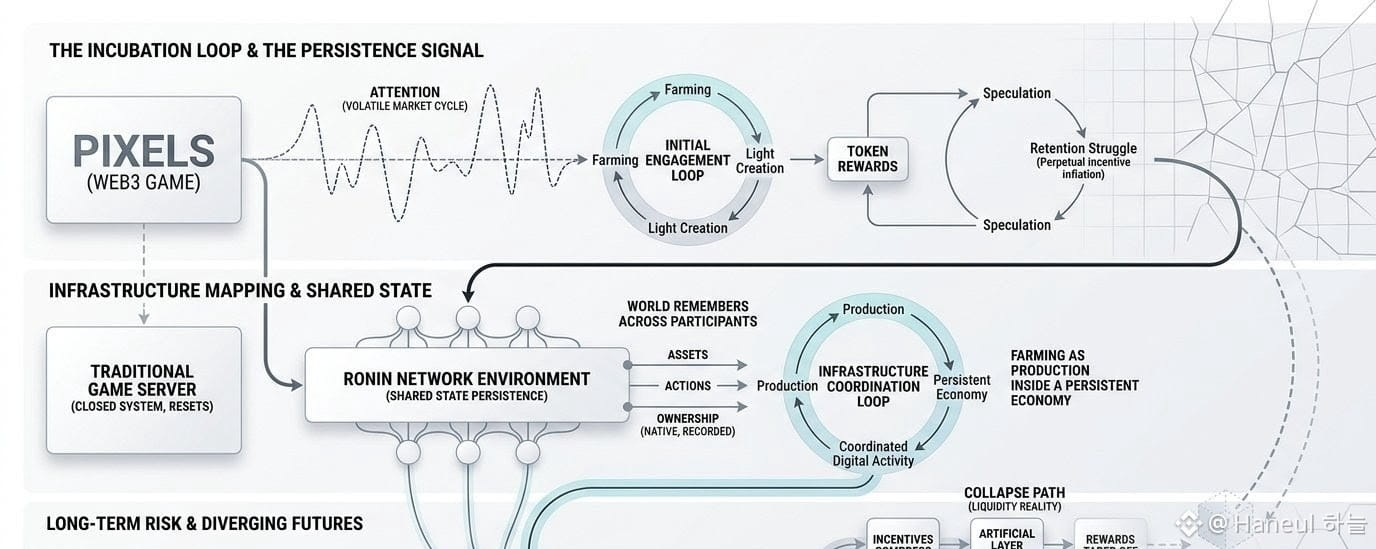
At first glance, it looks like a familiar Web3 gaming loop. Farming, exploration, light creation mechanics. The kind of thing that would’ve been exciting in a different liquidity regime maybe two cycles ago when anything with “on-chain economy” attached could hold attention for longer than a week. Now, everything is measured against retention, not just hype. And most games fail that test quickly.
But what made me pause wasn’t the gameplay. It was the persistence underneath it.
Because in this market, persistence is becoming rare. Attention is fragmented, capital is cautious, and retail behavior has shifted into something more reactive than exploratory. People don’t commit anymore; they rotate. So when a project manages to maintain a world that doesn’t feel like it resets every time incentives shift, you start to notice.
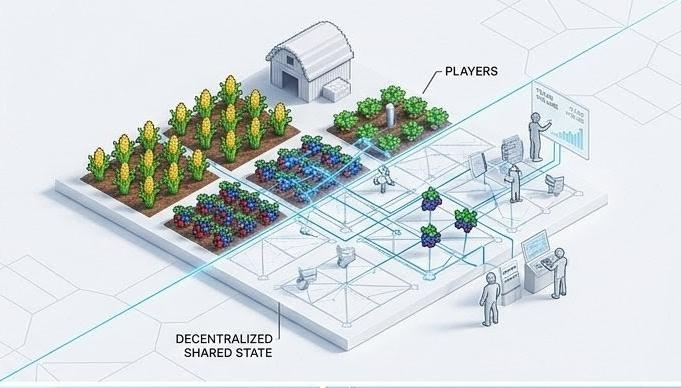
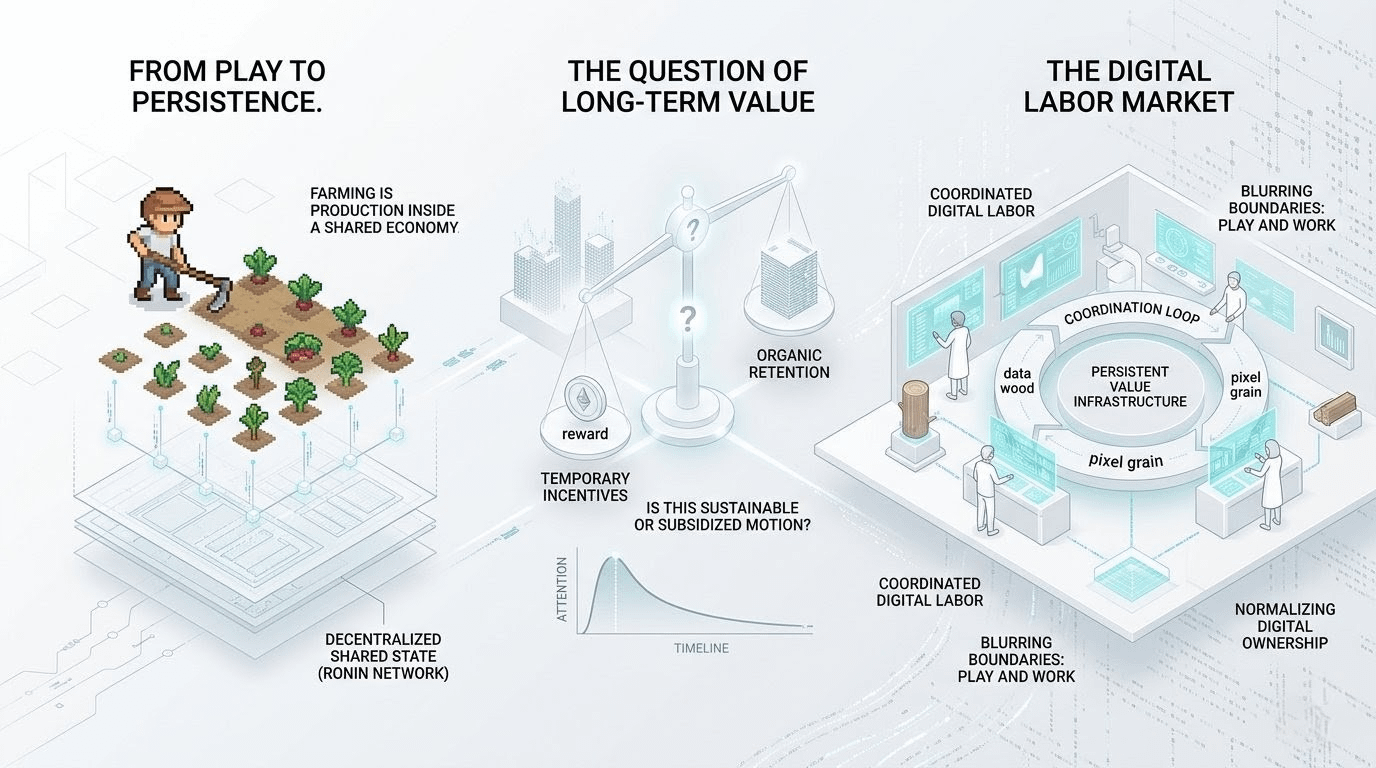
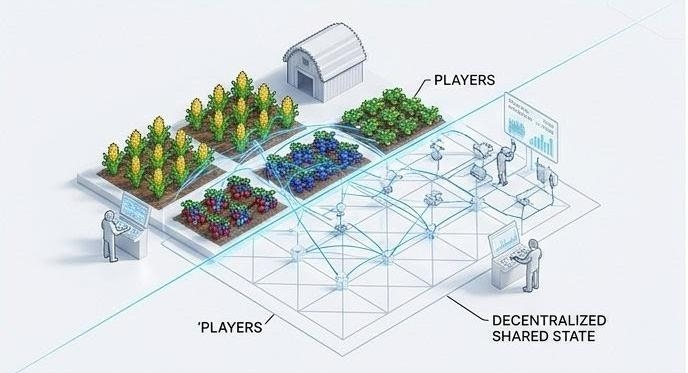
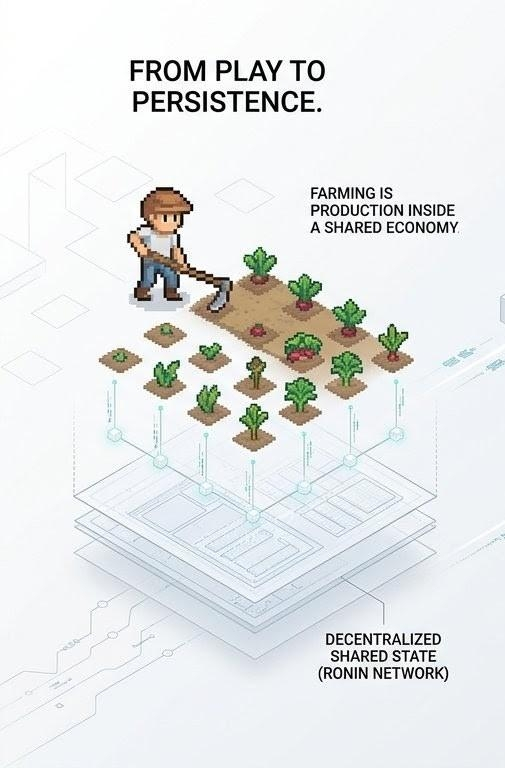
Pixels runs on Ronin, and that choice matters in a subtle way. Not because it’s trendy to say “gaming chain” again, but because it changes how state behaves. Ownership and progression don’t sit inside a single closed server. They exist in a shared environment where actions are recorded in a way that outlives individual sessions. That doesn’t automatically make it revolutionary, but it does make it structurally different from traditional games that rely on isolated databases and centralized control.
The problem it’s trying to solve isn’t immediately obvious until you think about where most Web3 games fail. It isn’t graphics or mechanics. It’s continuity. Players leave because the world doesn’t feel like it belongs to them. It feels rented. Temporary. Even when tokens exist, the underlying experience often collapses into extraction loops where incentives are doing all the emotional heavy lifting.
Pixels tries to stabilize that feeling of continuity by making the world persist across participants. Farming isn’t just progression; it becomes contribution to a shared state. Resources aren’t just rewards; they become part of an economy that other players can interact with independently of your presence.
In simple terms, it’s less about playing a game and more about existing inside a system that remembers what happened.
That sounds heavier than it feels in practice. And that gap between concept and experience is where most of my skepticism sits.
Because yes, there is a token model. Yes, incentives exist. And yes, like most Web3 games, early engagement is still partially driven by reward structures rather than pure organic demand. That part is hard to ignore. Liquidity in this sector still behaves like gravity it pulls behavior toward whatever is being subsidized most efficiently.
But there’s something slightly more stable here compared to many competitors. The economy doesn’t feel entirely disconnected from activity. Players are not just extracting tokens; they are building within constraints that persist beyond short cycles. That alone doesn’t guarantee anything, but it changes the shape of participation.
Where it gets more interesting is in how understated the coordination layer feels. There’s no loud narrative about decentralization being the end goal. It’s just embedded in the structure shared ownership, distributed validation of state, and coordination that doesn’t rely entirely on a single authority to dictate what exists. It’s not marketed as ideology. It just quietly sits underneath the experience.
Still, I’ve seen enough cycles to know that structure alone doesn’t protect a project from attention decay.
The risk here is subtle. If incentives weaken too quickly, does anything remain? Or does the system reveal itself as just another carefully tuned engagement loop that needed constant external fuel to feel alive? That’s the question I keep coming back to. Because in crypto gaming, retention is always the hardest variable to simulate.
What makes Pixels slightly different, at least for now, is that activity doesn’t feel entirely artificial. There are still moments where the world feels like it continues even when you’re not optimizing around rewards. That might sound small, but in this sector, it’s rare.
Still, I don’t want to overstate conviction. Adoption doesn’t feel fully organic yet. It feels like a mix part genuine engagement, part incentive-driven participation, part narrative positioning inside a broader “gaming comeback” rotation that the market keeps revisiting whenever other sectors stall.
And maybe that’s the more honest framing. It exists inside the same liquidity attention cycle as everything else. Nothing is outside of that gravity right now.

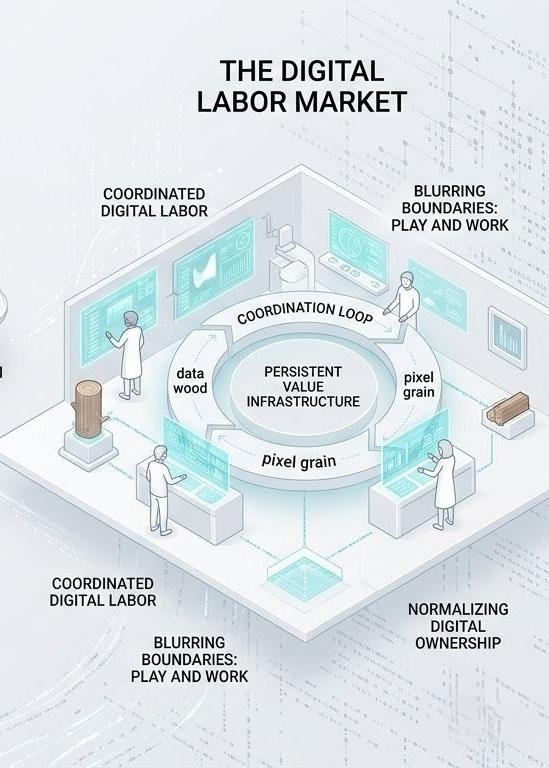
Here’s the part I keep circling back to, though, and it’s less discussed: Web3 games like Pixels might not actually succeed or fail based on “fun” or even token economics in isolation. They might succeed if they manage to become habit-forming infrastructure for digital coordination itself not entertainment, but repetition. Not gameplay, but routine interaction inside a shared system that feels mildly necessary rather than purely optional.
That’s a quieter shift than most people are pricing in. Because it doesn’t require explosive growth or viral moments. It requires repetition that slowly replaces other forms of attention allocation.
And that’s where my skepticism and curiosity overlap in an uncomfortable way.
Because even if Pixels is structurally interesting, it is still competing for the same limited resource everything else is fighting over right now: attention in a fragmented liquidity environment where narratives no longer last long enough to fully mature.
So I’m left with this lingering thought I can’t fully resolve yet.
If a game becomes a persistent shared system, if it starts to feel less like entertainment and more like digital infrastructure wrapped in familiar mechanics, does that actually represent evolution in how these markets organize themselves or is it just another temporary shape liquidity is taking before it moves on to the next narrative rotation?