
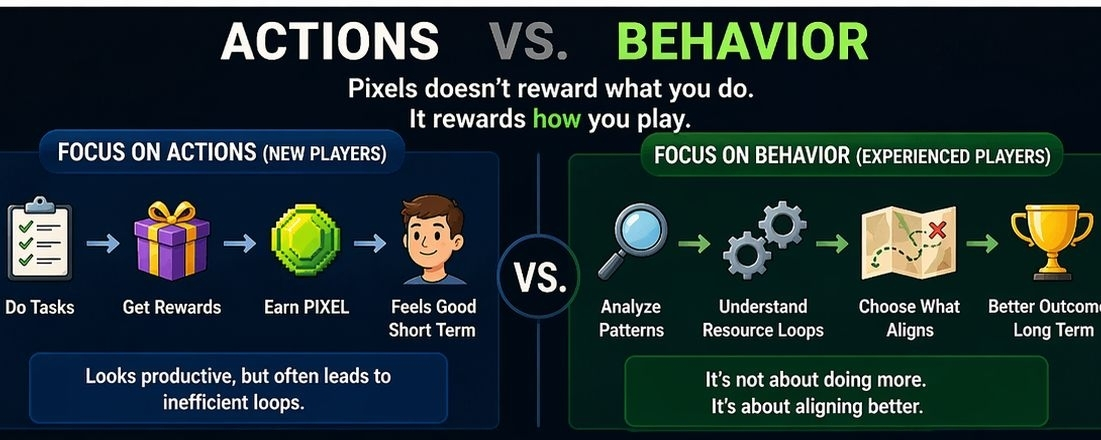

At first, Pixels felt simple to me.
Do something → get rewarded → earn $PIXEL.
It was clean. Predictable. Almost comforting. The kind of system you don’t need to overthink. Put in effort, get something back. That’s the rule most games train you to follow, so I followed it without questioning anything.
But that clarity didn’t last.
The longer I played, the more things started feeling… off.
There were moments where I’d grind harder, spend more time, do more tasks — and somehow the outcome felt weaker. Then other times, I’d barely do anything and still feel like I came out ahead long-term.
That gap didn’t make sense to me.
So I stopped playing on autopilot and started paying attention.
And that’s when something clicked.
Pixels isn’t really rewarding actions.
It’s rewarding behavior.
That sounds small, but it completely changes how you see the game.
---
Early on, most players (including me) chase anything that looks like a reward. If it gives something, it must be good, right?
And to be fair, that works… at the beginning.
But as you move deeper into the game, that approach quietly breaks down.
Because not every reward is actually helping you.
Some rewards push you into loops that look productive but aren’t efficient. Others feel small on the surface, but they connect into systems that pay off later.
That’s the shift.
You stop asking, “What do I get?”
And start asking, “Where does this lead?”
---
I started noticing how experienced players move differently.
They don’t rush everything.
They skip things.
They filter.
Not because they’re lazy — but because they understand that more activity doesn’t always mean more progress.
They’re not chasing rewards.
They’re aligning with systems.
---
What makes it even more interesting is that the game never clearly tells you this.
There’s no guide saying “this path is optimal.”
You learn it the slow way — through outcomes.
You try something. You see where it leads. You adjust.
Over time, you stop reacting… and start planning.
I’ve seen players track sessions, compare results, even think in terms of efficiency instead of size. The reward itself becomes less important than what it unlocks next.
That single idea changes everything.
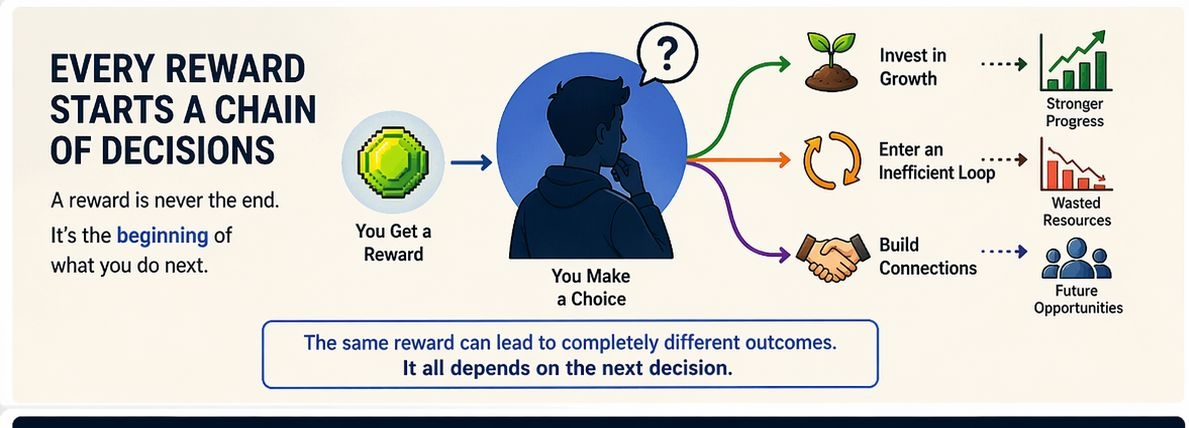
Because now every decision connects to another.
---
And honestly, this is where the game starts feeling different.
A bit less casual.
A bit more… calculated.
You don’t just collect rewards anymore.
You evaluate them.
---
It actually reminds me of something outside gaming.
Like when you stop looking at income alone and start thinking about how it’s used. Spending, saving, positioning — suddenly the same amount means different things depending on what you do with it.
Pixels creates that same shift.
Rewards stop being the finish line.
They become the starting point of the next decision.
---
And once you see that, you can’t unsee it.
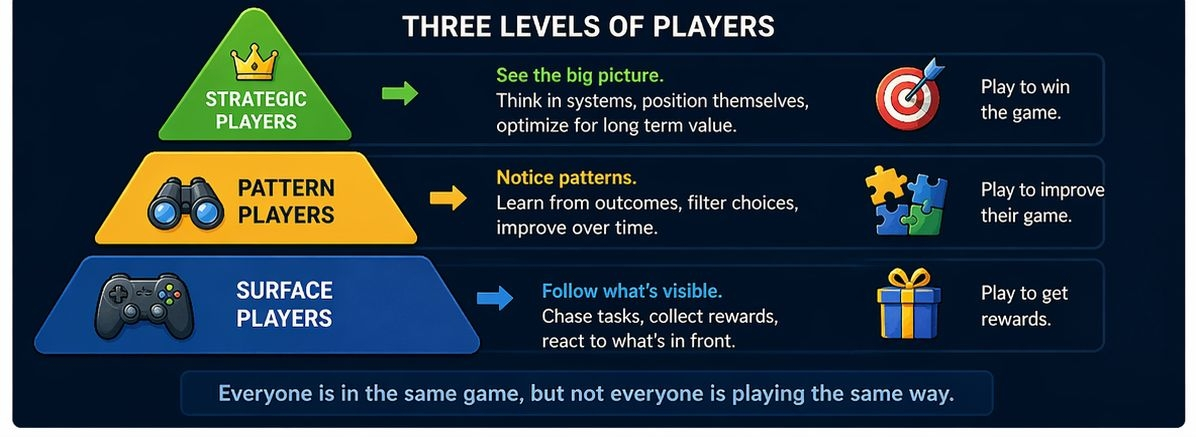
New players are still interacting with what’s visible.
Veteran players are playing what’s underneath.
Same game.
Two completely different experiences.
---
So now I keep coming back to this thought:
If rewards aren’t really there to be taken at face value… but to shape how you think and act over time…
Then what am I actually playing?
A game?
Or a system that quietly teaches you how to move inside an economy?
