
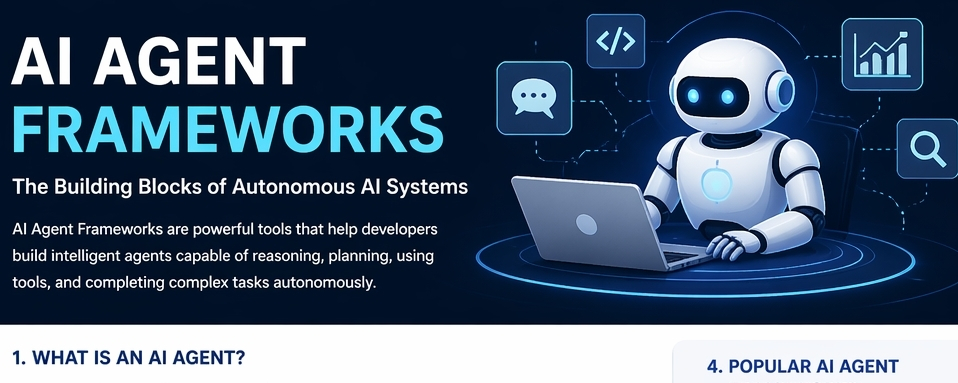
AI Agent Frameworks have become an important part of modern artificial intelligence systems. In simple terms, they are tools or structures that allow AI to go beyond just answering questions and enable it to think, plan, and take actions to complete tasks.
First, it is important to understand what an AI agent is. An AI agent is an intelligent system that can break a task into smaller steps, process those steps, and produce a final result. For example, if you ask an AI agent to do market research, it will not only give a simple answer. Instead, it will collect data, analyze it, and generate a structured report.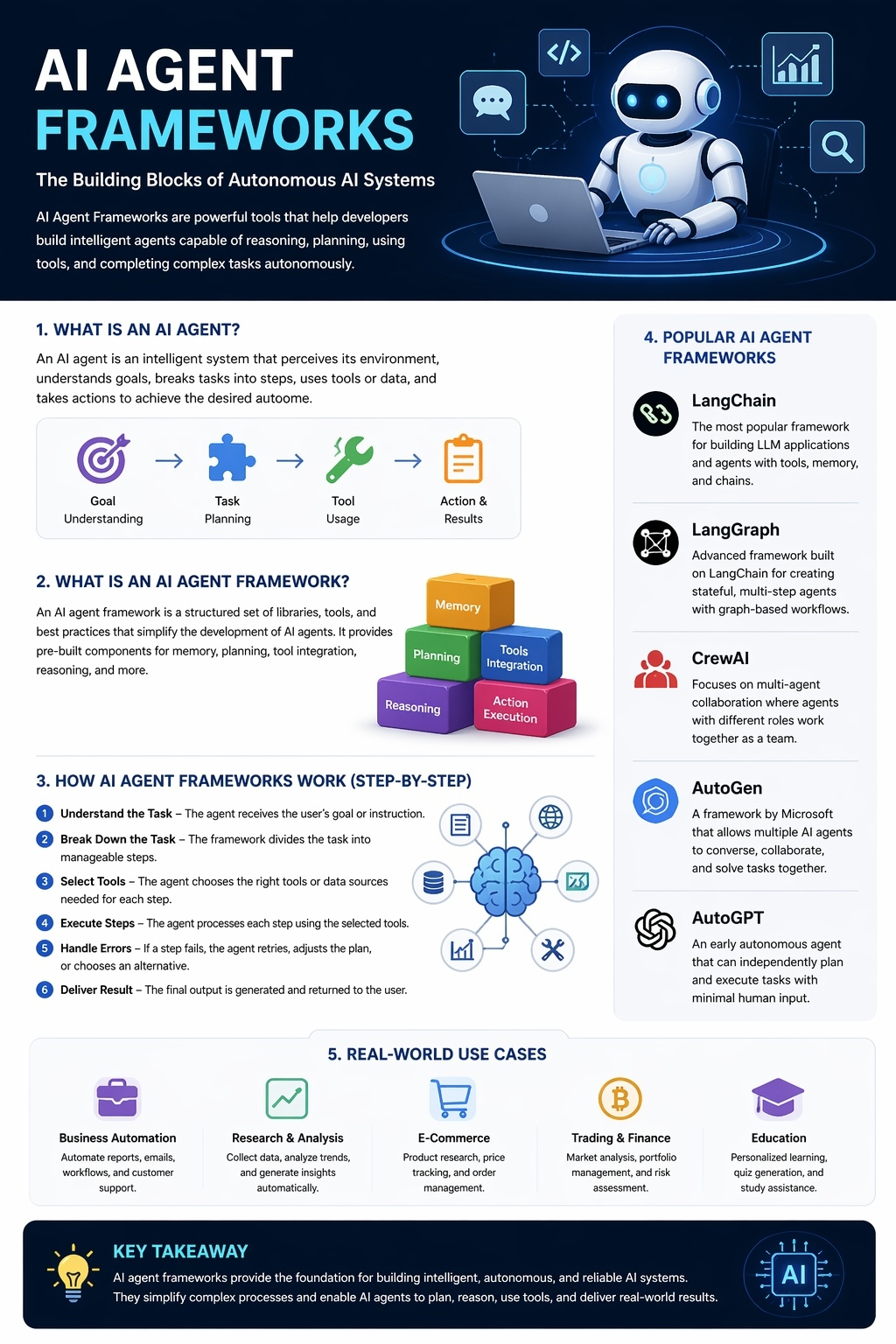
Now, an AI agent framework is the system that helps build these agents. It provides developers with ready-made components such as memory systems, tool integration, decision-making logic, and task planning modules. This saves time because developers do not need to build everything from scratch.
The working process of an AI agent framework usually follows a step-by-step flow. First, the system understands the given task. Then it breaks the task into smaller steps. After that, it selects the right tools needed for each step. The agent then executes those steps one by one and produces the final output. If any step fails, the system can retry or choose an alternative approach.
Today, several powerful AI agent frameworks are widely used, such as LangChain, LangGraph, CrewAI, and AutoGen. Each framework has its own strengths. Some are better for building simple AI applications, while others are designed for complex systems where multiple AI agents work together like a team.
In conclusion, AI agent frameworks are shaping the future of artificial intelligence. They are not limited to chatbots anymore but are being used in business automation, research, trading systems, and complex decision-making processes.