

I just spent the last hour scrolling through the same recycled threads about “the next big Web3 game,” and honestly, I don’t even know why I still click. It’s always the same formula. Fancy trailer, token ticker, some vague promise about “player-owned economies,” and a community already talking about price before gameplay. And yet here I am again, staring at Pixels like maybe—just maybe—this one’s a little different.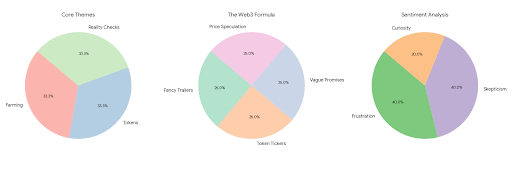
Or maybe I’m just tired and looking for something to believe in.
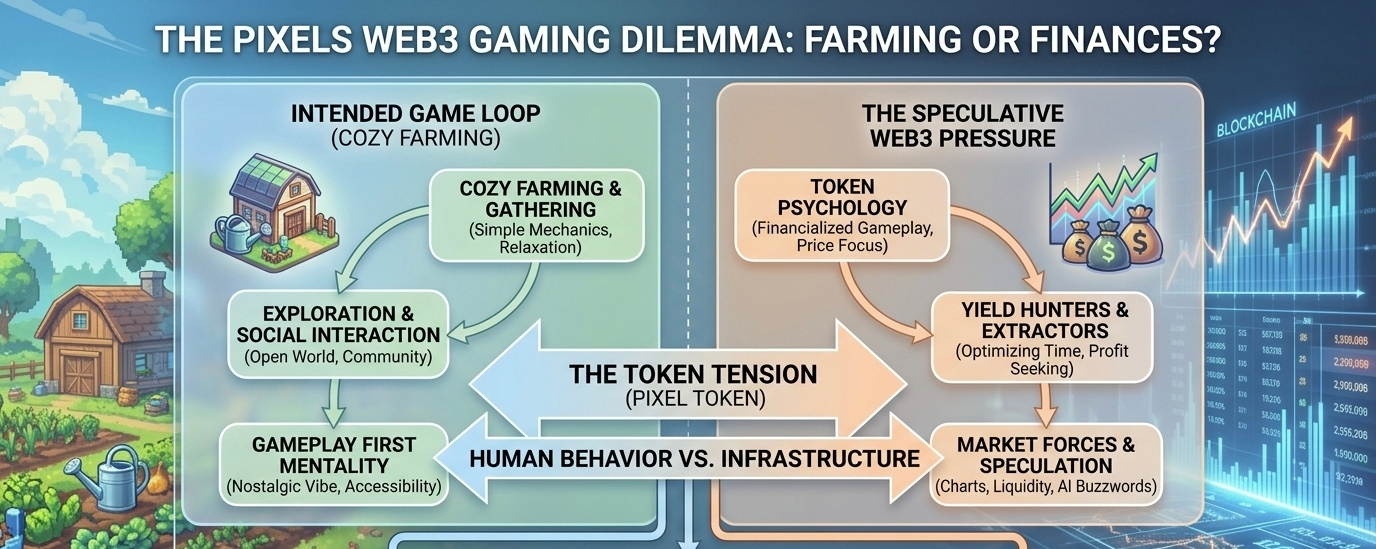
Pixels sits in that weird intersection of cozy farming game and crypto experiment. On the surface, it looks harmless. Almost nostalgic. Bright colors, simple mechanics, farming, gathering, wandering around an open world. It doesn’t scream “financialized gameplay” the way a lot of earlier Web3 games did. And I think that’s intentional. The whole vibe feels like it’s trying to sneak past your defenses. Like, don’t worry about tokens yet, just plant some crops, talk to some NPCs, explore a bit. Relax.
But of course, this is still crypto. Relaxing never lasts long.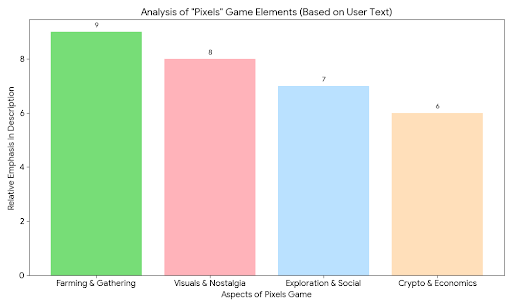
It’s built on Ronin, which already tells you a lot. Ronin isn’t new to this. They’ve seen what happens when a game actually gets traction. They’ve also seen what happens when that traction turns into a stampede and the infrastructure starts sweating. Everyone loves to talk about scaling solutions until real users show up and suddenly transactions slow down, fees spike, or something just… breaks. Not because the tech is fundamentally bad, but because actual humans behave differently than test environments.
That’s one thing I think people still don’t fully get. Crypto doesn’t break under theory. It breaks under attention.
Pixels has already had moments where you can feel that pressure building. Spikes in player activity, sudden interest, people rushing in not because they love farming mechanics but because they heard there’s money somewhere in the system. That’s the real stress test. Not TPS benchmarks. Not whitepapers. Just raw human behavior colliding with infrastructure.
And to be fair, Pixels seems to be handling that better than most. At least so far. The Ronin ecosystem has matured since the early days, and you can feel that there’s more thought put into onboarding and smoothing out the experience. It’s not perfect, but it’s not a complete mess either. Which, in crypto gaming, already puts it ahead of a lot of projects.
Still, I can’t shake this underlying question. Are people actually here to play, or are they just here to extract?
Because I’ve seen this cycle too many times. A game launches, gains traction, tokens start moving, and suddenly the “community” is just a swarm of yield hunters optimizing their time down to the second. Gameplay becomes secondary. Fun becomes irrelevant. Everything turns into a spreadsheet. And once the rewards slow down or the token dips, people disappear just as quickly as they arrived.
Pixels tries to push back against that by leaning into simplicity. Farming, crafting, social interaction. Things that don’t immediately scream profit. And I respect that. It’s almost like they’re trying to rebuild the idea that a game should be a game first. But the problem is, the moment you attach a token to anything, the psychology changes.
You can’t unring that bell.
The PIXEL token itself is already part of the conversation whether the devs like it or not. Price movements, liquidity, distribution, all of it. And you can feel the tension between creating a sustainable in-game economy and dealing with external market forces that don’t care about gameplay at all. Traders don’t care if your crops take time to grow. They care about charts.
And then there’s the broader crypto environment right now, which feels… chaotic in a very familiar way. AI is still being stapled onto everything like a buzzword bandage. Every other project claims to be “redefining” something that didn’t need redefining in the first place. And in the middle of all that noise, a simple farming game somehow feels refreshing. Which is kind of absurd when you think about it.
But maybe that’s the point. Maybe after all the over-engineered nonsense, people just want something that works. Something that doesn’t try to impress them with jargon. Something that feels accessible.
The problem is accessibility brings scale, and scale brings problems.
If Pixels actually succeeds in pulling in a large, non-crypto-native audience, the pressure on the system is going to increase dramatically. Not just technically, but economically. More players means more demand for resources, more strain on token dynamics, more opportunities for imbalance. And unlike traditional games, where developers can tweak things behind the scenes, here every change has financial implications.
Adjust a reward system, and suddenly you’ve affected someone’s income.
Nerf a mechanic, and you’ve triggered a wave of complaints not just about fairness, but about lost value.
That’s the part of Web3 gaming that still feels unresolved. The idea that players are stakeholders sounds great until you realize stakeholders don’t always agree, and they definitely don’t like losing money.
I also keep thinking about user behavior. Most people are lazy. Not in a bad way, just realistically. They don’t want to manage wallets, think about gas fees, or worry about asset security. Pixels does a decent job of abstracting some of that away, but there’s still a barrier. And the moment something goes wrong—a failed transaction, a confusing UI flow—that friction becomes a reason to leave.
Adoption isn’t just about getting users in. It’s about keeping them when things aren’t perfect.
And things are never perfect.
There’s also the question of longevity. Farming games can be addictive, sure, but they also rely heavily on content updates and player engagement loops. In traditional gaming, that’s already a challenge. In Web3, it’s even harder because you’re not just maintaining interest, you’re maintaining an economy. And economies are fragile.
One imbalance, one exploit, one poorly timed update, and the whole system can start to wobble.
To Pixels’ credit, it doesn’t feel like a cash grab. At least not in the obvious sense. There’s a level of care in how it’s presented, how the world is built, how the mechanics are structured. It feels like a team that actually wants to make something playable, not just profitable.
But intentions only go so far.
I’ve seen well-intentioned projects collapse under the weight of their own systems. I’ve seen communities turn on developers the moment expectations aren’t met. I’ve seen hype cycles inflate and deflate faster than anyone can react.
Pixels is somewhere in the middle of all that right now. Not overhyped to the point of absurdity, but definitely on the radar. Not perfect, but functional. Not revolutionary, but maybe… practical.
And maybe that’s enough.
Or maybe it isn’t.
Because at the end of the day, this space doesn’t reward “good enough.” It rewards attention. It rewards narrative. It rewards whatever people decide to believe in for that particular moment. And right now, Pixels is getting some of that attention. The question is what happens when the spotlight shifts.
Will people still log in when there’s no immediate financial incentive?
Will they keep farming when the token isn’t trending?
Will the infrastructure hold if millions of users suddenly decide this is their new digital home?
I don’t know.
Part of me wants to believe that a simpler approach to Web3 gaming has a real chance. That not everything needs to be overcomplicated to succeed. That maybe, just maybe, focusing on actual gameplay can create something sustainable.
And another part of me has been here long enough to know how this usually goes.
It starts with curiosity. Then momentum. Then speculation. Then pressure.
And somewhere along the way, the original idea either evolves into something stronger… or gets buried under its own success.
Pixels is still early in that story.
It might work.
Or it might just be another place where people showed up, farmed a bit, made some trades, and quietly left when the numbers stopped making sense.