
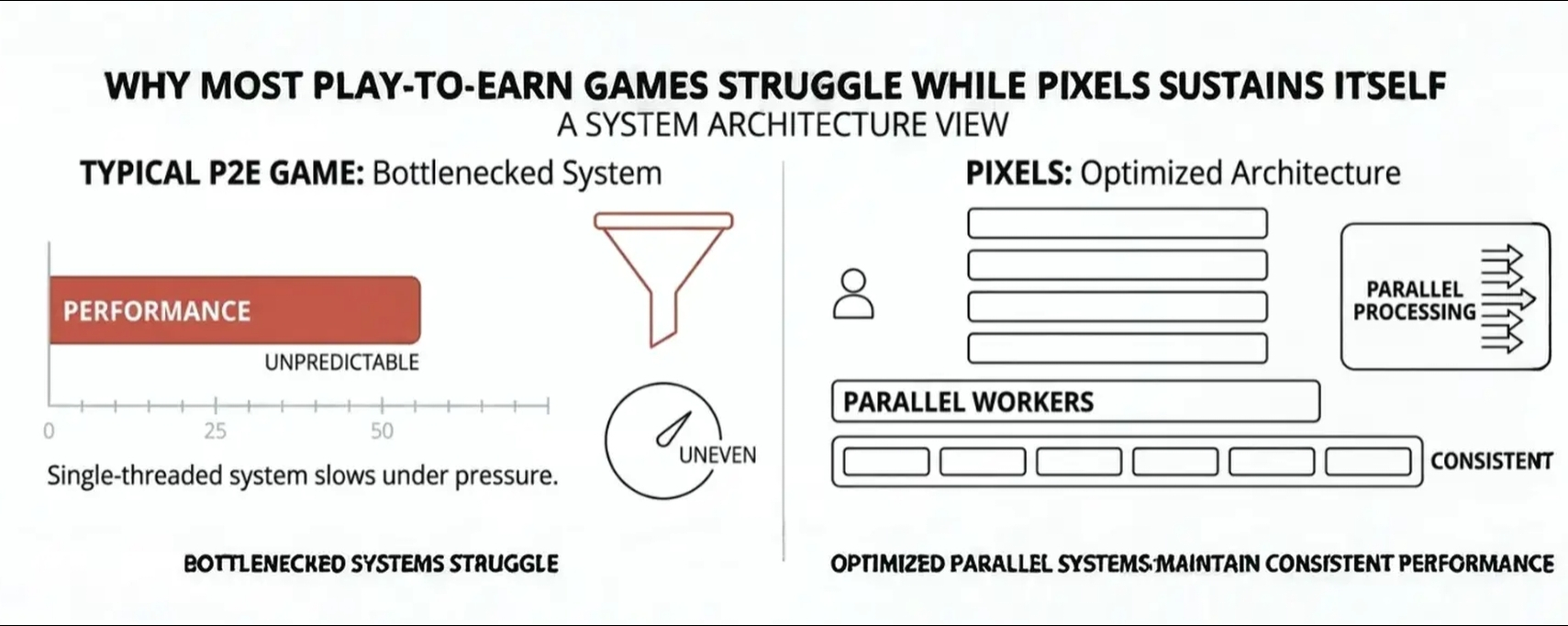
There was a moment when I was using a Play to Earn game late at night, expecting things to be smooth because fewer people were active. But instead, I noticed something strange. Some actions went through instantly, while others almost identical took longer to reflect. I remember pausing for a second, wondering if I had done something wrong. Nothing had failed, but the experience felt slightly off. That small inconsistency stayed with me.
After seeing this pattern across a few different games, what I noticed is that the problem isn’t really about earning or even gameplay. It’s about how these systems handle pressure. Every action carries multiple responsibilities game logic, reward calculation, verification and all of it gets processed together. When activity increases, even slightly, that combined weight starts to slow things down.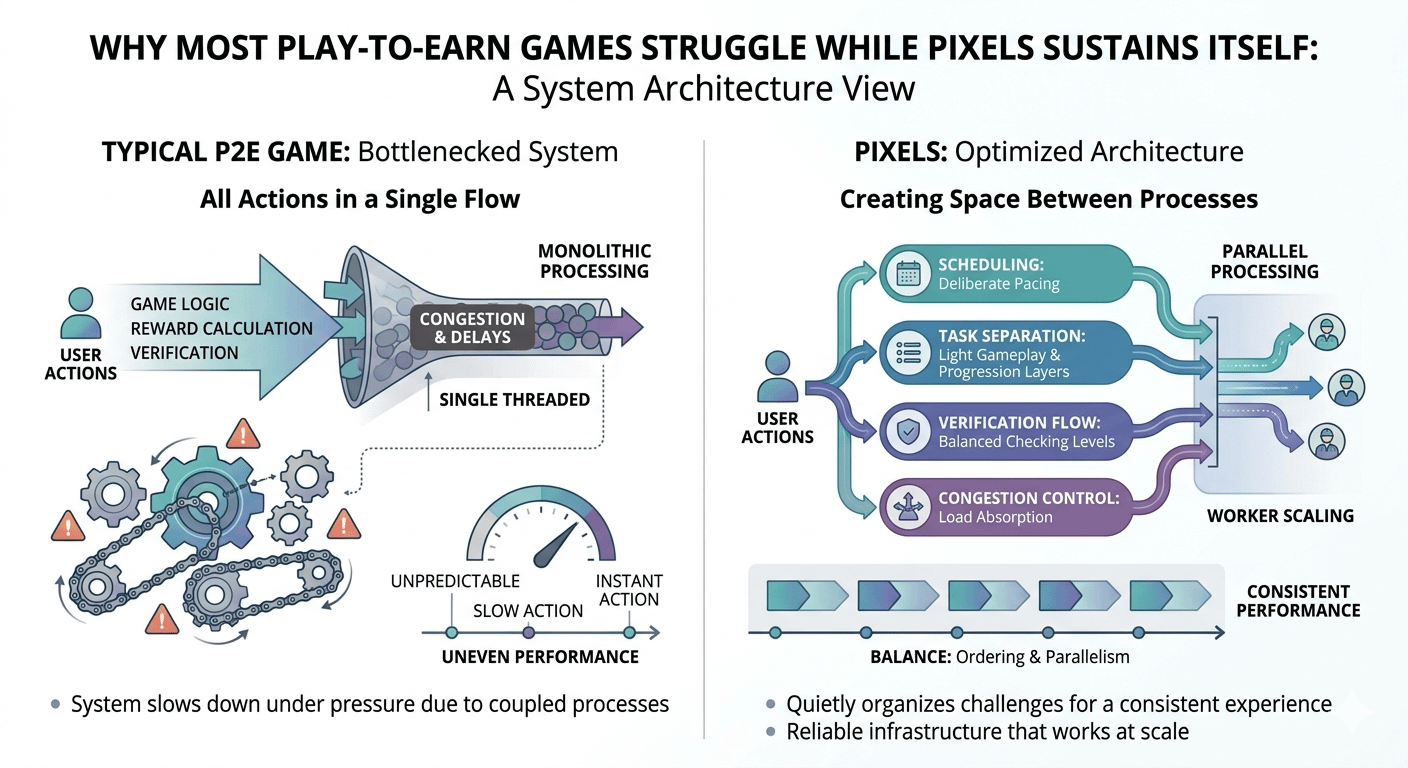
From a system perspective, it feels like everything is trying to pass through the same narrow path. And when too many things arrive at once, the system doesn’t break it just becomes uneven. Some actions move forward, others wait. Not randomly, but because the system is trying to keep itself stable.
I often think about it like a small shop where one person is handling everything taking orders, packing items, and managing payments. When there are only a few customers, it works fine. But as more people arrive, delays start appearing, not because the process is wrong, but because everything is happening in the same place.
When I look at how @Pixels approaches this, what caught my attention is that it doesn’t seem to stack everything together in that way. The experience still feels simple and easy to follow, but underneath, there’s a sense that different types of actions are handled differently.
What interests me more is how that separation helps the system stay stable.
Scheduling feels more deliberate. Some actions are instant, while others feel slightly paced. It doesn’t come across as random delay it feels like the system is spreading activity over time so everything doesn’t collide at once.
Task separation is another thing I notice. Basic gameplay remains light and responsive, even when activity increases. But deeper progression or reward-related processes feel like they exist in another layer. That separation keeps the core experience from slowing down.
Verification flow also seems more balanced. Not every action feels like it’s going through the same level of checking. In my experience watching systems, this is often what prevents everything from becoming heavy at once.
Then there’s congestion control. What matters in practice is not avoiding pressure, but handling it quietly. Systems that last don’t try to push everything through instantly. They absorb some of that load, slow certain paths slightly, and keep the rest moving.
Worker scaling helps, but only when the system actually distributes tasks properly. If everything still funnels into one place, adding capacity doesn’t change much. What makes a difference is how evenly the system spreads activity.
And then there’s the balance between ordering and parallelism. Simple actions can happen side by side, keeping things responsive. But structured progression needs some level of order to stay consistent. Finding that balance is where systems either feel smooth or start to feel unpredictable.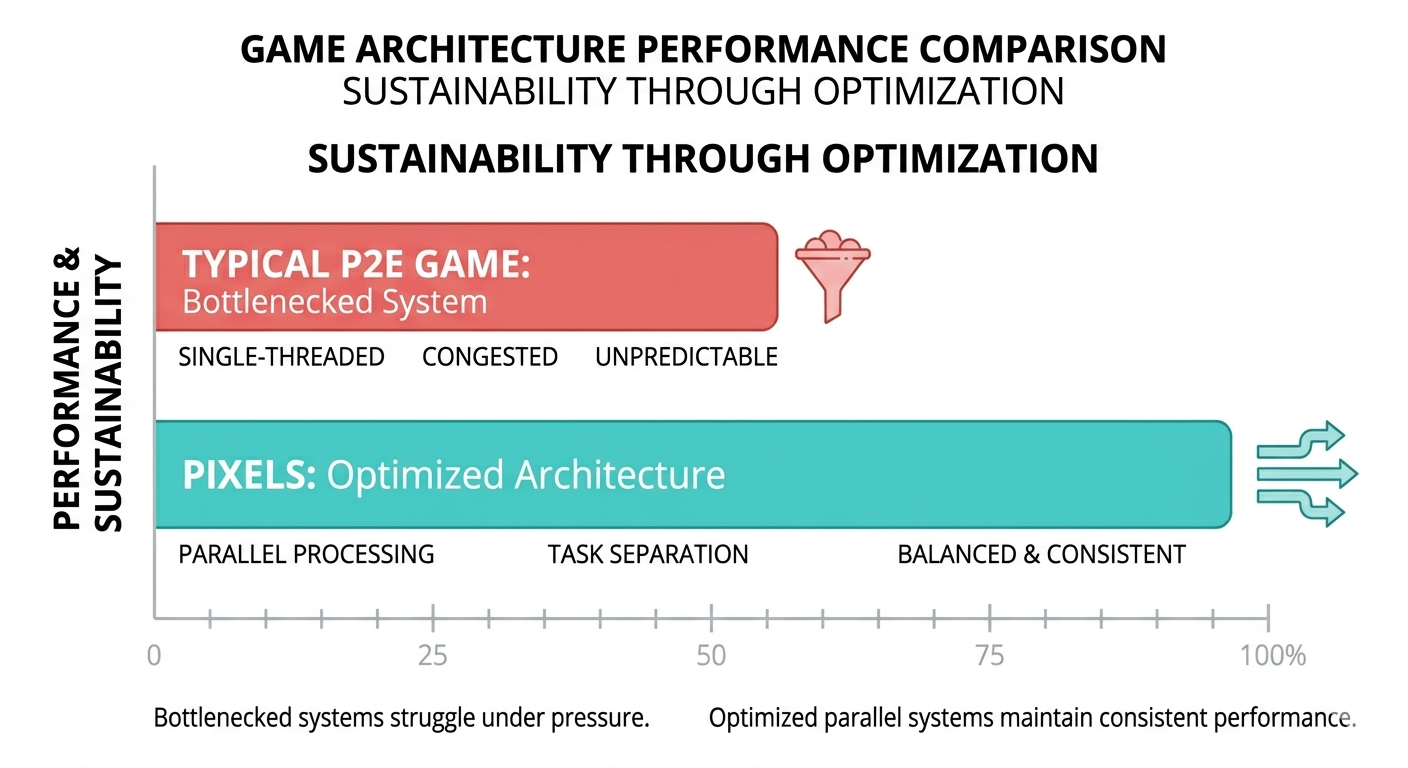
What stands out to me is that pixels doesn’t try to remove these challenges it quietly organizes them. The experience still feels like you’re just playing, just progressing. But underneath, there’s structure preventing everything from piling up at once.
Over time, this changed how I look at Play to Earn systems. The ones that struggle often try to do everything in a single flow. The ones that last create space between processes, even if the user never notices it directly.
A reliable system isn’t the one that feels perfect when things are quiet. It’s the one that still feels consistent when activity grows. Good infrastructure doesn’t try to impress you it just keeps working in a way that makes sense.