
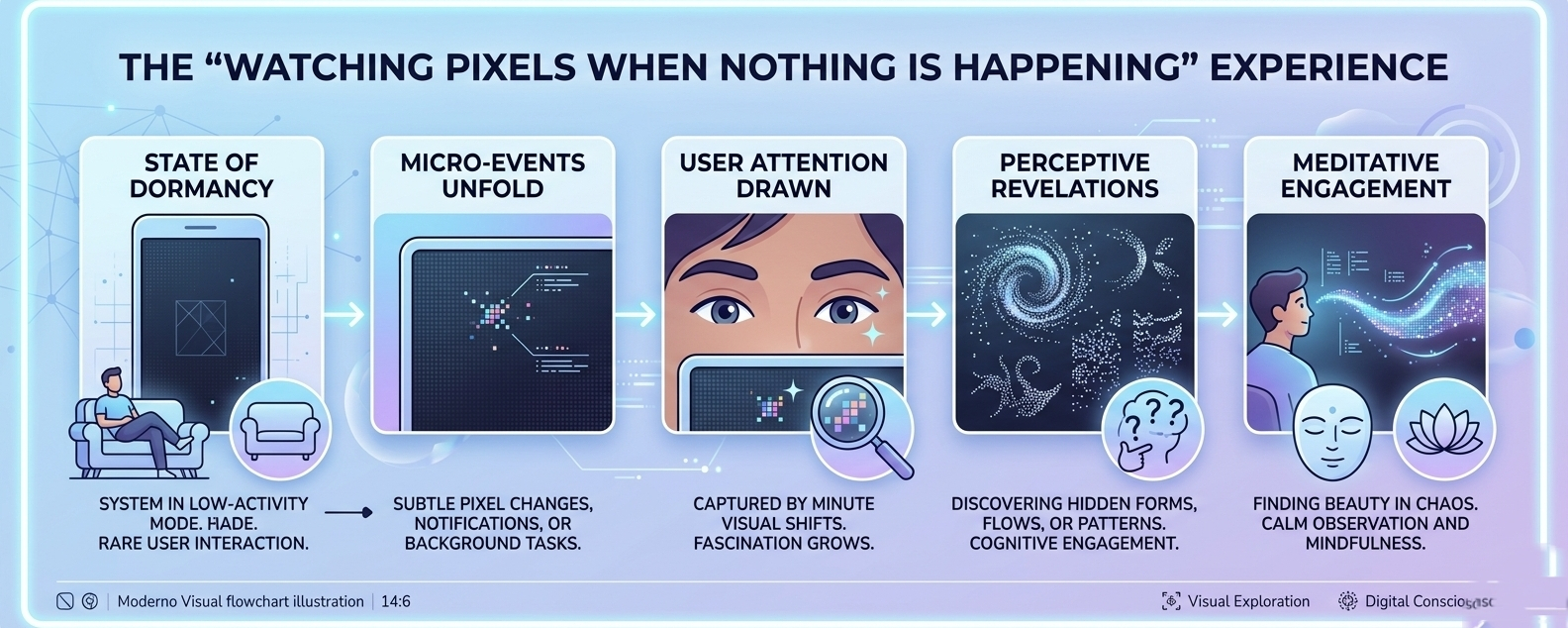
I’m waiting.
I’m watching.
I’m looking at the edges more than the center.
I’ve seen this before. Not this exactly. But close enough that my brain keeps trying to file it somewhere it already understands. It doesn’t quite fit. That’s the only reason I’m still here with it.
I focus on small things now.
The way a system behaves when no one is talking about it. The quiet hours. The friction no one writes threads about. The parts that don’t market well. That’s usually where the truth sits, if it sits anywhere at all.
Pixels is there. Somewhere in that space.
It doesn’t try too hard on the surface. Farming. Movement. Land. A loop that feels almost too simple if you’ve spent enough time around these things. And yet it’s not loud in the way most things are loud now. It isn’t constantly explaining itself. That helps. Or maybe it just delays the moment where you realize it still has to prove something.
Most projects feel like they’re built to be seen.
You can tell almost immediately. The UI is clean in a specific way. The words are chosen to travel well. The mechanics exist, but they’re secondary to the way they’re presented. It’s not that they don’t work—it’s that they don’t expect to be used for long. They expect to be noticed, circulated, clipped into a narrative that makes sense for a week or two.
This one feels… quieter.
But quiet doesn’t mean durable. I’ve made that mistake before.
I’ve seen well-built systems fold the moment real people arrive. Not users—people. The ones who don’t follow the intended loop. The ones who optimize too hard or not at all. The ones who break economies just by existing inside them. Design can hold for a while. Then it starts bending. Then something gives.
I watch how Pixels handles that.
Not the roadmap. Not the announcements. The behavior. The small inefficiencies. The way time is spent inside it. Whether it asks for attention or earns it slowly. Whether the loop holds when no one is incentivized to pretend it’s fun.
It’s always that moment.
When the incentives thin out and what’s left is just the thing itself. Most don’t survive that. They weren’t meant to.
There’s something careful here though. Not perfect. Not finished. Just… intentional in a way that feels slightly out of step with everything else. Like it was built by people who know how these cycles end, but aren’t entirely sure how to avoid it either.
That uncertainty shows up in the edges.
And I don’t trust it. But I don’t dismiss it either.
Because I’ve also seen things that looked worse at the start and held longer than expected. Not because they were better, but because they found a way to exist without needing constant validation. They became background noise instead of headlines. And sometimes that’s enough.
Still, the pattern is hard to ignore.
A new wave comes in. It dresses itself differently. It says it’s about users this time. Or gameplay. Or ownership. It shifts the language just enough that people lean in again. And for a while, it almost feels true.
Then the repetition creeps back in.
You start seeing the same behaviors. The same extraction loops dressed up as engagement. The same quiet exits when the numbers don’t hold. The same realization that design alone doesn’t fix what happens when attention leaves.
I’m looking at Pixels through that lens.
Not trying to decide anything. Just watching.
How long people stay when there’s nothing to gain.
What they do when they’re not being guided.
Whether the system resists being reduced to a single strategy.
Small things.
Because that’s all that matters in the end. Not the vision. Not the structure. Just the way it lives once it’s out there, exposed to everyone who wasn’t in the room when it was built.
It’s still early. Or maybe it just feels that way.
I’ve seen early before too.
So I stay here for a bit longer.
Not expecting much.
Just noticing what holds.
And what starts to slip.
