
Beyond the Hype: Why a Rejected Proposal is STON.fi’s Best Governance Update
In the fast-paced world of decentralized finance, some weeks hit you with a tidal wave of flashy updates, token launches, and dramatic market shifts. But other weeks? They lean into something much more grounded: steady, quiet progress. And if you know what to look for, those quiet weeks are often the most telling.
Taking a step back to check in on the STON.fi DAO governance recently revealed exactly this kind of understated momentum. For everyday users, DAO updates can sometimes look like simple administrative housekeeping. But when you look at how things are actually playing out behind the scenes, these updates reflect the true heartbeat and engagement of the community.
The Last Two Weeks in STON.fi Governance
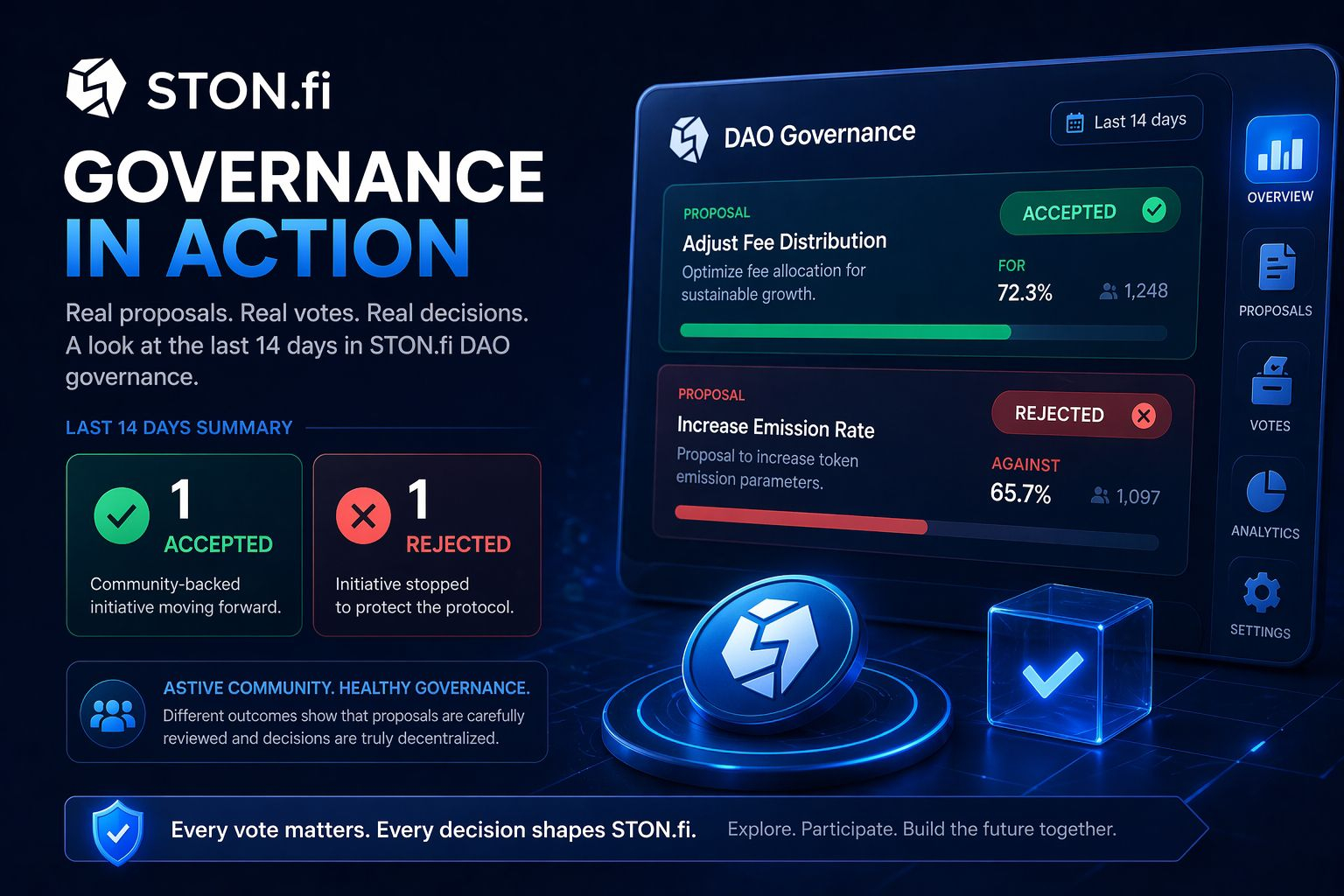
A quick glance at the publicly available DAO data over the past fourteen days paints a concise picture of community activity. Two major proposals reached the end of their voting cycle:
1 Proposal Accepted: Pushing a community-backed initiative forward.
1 Proposal Rejected: Stopping an initiative in its tracks.
(Note: This is an informal, informational summary based on recent interface activity, not an official foundation report.)
Why a "No" is Actually a Win
When assessing the health of a decentralized autonomous organization (DAO), it is incredibly easy to fall into the trap of thinking more approvals = more progress.
What stands out in this recent STON.fi update is the decision-making process itself. Not every proposal getting a green light is a good sign. In fact, when DAOs have a 100% approval rating, it usually points to "governance theater"—a system where votes are merely rubber-stamped, voter fatigue has set in, or things are just passed through without thought.
A healthy protocol requires friction. When a community reviews a proposal and decides to reject it, it shows that governance is being taken seriously.
A split outcome over two weeks shows:
Proper Review: Proposals are being actively read, debated, and scrutinized by the community.
Active Defense: Token holders are utilizing their voting power to protect the protocol's mechanics and ensure quality control.
True Decentralization: Decisions are not just passing through unchecked; different outcomes prove that real, independent choices are being made.
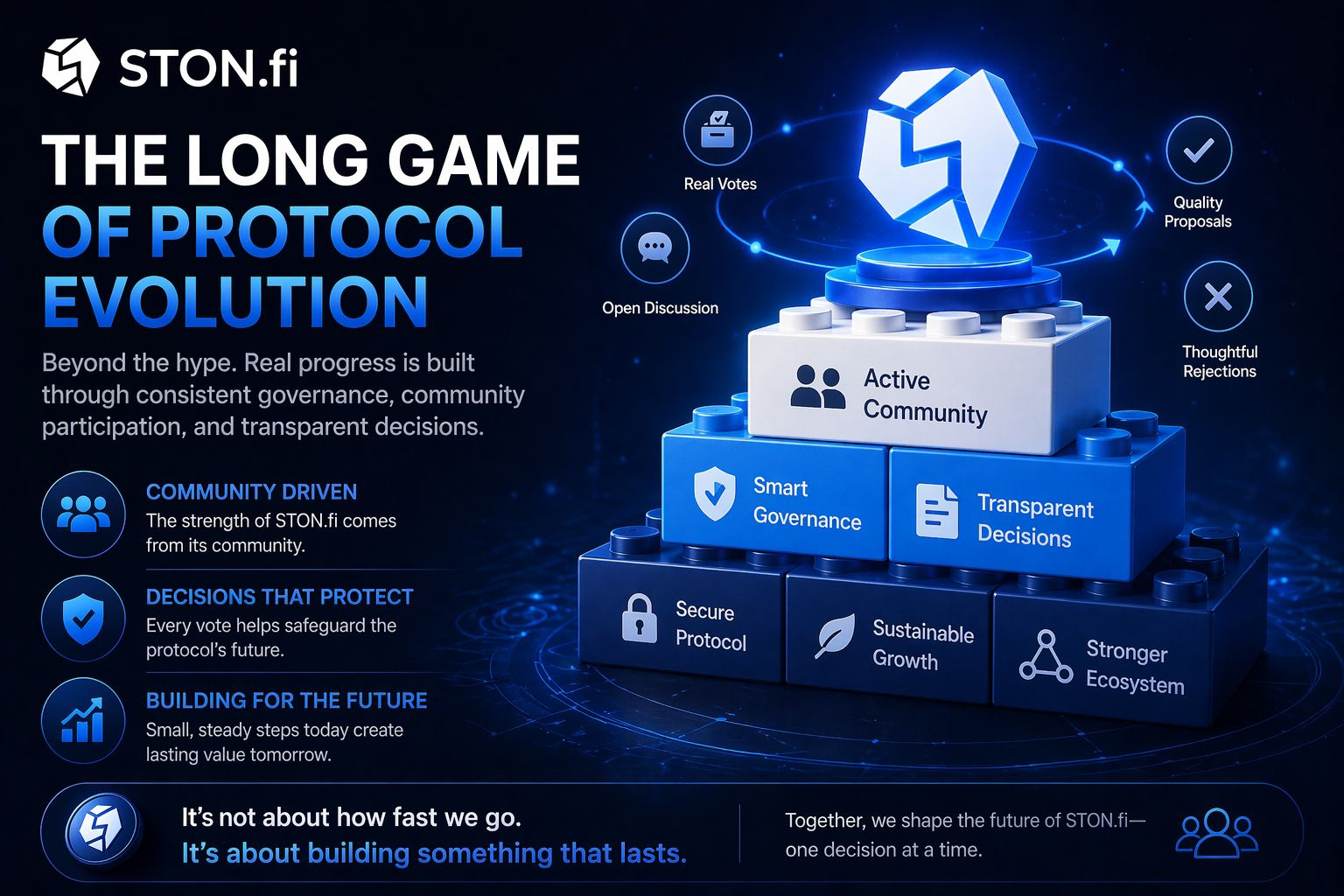
The Long Game of Protocol Evolution
From experience, these kinds of weekly updates might not seem like much at first glance. They don't carry the same immediate dopamine hit as an airdrop or a massive partnership announcement.
However, they are the vital building blocks of how a protocol genuinely evolves over time. The strength of STON.fi isn't just about its underlying technology; it's heavily reliant on the consistency and participation of the people using it. At the end of the day, it is always incredibly encouraging to see a system where real decisions—both "yes" and "no"—are actively being made and recorded transparently on-chain.
Dive Deeper
Governance isn't a spectator sport. If you want to see how these decisions are playing out, or if you want to understand the mechanics shaping the protocol's future, the doors are wide open.
Explore the governance interface and past votes directly: app.ston.fi/governance
Read up on STON.fi's latest developments and insights: blog.ston.fi/