
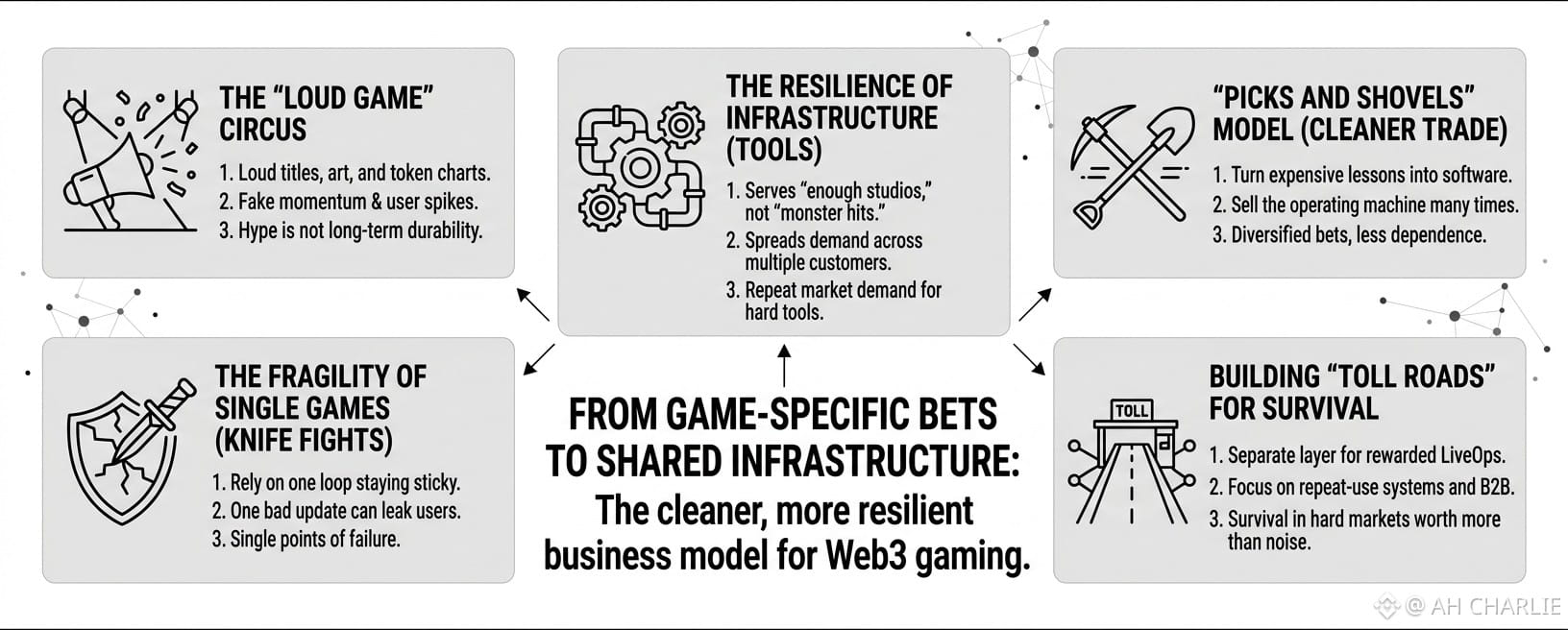
I used to make the same lazy mistake most people make in Web3 gaming. I looked at the loud game. The art. The token chart. The user spike. The fake momentum. The whole circus.
Then I learned, usually the hard way, that the flashy game is often just the front window. The real value sits in the pipes behind it. The reward logic. The retention loops. The live event tools. The systems that keep a game running after the launch sugar high burns off.
That is why PIXEL gets more interesting when I stop looking at it like a single game bet and start looking at Stacked as infrastructure. That shift matters.
Today, PIXEL is still a small-cap token by market value, with Binance showing a price around $0.0076, market cap near $25.7 million, 24-hour volume around $8.6 million, and roughly 3.4 billion tokens in circulation out of 5 billion total. That is the public market layer.
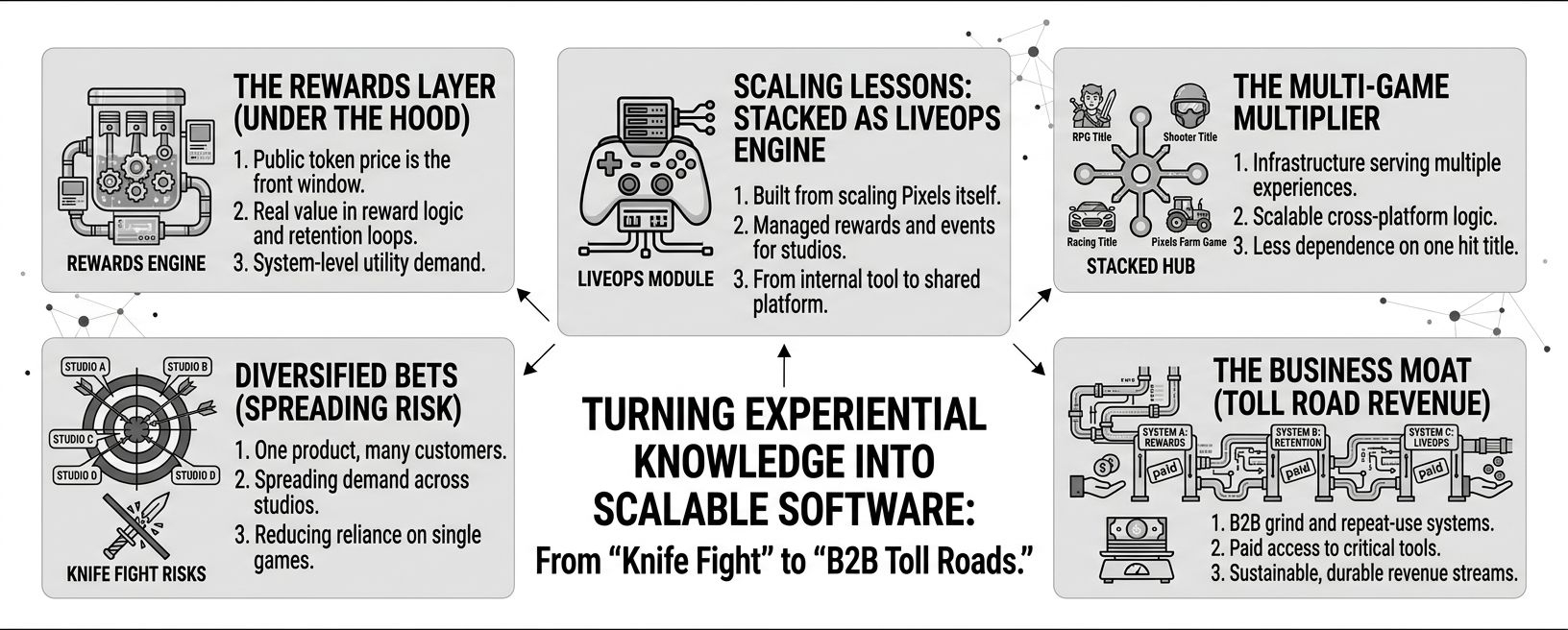
But the more important layer is under the hood: Pixels has described Stacked as a rewards app for players and a rewarded LiveOps engine for games, built from what it learned scaling Pixels itself. Luke Barwikowski has also framed Stacked as infrastructure that can support a broader push beyond one title.
And that changes the risk shape. A single game is a knife fight. One bad update, one weak season, one broken sink for rewards, one bot wave, and the whole thing starts leaking users. Game-specific bets are fragile because they rely on one world staying fun, one loop staying sticky, one team staying sharp. That is not a business moat. That is a stress fracture with good branding. Infrastructure is different.
Infrastructure does not need every game to become a monster hit. It needs enough studios to need the same boring, hard, painful tools. That is the part retail usually ignores because it sounds less sexy. Humans do love shiny trash. But the boring layer is where repeat demand lives.
If Stacked is the engine helping studios manage rewards, events, and monetized engagement systems, then PIXEL is not tied to one farm game winning forever. It is tied to whether Pixels can turn hard-earned operating knowledge into software other teams use. That is a much cleaner business model. One product. Many customers. Many shots on goal. Less dependence on one title carrying the whole cart uphill. That is the picks and shovels case.
During a gold rush, the cleaner trade is often not the guy digging in one patch of dirt. It is the one selling tools to every desperate digger with mud on his boots.
Web3 gaming has a brutal history of confusing traffic with durability. A game can trend for a month and still have rotten economics. A token can bounce and still have no real operating edge. But when a team takes lessons from a live product and turns them into infrastructure, I pay attention. Because that means they may have stopped chasing applause and started building toll roads.
That is where Stacked gets sharp. Pixels is already signaling that its future architecture is wider than one game loop. Public posts around Stacked describe it as a separate layer for rewarded LiveOps, while Luke has talked about building for a world where the infrastructure layer can serve more than one experience. That is not just product expansion. That is margin logic. It says, “we learned expensive lessons once, now let’s sell the machine many times.”
I like this angle because it removes some of the fantasy. A lot of Web3 people want a hero story. One game. One chart. One explosive run. Clean narrative. Easy dopamine. Real businesses are uglier than that.
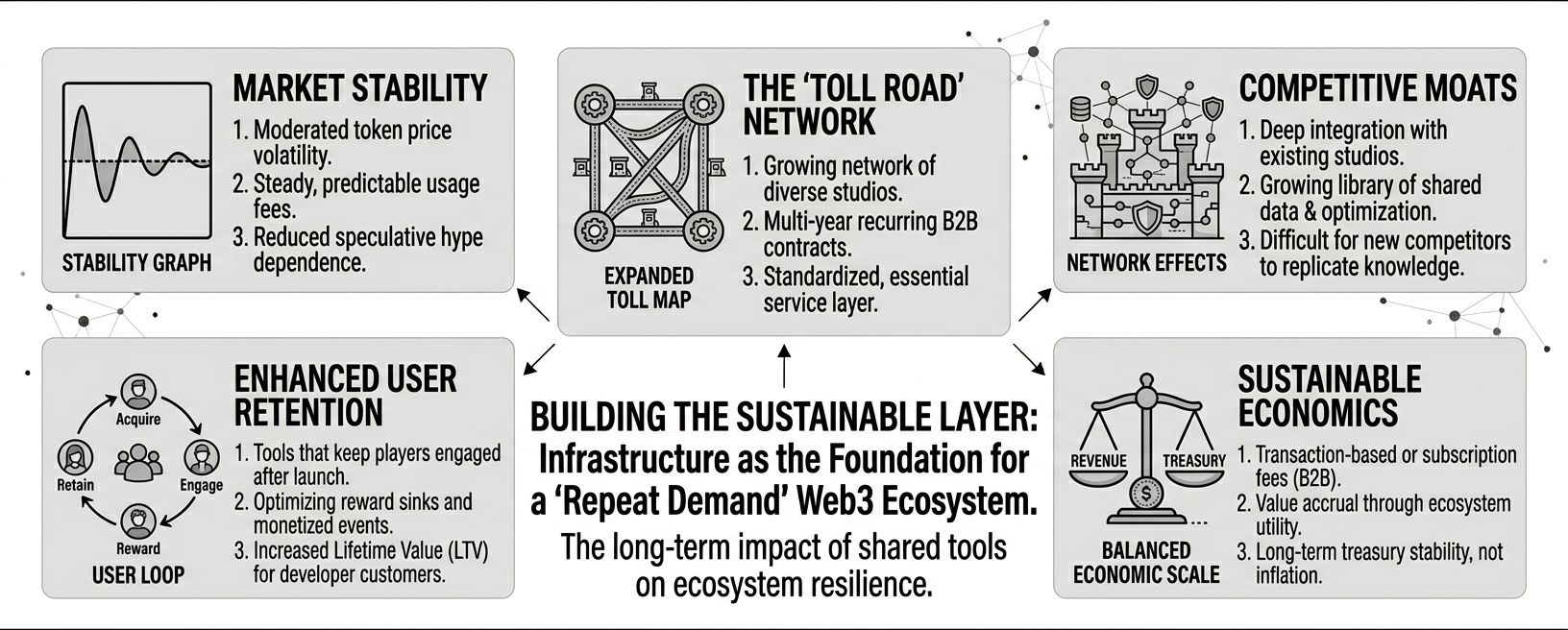
The strongest setups often look dull at first. Less romance. More wiring. More dashboards. More repeat use. More B2B grind. The crowd hates that phase because it does not feel magical. I usually like it for the exact same reason.
So when I look at PIXEL through this lens, I do not see a clean moon story. Good. Those usually end badly. I see a small public asset attached to a team trying to turn game-specific survival skills into shared infrastructure. That lowers the dependence on one title, spreads demand across more studios, and gives the model more ways to work if execution is real. Not easy. Not risk-free. Still very early. But structurally better.
That, to me, is the whole point. In weak markets, single products break. In hard markets, tools survive. And in Web3 gaming, survival is worth more than noise.
