


I’ll admit it. For a while I thought Pixels’ inflation problem was the usual "too many rewards, too fast" situation. You know, when a game gives out many tokens and players quickly sell them causing the value to drop. But the more I looked into it the more I felt like something deliberate was happening… like inflation wasn’t just a mistake it was something they were trying to control.
Pixels has a lot of rewards. Farming, quests and resource loops all give out pixel tokens.. When you look at the numbers it’s clear why that can be a problem. If many tokens are given out and not enough are taken away the value of each token will go down. That’s what happens in Web3 games.
Pixels didn’t just reduce rewards without thinking. What stood out to me was their use of a metric that balances rewards and sinks. It’s called RORS. It’s around 0.8. That number means that 80% of the tokens given out escape the system while 20% are recaptured through things like upgrades and land usage. In terms not every token leaves the system forever. Some of it gets reused.
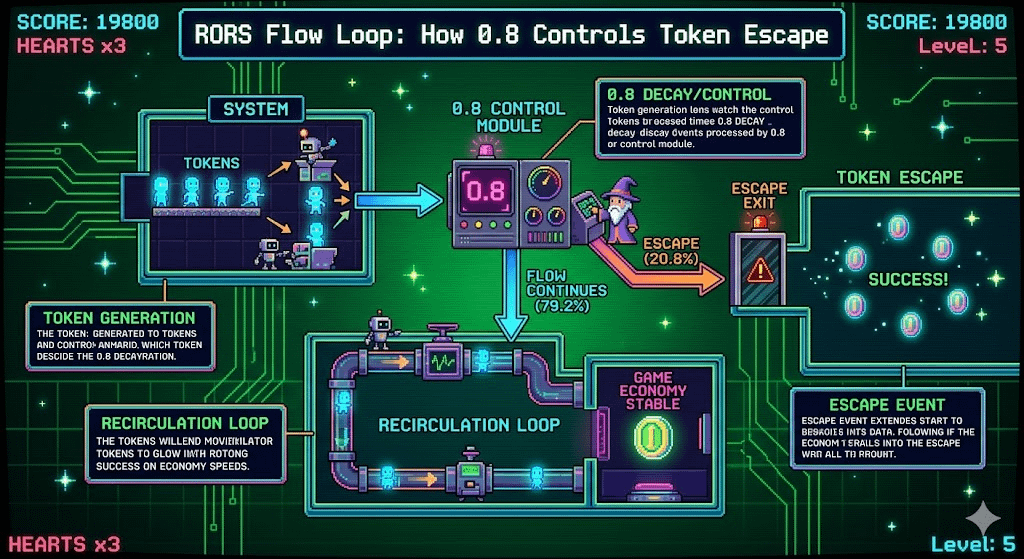
This helps to slow down the number of tokens that hit the market. If players earn 100 units of value but only 80 of them effectively "survive" after sinks inflation isn’t eliminated,. It’s reduced. It buys time. And in economies time is everything.
Staking also adds another layer that I initially didn’t think was that important. Some pixel tokens aren’t just sitting idle; they’re locked by players who want to influence reward distribution or position themselves for the term. When tokens are staked they’re temporarily removed from circulation. That reduces sell pressure but more importantly it changes how players behave. Of extracting value right away some players start thinking about yield and control.
The emission structure itself is also. Targeted. Of infinite or unpredictable rewards Pixels has controlled distribution tied to activity and system health. That matters because uncapped emissions are where most games collapse. Supply expands endlessly while utility struggles to keep up. By contrast a capped or semi-controlled emission model creates boundaries.
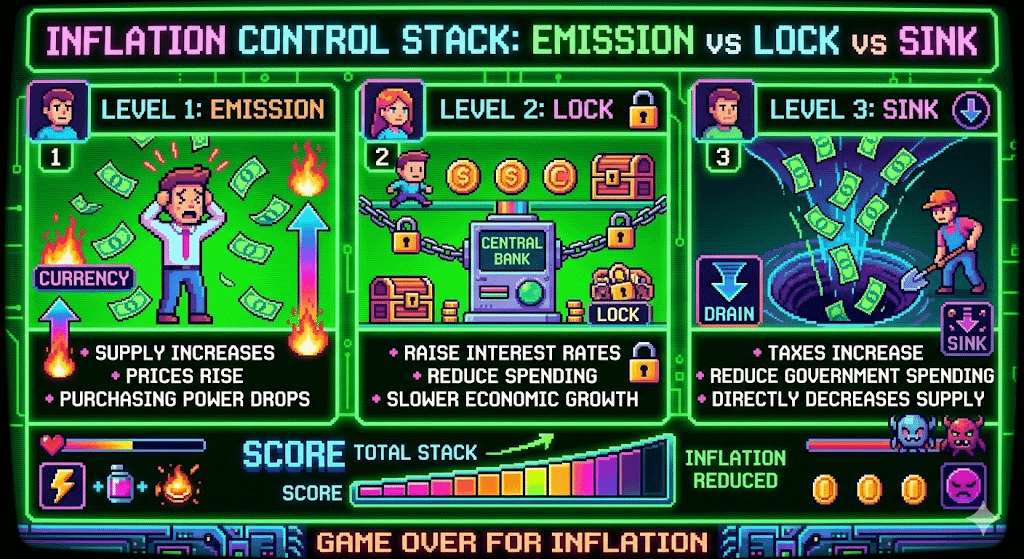
This is where it gets interesting. All of this. RORS ~0.8 staking locks emission targeting. Doesn’t eliminate inflation. It changes it. Inflation becomes something managed than avoided. Tokens still enter the system. The goal shifts toward controlling how fast they circulate and where they accumulate.
What this enables is a kind of flywheel. Players earn, spend, reinvest and occasionally exit. But not all once and not without friction. That friction is intentional. It slows down the farm and dump" cycle just enough to keep the system from collapsing under its own rewards.
Still I’m not completely convinced it’s a problem. If player growth. Sinks lose their appeal that 0.8 balance could drift. Suddenly more value escapes than expected and inflation pressure returns. These systems are fragile. They work until behavior shifts.
What struck me most is that Pixels didn’t try to eliminate inflation. They accepted it as part of the system. Focused on shaping its flow instead.. That feels like a bigger shift. Not just for Pixels but for Web3 games in general.
The real evolution here isn’t " inflation." It’s the idea that, in-game economies might survive not by stopping token emission…. By teaching tokens where to go before they ever reach the exit.