

$PIXEL represents a vision of a digital economy that starts with gaming and expands into a broader online ecosystem. The image presents a structured growth model built in layers. It shows how a strong gaming economy can become the foundation for creator income, e commerce, virtual ownership, and community governance. Instead of limiting value to gameplay rewards, the model aims to turn user activity into a larger economic network.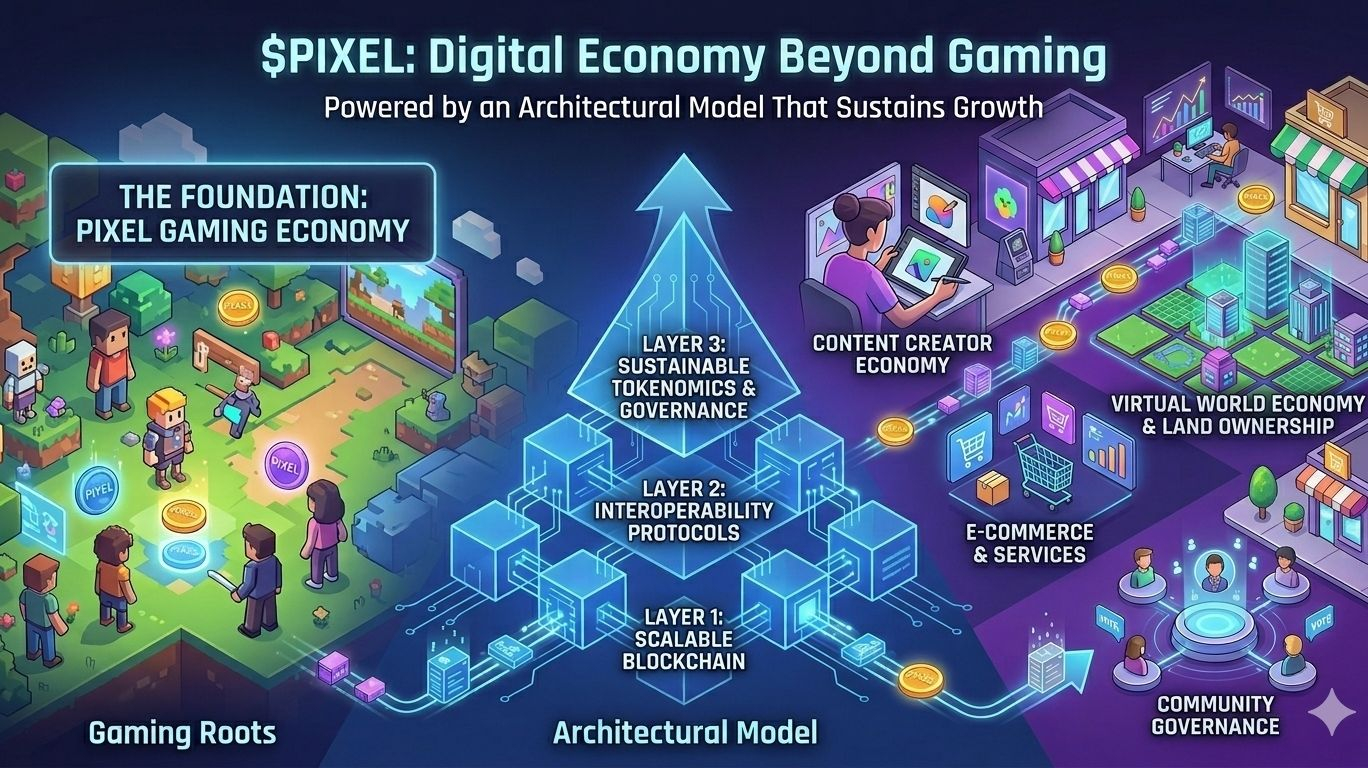
The first foundation is the Pixel gaming economy. This is where users enter the ecosystem. Players earn, trade, build, and participate through game experiences. Gaming creates traffic, attention, and daily engagement. These are valuable assets in any digital platform. Many projects struggle to attract active users, but games naturally create repeat interaction. That makes gaming a practical starting point.
Inside the gaming layer, users may collect items, trade resources, complete missions, or own digital assets. These actions create market behavior. Demand, scarcity, and utility begin to form. When users see real value in time spent, retention often improves. This is why gaming can function as the engine that powers the rest of the ecosystem.
The image then highlights three architectural layers that support expansion. Layer one is a scalable blockchain. This means the system needs fast transactions, low costs, and reliable infrastructure. If users face slow speeds or high fees, adoption drops. Scalability is essential when thousands or millions of users interact daily. A strong base layer allows assets, payments, and ownership records to move efficiently.
Layer two is interoperability protocols. This is where separate products connect. Assets should move across games, marketplaces, apps, and services. Identity should remain portable. Interoperability reduces friction and increases usefulness. A digital item becomes more valuable when it works in multiple places. This layer can also help developers build new tools faster because they connect to existing systems instead of starting from zero.
Layer three is sustainable tokenomics and governance. Many digital projects fail because rewards are short term and inflation is uncontrolled. Sustainable tokenomics means balancing incentives, supply, demand, and long term utility. Tokens need reasons to exist beyond speculation. They may support payments, access, voting, staking, or ecosystem services. Governance gives the community a voice in decisions. Users who help grow the network often want influence over future direction.
Once these three layers are in place, the economy can expand beyond gaming. The first growth area is the content creator economy. Designers, streamers, artists, writers, and developers can monetize skills through the platform. They may sell digital goods, receive tips, launch experiences, or build branded communities. This turns users into producers, not only consumers.
The second growth area is e commerce and services. A tokenized ecosystem can support online stores, freelance work, subscriptions, and business tools. If payments are smooth and community trust is high, commerce can grow naturally. Users already active in the platform may prefer to buy and sell inside familiar networks.
The third area is virtual world economy and land ownership. Digital spaces can host events, shops, advertising, social hubs, and experiences. Ownership creates incentives to improve land and attract visitors. When virtual locations generate traffic, they can hold economic value similar to premium online real estate.
The final area is community governance. The image shows users connected through voting. This suggests decentralized decision making. Communities may vote on updates, grants, treasury use, policies, or new partnerships. Governance can strengthen loyalty because users feel ownership over outcomes.
The larger message is clear. PIXEL is positioned as more than a gaming token. It aims to become the center of a connected digital economy. Gaming brings users. Infrastructure enables scale. Interoperability increases utility. Smart tokenomics supports longevity. Governance builds trust. From there, creators, businesses, and communities can grow together.
If executed well, this model creates multiple revenue streams instead of relying on one product. That diversification can improve resilience. Success depends on real adoption, quality products, and disciplined economic design. Without those factors, vision remains theory. With them, PIXEL could evolve from a game based ecosystem into a broad digital marketplace.
