
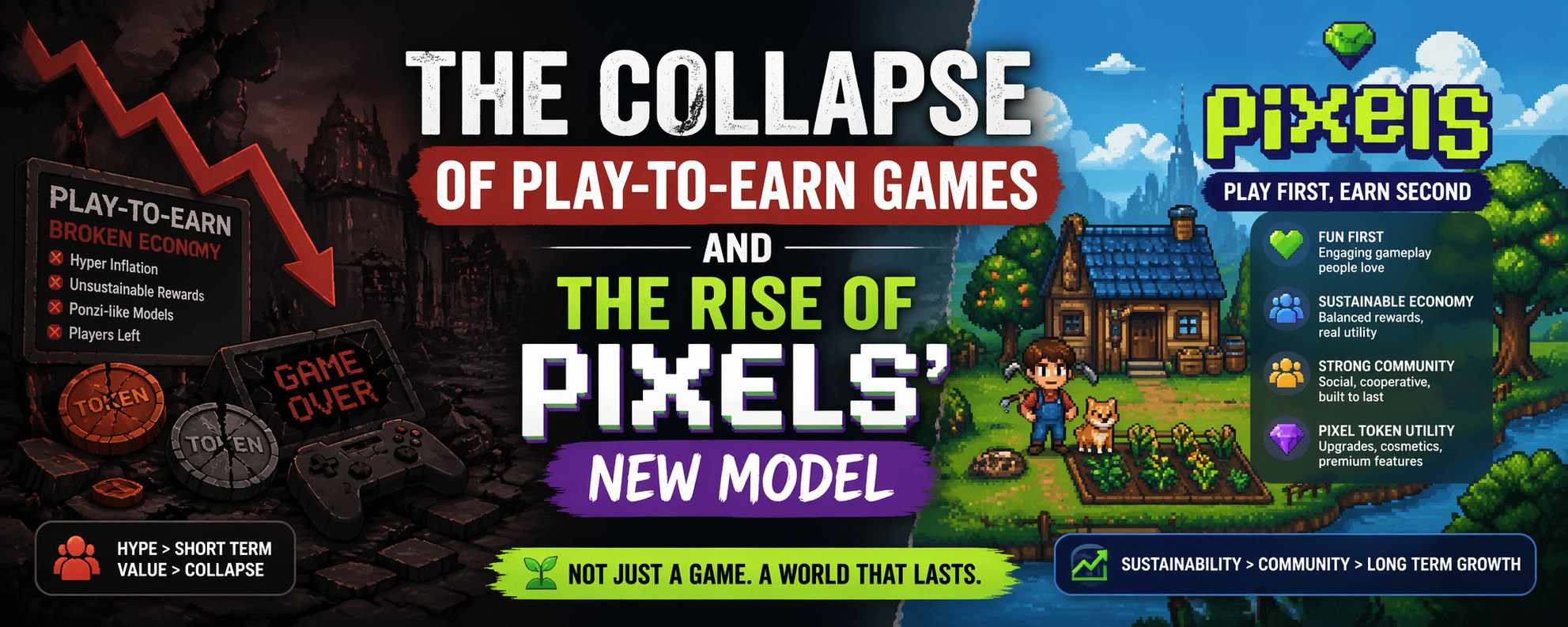
It began with a simple idea that felt almost too good to question. Play a game. Earn money. Repeat. For a while, it worked—until it didn’t. You could feel the shift slowly, almost painfully. What once looked like a new digital economy started showing cracks. Not loud at first. Just small signs. Rewards getting thinner. Players logging in less. That quiet drop in excitement said more than any chart ever could.
Early successes like Axie Infinity proved one thing very clearly—people will show up when there’s money on the table. But they also revealed something deeper. Most of these systems were built on momentum, not foundation. The moment growth slowed, everything felt fragile. And honestly, that fragility wasn’t hidden. It was just ignored.
The real issue wasn’t crypto. It wasn’t even tokens. It was design thinking. Play-to-earn games treated players like economic units. Log in. Perform tasks. Extract value. Leave. There was no emotional hook. No real sense of discovery. Just a loop that quietly drained interest over time. And here’s the hard truth—when a game starts to feel like work, people don’t stay. Even if it pays.
Economically, the problem was sharper. Tokens kept flowing out. But real demand? That stayed limited. New players were needed to sustain old rewards. That created a cycle that looked functional… until it wasn’t. Once user growth slowed, token value dropped. Earnings collapsed. And just like that, the illusion faded. A lot of retail players felt that moment deeply—it wasn’t just financial, it was psychological. Trust broke. Confidence slipped.
Developers learned the hard way too. Chasing fast adoption through rewards brought short-term wins, but long-term instability. Institutions mostly stayed on the sidelines, watching cautiously. They wanted proof of sustainability, not just hype-driven spikes. And for a long time, that proof simply wasn’t there.
Now here’s where things take a quieter, more interesting turn.
Pixels doesn’t try to shout louder. It doesn’t promise overnight income. In fact, at first glance, it feels almost… calm. A farming world. Simple mechanics. Social interaction. But that calm surface hides a very deliberate shift in direction.
Pixels leans into something many Web3 games forgot—people play games to feel something. Not just to earn. That small shift changes the entire structure. Instead of pushing rewards upfront, it builds engagement first. Farming, crafting, exploring… these aren’t just tasks. They create rhythm. And rhythm keeps players coming back in a way rewards alone never could.
The role of the PIXEL token is also handled differently. It’s not forced into every action. You don’t need it to enjoy the game. It sits slightly in the background, used for upgrades, cosmetics, and premium layers. That separation matters. It reduces pressure on the economy. It avoids that constant need to “cash out” that damaged earlier models.
There’s also a subtle social layer working here. Players interact, trade, collaborate. It’s not just about extracting value—it’s about building small connections inside the game world. And those connections, even if simple, create stickiness. Something most P2E systems lacked.
From a developer’s perspective, this model feels more controlled. Growth is slower, yes. But it’s also more stable. From a retail trader’s side, it’s less about quick flips and more about long-term positioning—if the ecosystem continues to hold. Institutions? Still cautious. But Pixels aligns more closely with what they’ve been waiting for: real users, consistent engagement, and a system that doesn’t rely entirely on speculation.
That said, risk hasn’t disappeared. It never does. The token still depends on demand. The game still needs to evolve. Attention in Web3 moves quickly, sometimes brutally fast. If innovation slows, users drift. That’s the reality no project can escape.
But here’s what stands out. Pixels doesn’t try to fix everything at once. It simply changes priorities. It puts experience before extraction. It accepts that not every player is here to earn. And that quiet acceptance feels… refreshing. Almost rare.
Looking at current market trends, this shift makes sense. The hype phase of play-to-earn has cooled. Users are more selective. Developers are more aware. Even capital is flowing toward projects that show real engagement, not just token activity. Pixels fits into that transition phase. Not as a finished answer—but as a more thoughtful direction.
If you step back, the lesson becomes clear. Games built only around money don’t last. People stay for progression, for connection, for that small sense of belonging. Earnings can support that. But they can’t replace it.
Personally, this is why Pixels feels worth watching. Not because it guarantees success—but because it avoids the mistakes that broke others. There’s a certain restraint in its design. A sense of patience. And in a space that has seen too many loud promises and sudden collapses, that quiet, steady approach builds something more valuable than hype—it builds trust.