
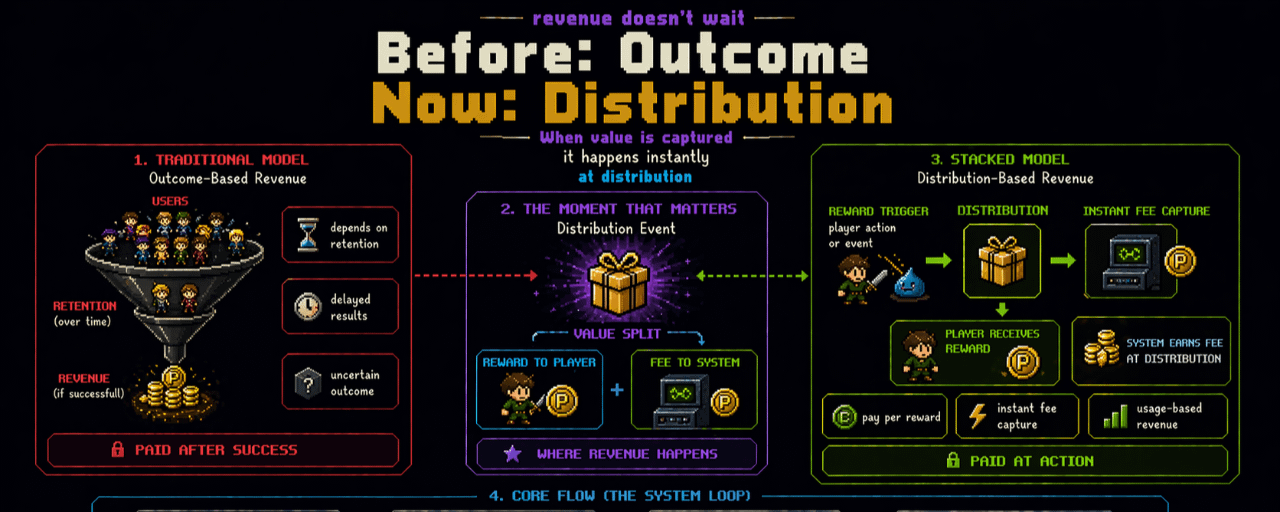
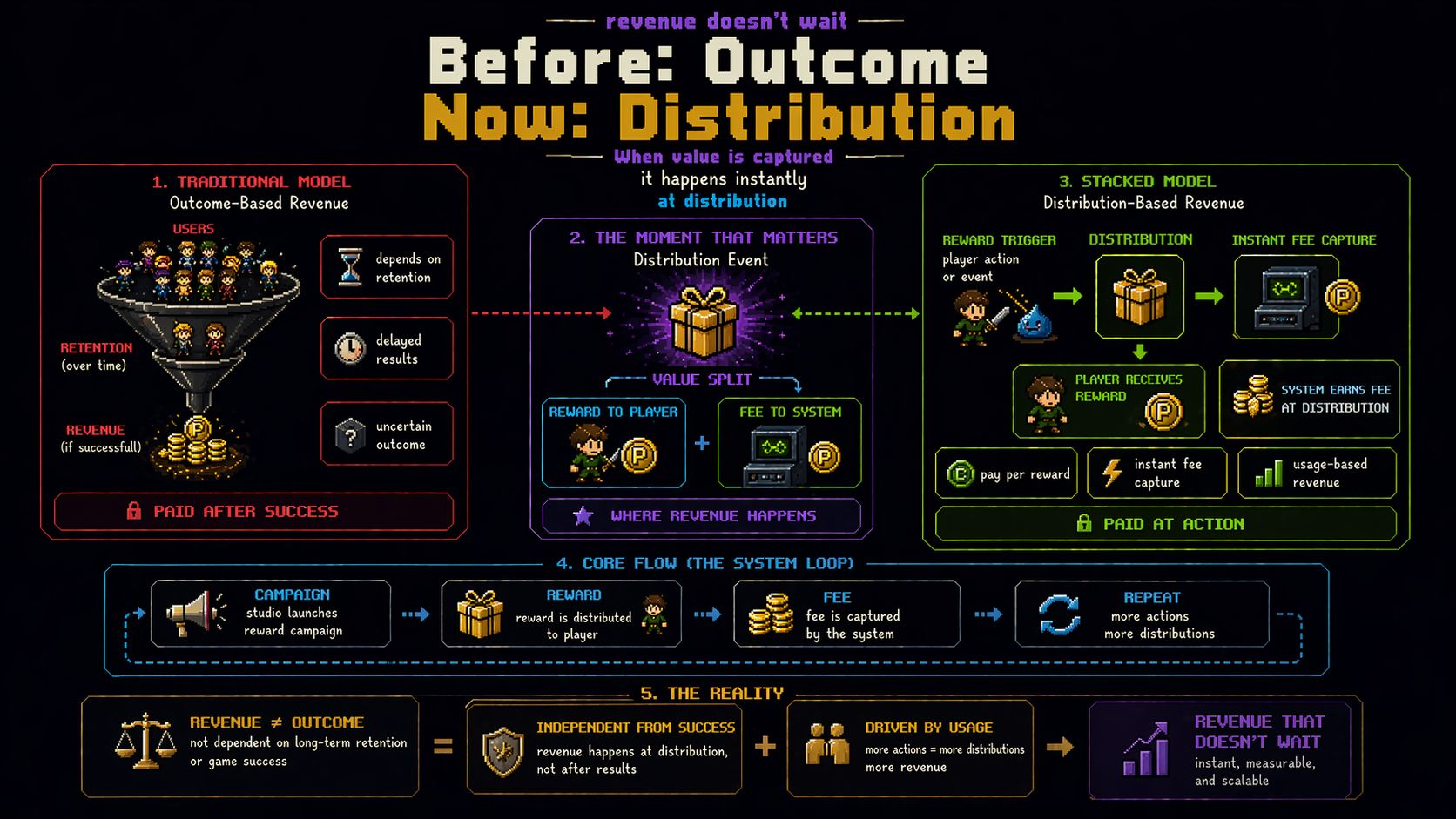
I was going through how Stacked makes money and there’s one detail that I didn’t really pay attention to before, but now it feels like it changes how the whole thing should be read. The fact that Stacked charges fees at the moment rewards are distributed, not based on whether the campaign actually works.
At first I thought that was just a normal fee structure. But the more I think about it, the more it feels… different from how most systems in Web3 are built.
Because usually, revenue depends on results. A game needs players. Players create activity. Activity generates fees. If that chain breaks anywhere, everything slows down with it. You can almost trace every token collapse back to that dependency.
Stacked doesn’t seem to follow that same path.
It earns when a studio runs a campaign through its system. The fee is tied to the act of distributing rewards, not whether those rewards lead to better retention or growth afterward. So revenue happens upfront, at the moment of usage, not at the end of the outcome.
And this isn’t theoretical. Pixels has already processed a huge number of rewards and generated real revenue from that flow. So at least inside its own ecosystem, this model has already been under real conditions.
What I find more interesting is what happens when other studios start using it.
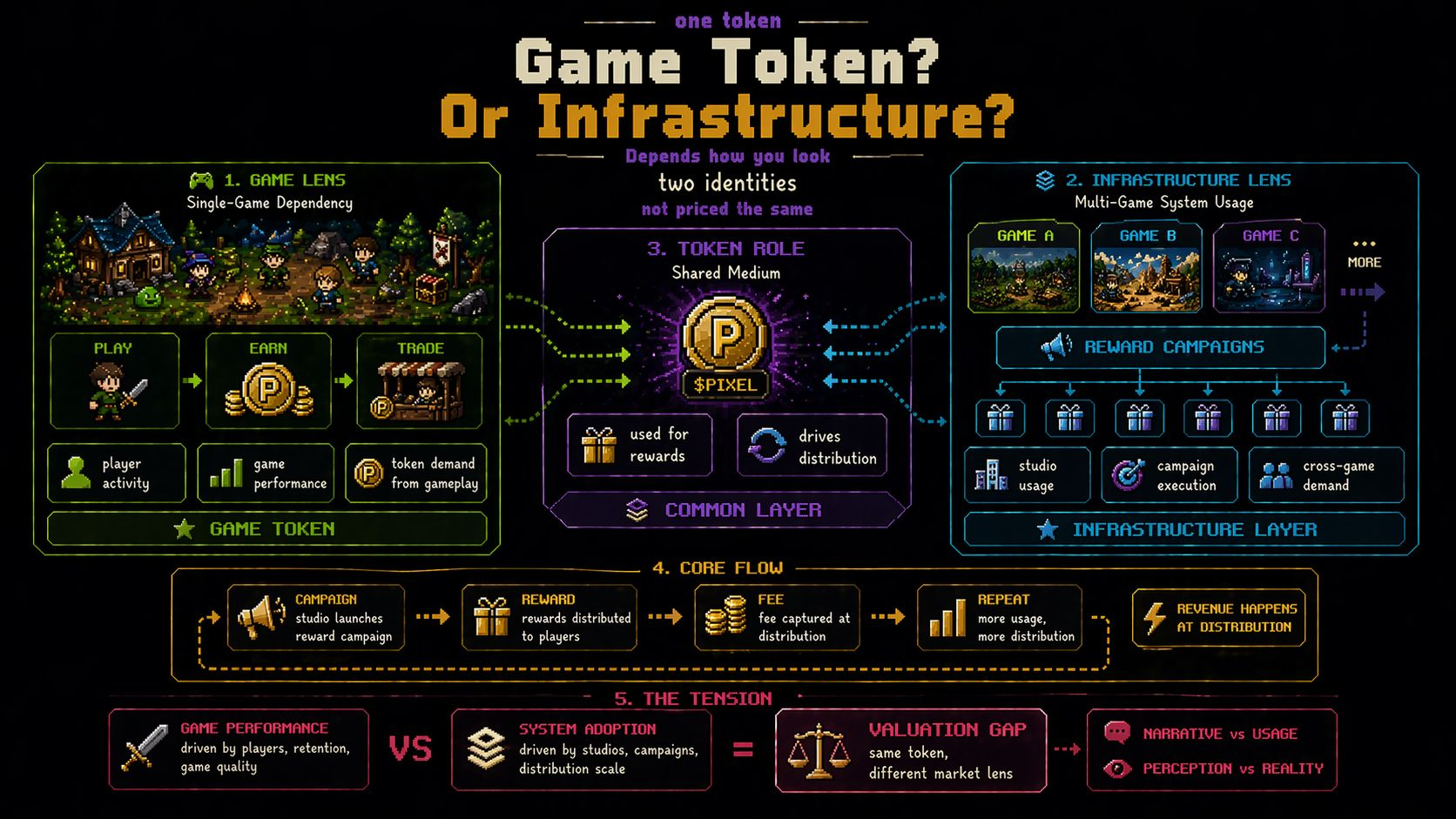
Every time a campaign runs, two things happen at once. Stacked collects its fee, and the studio needs PIXEL to actually distribute rewards. So usage of the system creates both revenue and token demand in parallel. Not because of speculation, but because something needs to be executed.
That starts to feel less like a typical game economy and more like a service layer.
But I think the part that’s still unclear is adoption. It’s one thing to have the system working inside Pixels, where everything is already aligned. It’s another thing entirely to convince external studios to plug into it, run campaigns, and trust the results enough to keep using it.
That’s not a technical question anymore. It’s more about sales, trust, and whether the results translate outside of the original environment.
Still, I keep coming back to that initial detail. Getting paid for distribution itself, not for whether it succeeds afterward, is a very different way to structure revenue.
And if that model actually scales beyond Pixels, then maybe PIXEL isn’t just tied to how one game performs. Maybe it’s tied to how often this system gets used across multiple games.
I don’t really have a strong conclusion here yet. It just feels like the market is still looking at PIXEL through a game lens, while part of it is starting to behave more like infrastructure.
And those two ways of looking at it don’t always lead to the same place.