
I was standing in a queue at a small tea stall this morning, watching two people argue quietly about who had ordered first. Neither of them raised their voice. They just kept repeating small details, trying to prove they deserved to be served before the other. It wasn’t about the tea anymore. It was about position.$PIXEL
Later, I opened the CreatorPad task and found myself staring at the earnings dashboard, specifically the leaderboard panel and the reward distribution bar. I adjusted my submission, refreshed the screen, and watched my position shift slightly. That moment—seeing how a tiny movement on the leaderboard changed the projected payout beside my name—felt more revealing than anything else in the task. It wasn’t the content I made that stayed with me, it was how the structure decided what that content was worth.
I don’t think most people want to admit how much these systems quietly turn effort into competition rather than value.
What bothered me wasn’t losing or gaining a spot. It was realizing that the structure itself doesn’t reward quality in any stable sense—it rewards relative positioning. The earnings weren’t tied to what I created in isolation, but to how it performed against others in the same confined pool. That sounds obvious, but it feels different when you watch your “worth” fluctuate in real time because someone else posted something slightly more engaging.
We often talk about crypto as if it fixes fairness by removing middlemen, but this felt like a different kind of control. Not hidden, not malicious, just embedded in the rules. The system wasn’t asking “is this good?” It was asking “is this better than the rest, right now?”
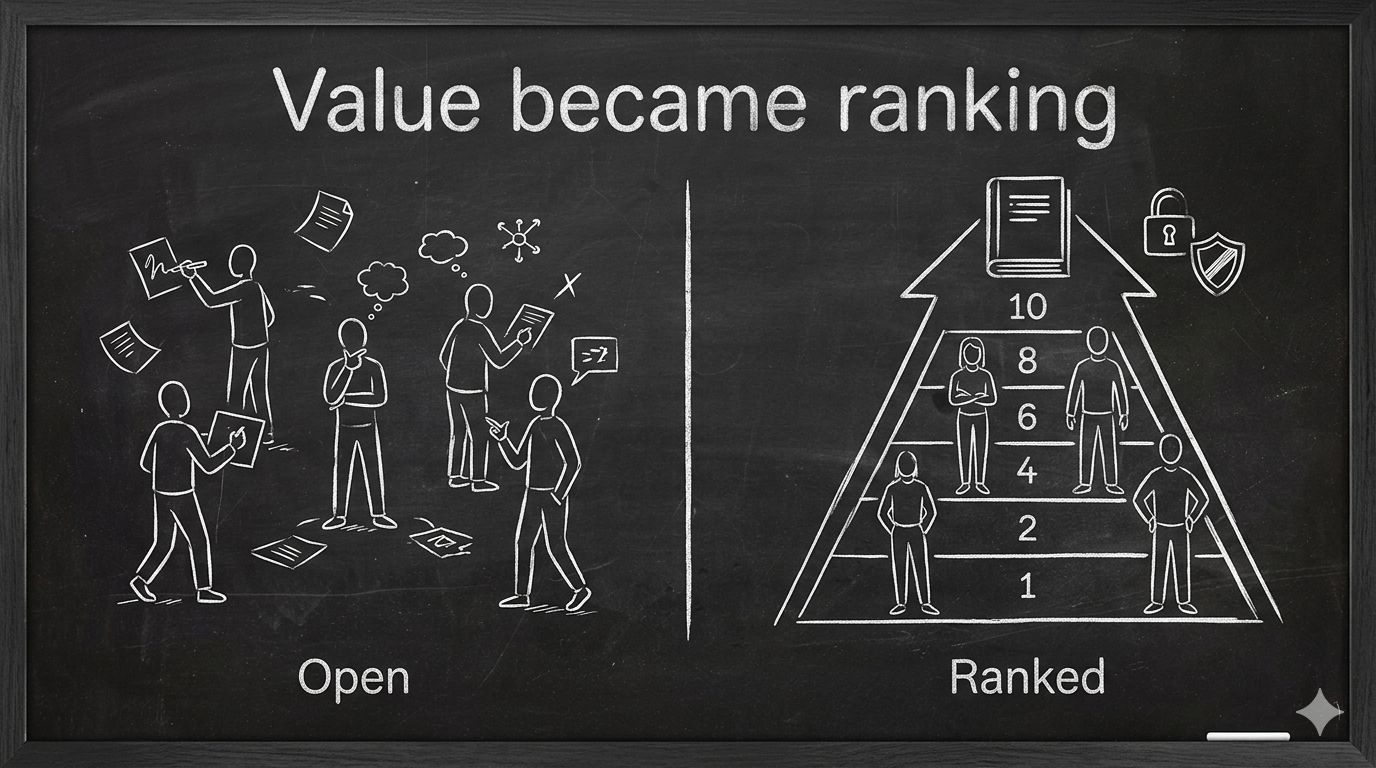
And that creates a strange pressure. You stop thinking about what should exist and start thinking about what will outperform. Even subtle decisions—tone, timing, framing—begin to orbit around visibility rather than meaning. I noticed myself hesitating before posting, not because I doubted the idea, but because I was calculating its competitive weight.
The CreatorPad campaign didn’t feel exploitative. It was clean, transparent, even efficient. But that’s exactly why it lingered with me. There’s no confusion about how rewards are distributed. The rules are visible. And still, the outcome feels less like recognition and more like sorting.
Maybe this is inevitable. Any system with limited rewards will create hierarchy. But I keep coming back to that quiet argument at the tea stall. Both people believed they deserved to go first, and both had reasons. The system—the vendor, the line, the moment—would decide, not the intrinsic merit of their claim.
In the same way, competitive structures in crypto don’t eliminate bias or inefficiency. They just formalize a different kind of gatekeeping, one that feels objective because it’s numerical. But numbers don’t remove pressure—they redirect it.
I’m not convinced this leads to better creation. It might just lead to better positioning.
And if that’s true, then what exactly are we optimizing for when we participate in systems like this? @Pixels $PIXEL #pixel