

I didn’t notice it immediately, but after a few days of playing with Stacked fully active, something started to feel… too aligned. Not in a bad way at first. Actually, it felt smoother, like the friction that usually slows you down was being quietly removed. Tasks were easier to follow, rewards felt more consistent, and the daily loop started to make more sense without having to think too much about it.
At some point I realized that I wasn’t adjusting to the game anymore.
The game was adjusting to me.
Stacked is now personalizing missions based on how you play, whether you lean more into farming, production, or other loops. On top of that, streak bonuses are reinforcing that same behavior over time, rewarding consistency not just in activity, but in the specific way you approach the game. It’s subtle, but it builds quickly.
And that’s where it gets interesting.
Because when everything starts to align with your natural way of playing, you stop questioning it.
Inside Pixels, that alignment feels like progress. You log in, your tasks make sense, your routes feel efficient, and your rewards follow a pattern that seems predictable enough to trust. There’s less friction, less need to experiment, less reason to step outside what already works.
At first, that feels like improvement.
But after a while, it starts to feel like repetition.
Not forced repetition, but reinforced repetition.
Because if Stacked is learning from what you do, and then shaping your next set of tasks around that same behavior, it’s not just rewarding your style. It’s narrowing it.
You’re not exploring different ways to play.
You’re optimizing one.
And the more you repeat it, the more the system confirms that this is the right path, because it keeps giving you outcomes that validate it.
That loop is efficient.
But it’s also closed.
That’s what made me pause.
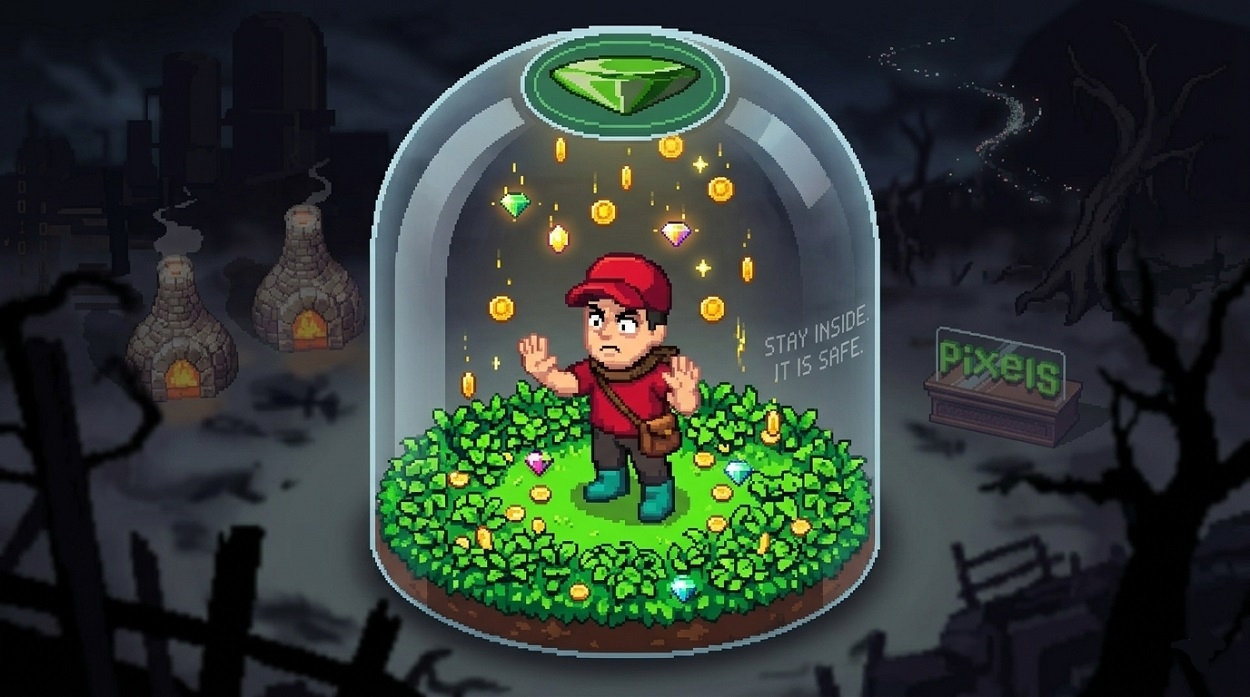
Because before, even when the system was messy or less precise, there was more randomness in how things unfolded. You could drift between activities, test different approaches, and even if it wasn’t optimal, it exposed you to different parts of the game. It felt less directed.
Now it feels guided.
Not explicitly, not in a way that tells you what to do, but in a way that makes certain paths easier to follow than others.
And over time, easier paths become default paths.
That’s where I start to question what’s actually happening.
If Stacked keeps refining its understanding of how I play, and keeps reinforcing that same behavior through rewards, missions, and streaks, then I’m not just progressing inside the game.
I’m being shaped into a more predictable version of myself as a player.
That predictability is valuable for the system.
It’s easier to manage, easier to optimize, easier to reward.
But from my side, it raises a different question.
How much of what I’m doing is still a choice… and how much of it is just the path that’s been made smoother for me?
Especially now that the broader environment looks stable. $PIXEL is holding its range after the unlock, supply is largely in circulation, and the ecosystem keeps expanding through Chapter 3 with more structured production and synchronized tasks. Everything points to a system that’s becoming more coherent, more connected.
And maybe that coherence comes at a cost.
Because when everything starts to adapt to you, it removes the need to adapt yourself.
And without that pressure, it becomes harder to notice what you’re not doing anymore.
Not because it disappeared.
But because the system stopped putting it in front of you.
So you keep moving forward, more efficiently, more consistently, more aligned…
but possibly within a space that’s getting narrower over time.
I’m not sure where that leads yet.
But it’s the first time it feels like improvement and limitation might be happening at the same time, just in different layers of the same experience.