
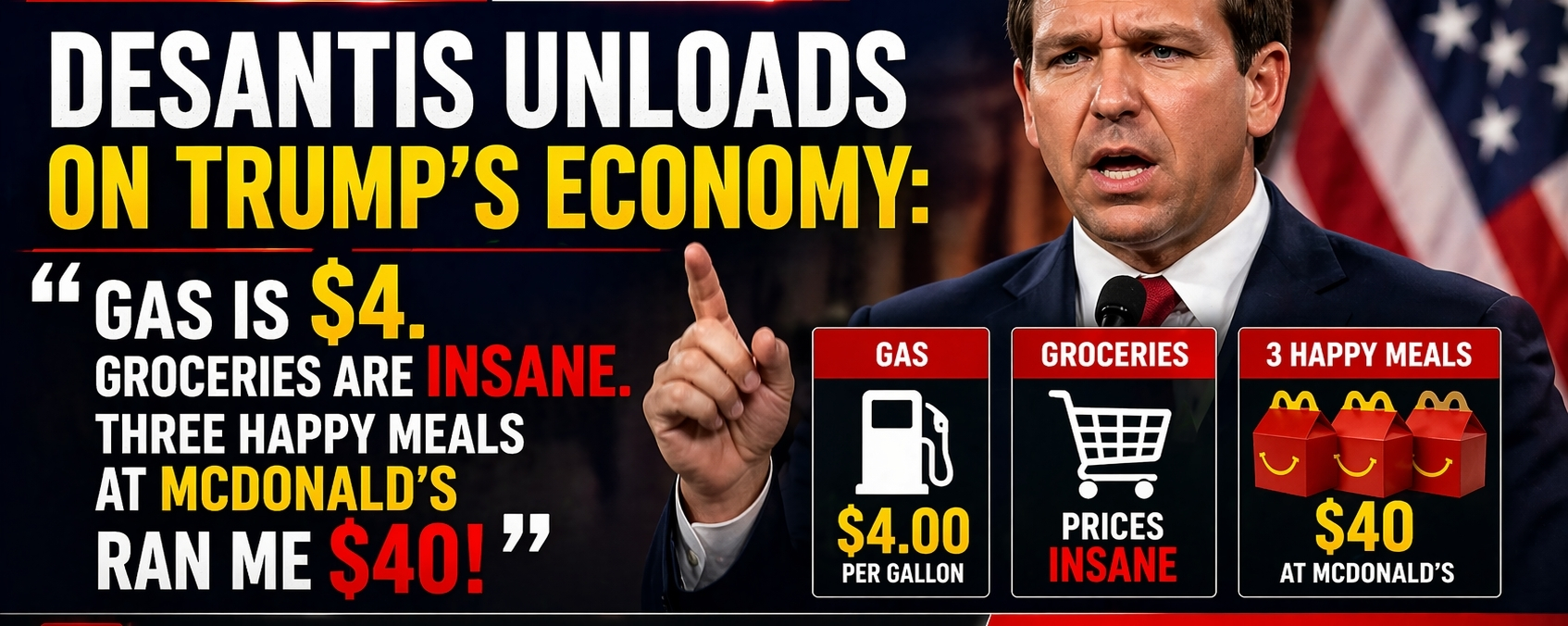

When Ron DeSantis openly calls out the state of the economy under Donald Trump, it hits differently. This isn’t just political noise—it’s a reflection of what many Americans are quietly feeling every single day. And the way he framed it was brutally simple: gas hovering around $4, grocery bills climbing out of control, and something as basic as three Happy Meals from McDonald's costing nearly $40.
That’s not just inflation—that’s a shift in everyday reality.
What stands out to me is how relatable the example is. Forget complex economic charts or policy debates. When fast food—once the cheapest, quickest option for families—starts feeling like a luxury, you know something deeper is off. It signals a pressure point where middle-class comfort begins to crack.
DeSantis isn’t just criticizing numbers; he’s tapping into frustration. People aren’t measuring the economy by GDP or stock market highs—they’re measuring it by what’s left in their wallet after a grocery run. And right now, that gap between income and cost of living feels wider than ever.
But here’s the real question: is this a temporary squeeze, or a sign of something structurally broken? Because if everyday essentials continue trending this way, it’s not just about politics anymore—it’s about sustainability. Families can adjust for a while, cut back, rethink spending… but only to a limit.
The bigger story isn’t who said it—it’s why it resonates. When leaders start pointing out the same pain people are living through, it means the issue has already gone beyond debate. It’s become reality.