
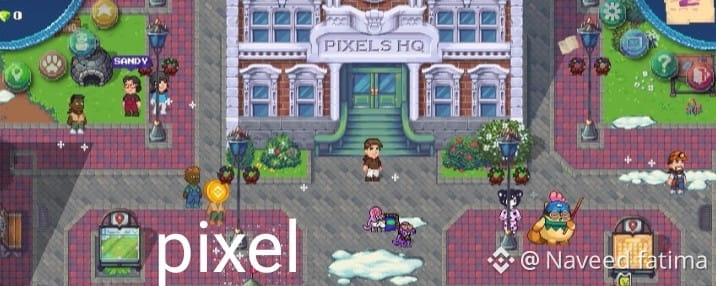
Explain how camping machines in pixel are not just game play feature,but tool that creates daily engagement, retention, and emotional attachment in the ecosystem.
When I first joined the Pixels ecosystem, I honestly thought Pixel Camping was just another short-term engagement strategy — something designed to increase activity for a few weeks and then fade away. But after actively participating, observing the community behavior, and experiencing the structured missions myself, I realized it’s much deeper than that. Pixel Camping doesn’t just reward activity; it builds emotional connection, routine participation, and long-term loyalty around the Pixels world and the PIXEL token.
From my experience, the most powerful part of Pixel Camping is consistency. The structured tasks, daily missions, and reward pools create a rhythm. When you log in every day to farm, craft, complete quests, or contribute content, it slowly becomes part of your lifestyle. At first, you participate for rewards. But over time, you stay because you feel connected. I noticed this shift in myself — I wasn’t just completing tasks for tokens; I was genuinely excited to see the ecosystem grow and the community become stronger.

Another thing I personally observed is how $PIXEL camping encourages quality over hype. In many Web3 projects, people join for quick airdrops and then disappear. But in Pixel Camping, structured missions require effort, creativity, and consistency. This filters out temporary participants and naturally retains serious builders. I saw community members improving their content, sharing farming strategies, helping newcomers, and creating value — not just chasing rewards. That kind of environment builds trust and shared identity.
The loyalty also grows because rewards feel earned, not random. When I completed missions and saw my effort reflected in structured incentives, it created a sense of achievement. Psychological commitment increases when effort is involved. The more time and energy you invest, the harder it becomes to leave. Pixel Camping smartly uses this dynamic to transform casual players into long-term community supporters.
What makes it even stronger is the social layer. Through camping activities, I interacted with more players, engaged in discussions, and collaborated on strategies. Loyalty isn’t just built between a user and a platform — it’s built between people. When friendships and networks form inside an ecosystem, leaving doesn’t just mean losing rewards; it means leaving a community.
In my view, Pixel Camping is not just a campaign model — it’s a community-building framework. It combines structured missions, transparent reward pools, emotional investment, and social interaction. Over time, this transforms short-term engagement into long-term loyalty. I’ve seen participants evolve from curious newcomers into committed advocates of the ecosystem.
That’s the real power of Pixel Camping: it turns participation into belonging, and belonging into loyalty.
