
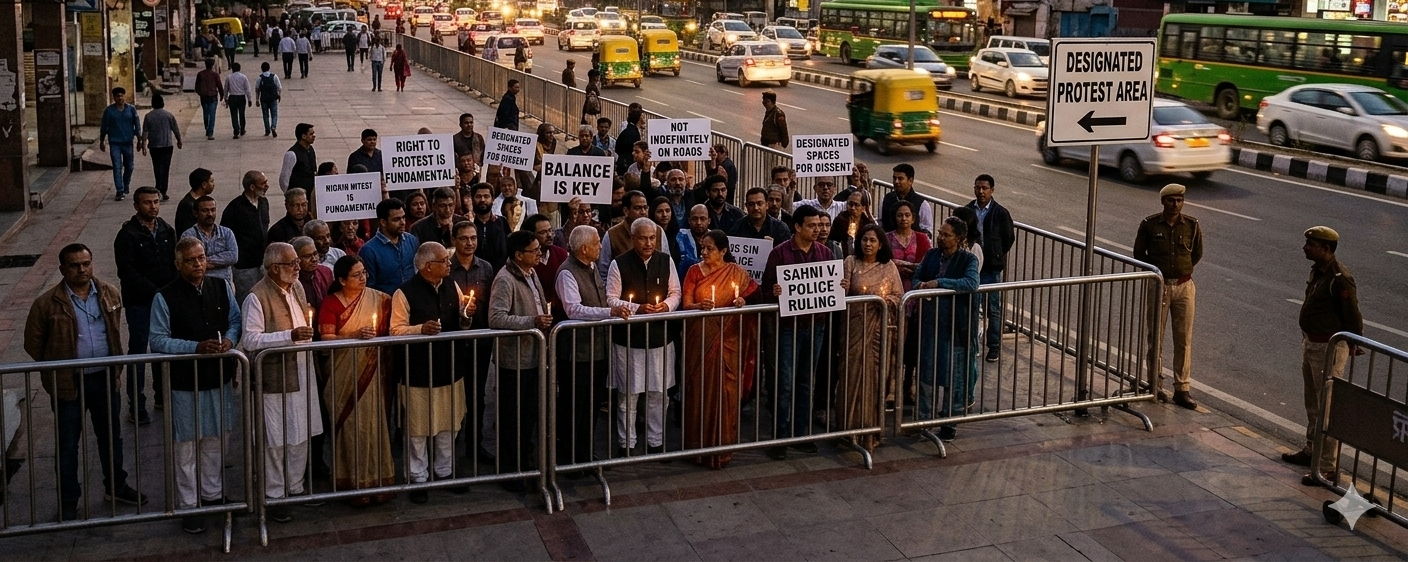
In the landmark 2020 case, *Amit Sahni v. Commissioner of Police*, the Supreme Court of India addressed the tension between the **fundamental right to protest** and the **right to free movement**. While the Court reaffirmed that peaceful protest is a cornerstone of democracy, it ruled that such rights are not absolute.
The judgment clarified that public spaces and arterial roads cannot be occupied indefinitely, as this causes significant inconvenience to the general public. The Court emphasized that dissent must be expressed in **designated areas** rather than through the permanent blockage of public pathways. Ultimately, the ruling established a legal necessity to balance the constitutional right to peaceful assembly with the collective rights of citizens to unhindered mobility.