
I was reading through some of the Pixels material and paused at a phrase that didn’t look like much at first: “spot churn patterns.” I had to read it again, not because it’s complex, but because it implies something most studios don’t actually have.
Not reducing churn. Not analyzing churn after the fact. But seeing it before it happens.
And the more I think about it, the more that difference feels bigger than it sounds.
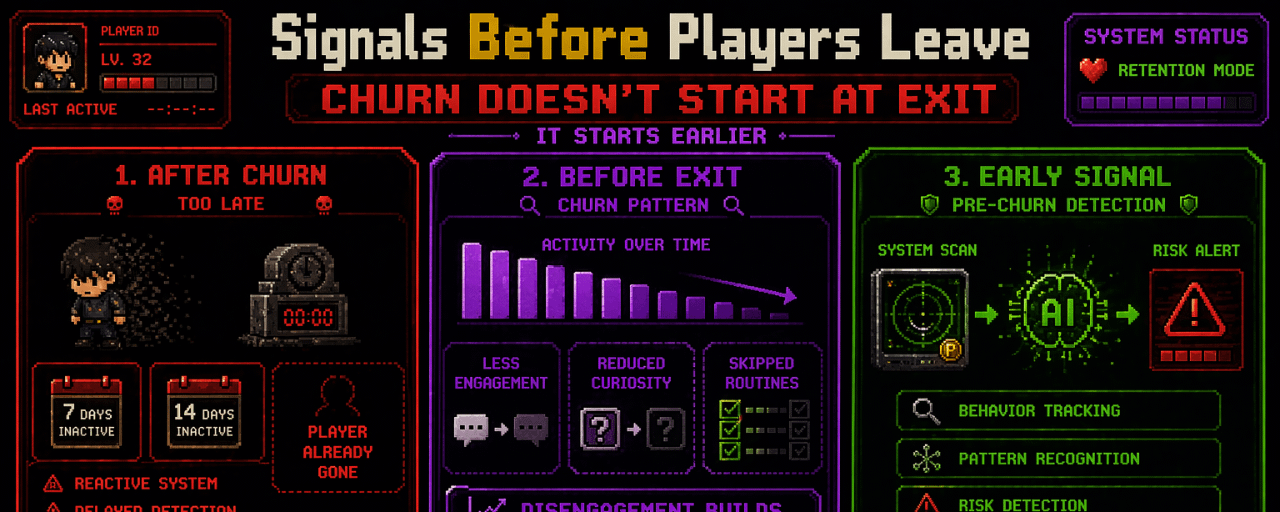
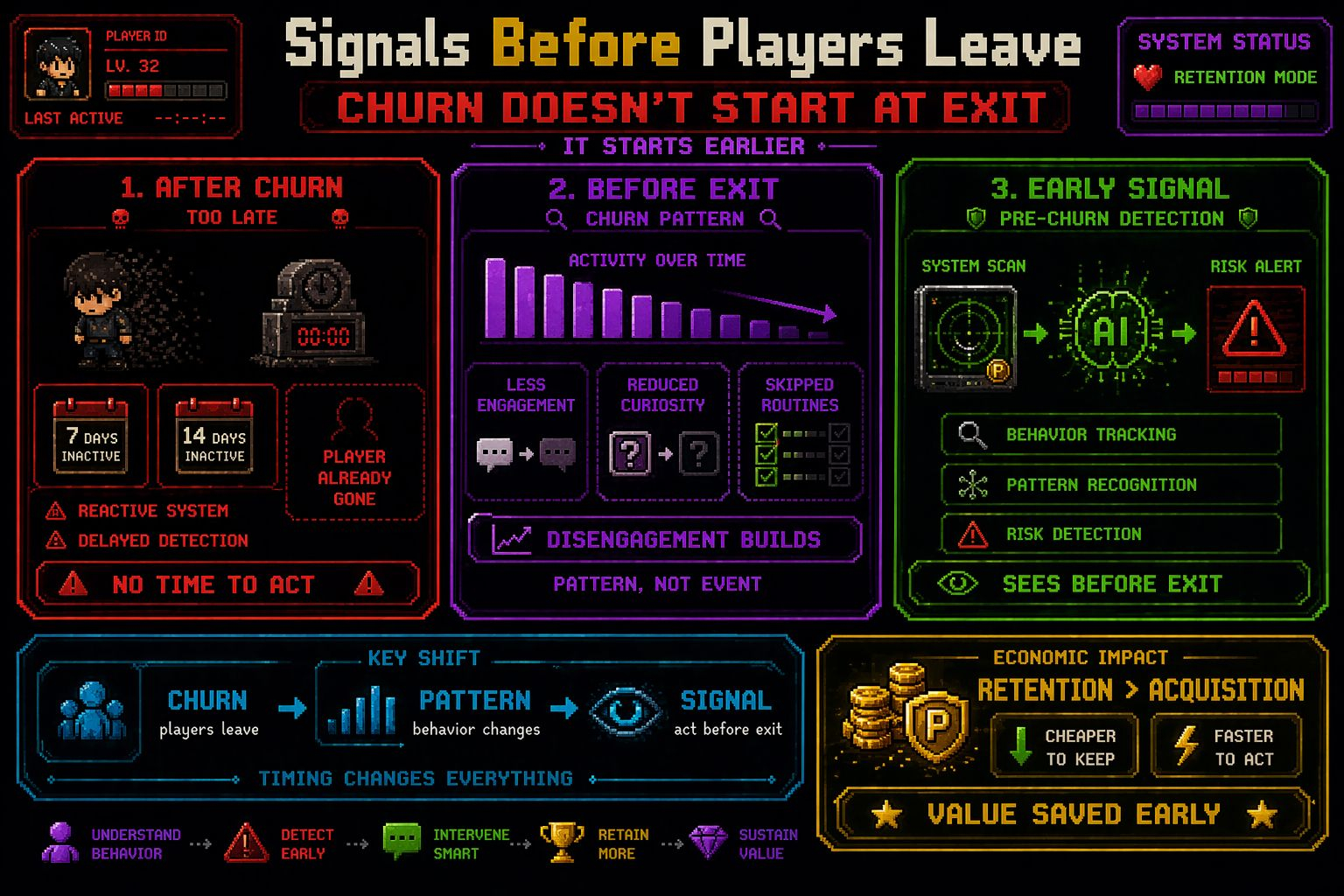
In most games, churn is something you label after the player is already gone. Seven days inactive, maybe fourteen, then they’re marked as churned. But by the time that label shows up, the decision was made earlier. The player didn’t wake up one day and suddenly quit. It built up over time, and that buildup leaves traces.
Shorter sessions, less curiosity, fewer interactions, skipping things they used to do daily. None of these are churn by themselves, but together they start to look like a pattern. A kind of slow disengagement.
What matters is that this pattern shows up before the player disappears.
And economically, that timing changes everything.
Keeping a player is almost always cheaper than finding a new one. In Web3 gaming, that gap feels even wider. Acquiring a new player isn’t just about cost, it’s also about time. They need to learn the system, understand the economy, and actually reach a point where they contribute value.
So if you can intervene before a valuable player leaves, even with something small, it can be far more efficient than replacing them later.
That’s where this idea of spotting churn early starts to feel less like analytics and more like leverage.
But only if you can act on it.
Because seeing the pattern alone doesn’t do much. A dashboard telling you who is about to leave is useful, but if the response takes days or requires multiple steps, the window is already gone.
What Stacked seems to be doing is connecting those two parts. The system identifies a pattern, then immediately allows a targeted action, usually through rewards aimed at that specific cohort. No delay between insight and execution.
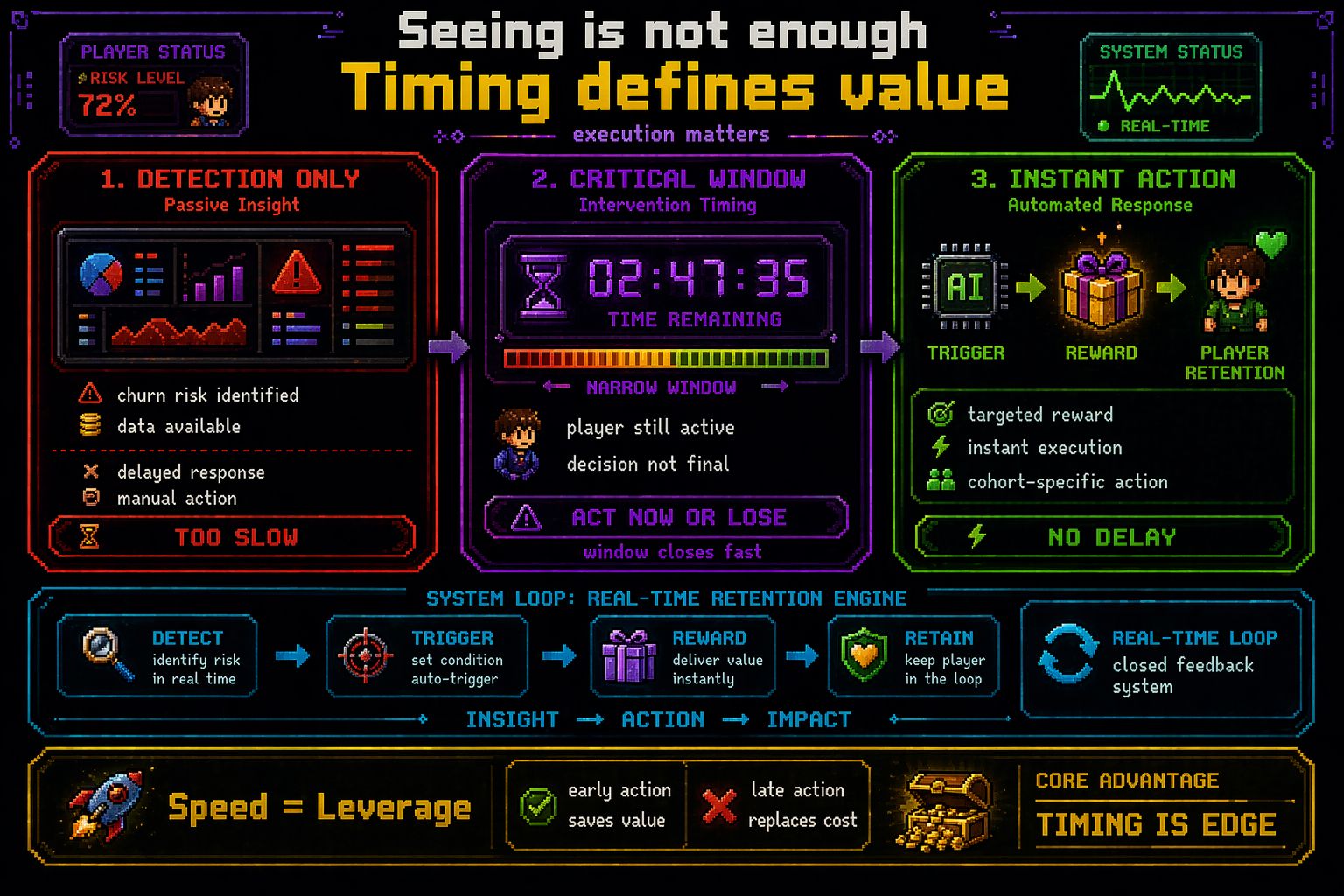
That loop is what makes it interesting to me.
Still, there’s something I’m not fully sure about.
These models depend heavily on the data they were trained on. And a lot of Stacked’s experience comes from Pixels itself, which has a very specific type of gameplay and player behavior. Farming, social interaction, slower loops.
If you move that into a completely different genre, like a competitive PvP game, the signals might not look the same. Players leave for different reasons. Frustration, matchmaking, skill gaps. The patterns could shift in ways the model hasn’t seen before.
So I guess the real question isn’t whether Stacked can spot churn. It’s how transferable that understanding is across different kinds of games.
And that’s probably something we won’t fully know until more studios outside of Pixels start using it in real conditions.
For now, it just feels like one of those ideas that sounds simple on the surface, but once you think about the timing and the economics behind it, it opens up a much bigger question about how games actually retain players.