


I keep thinking GameFi doesn't collapse at the start. It collapses when the system gets figured out.
Once players solve the pattern, once rewards start feeling predictable, the whole thing quietly stops feeling alive. It's no longer responding, just repeating. And that's where most P2E systems quietly die.
@Pixels feels different. Something in the structure is off ... in a way I can't fully name yet. I'm inside it, playing, and there's something underneath that keeps not quite revealing itself... Like I'm brushing up against a layer that's there, doing something, but the closer I look the less certain I am about what exactly I'm seeing. That's what pulled me toward Stacked. Not because I understood it but because I felt it before I could explain it.

Most reward systems fail the same way. They attract bots, get farmed, drain the economy, and vanish. What's different here is that the Pixels team didn't just watch that happen, they lived through it, reverse engeneerered it to find what actually breaks, and built something from the other side of that experience. Stacked isn't a concept. It's not a whitepaper. It's infrastructure that was built in production, stress-tested inside a live ecosystem, already processing 200M+ rewards across millions of real players. When they say it works, there are receipts, $25M+ in ecosystem revenue isn't a projection, it's what already happened.
That changes how I read what I'm feeling inside the game...
What stood out is how PIXEL behaves less like a payout layer and more like a routing signal inside something larger. Not just representing reward, but participating in where reward pressure actually goes... If that makes sense?
I ran the same type of task in the game. Similar inputs, noticeably different outcome. Not dramatically, just enough to notice. I sucesfully made my first ingame Pixel but now I cant do it again in the same way. Just enough to make me stop and think: something is interpreting this, not just recording it.
And that interpretation seems to slowly feed back into how rewards get adjusted.
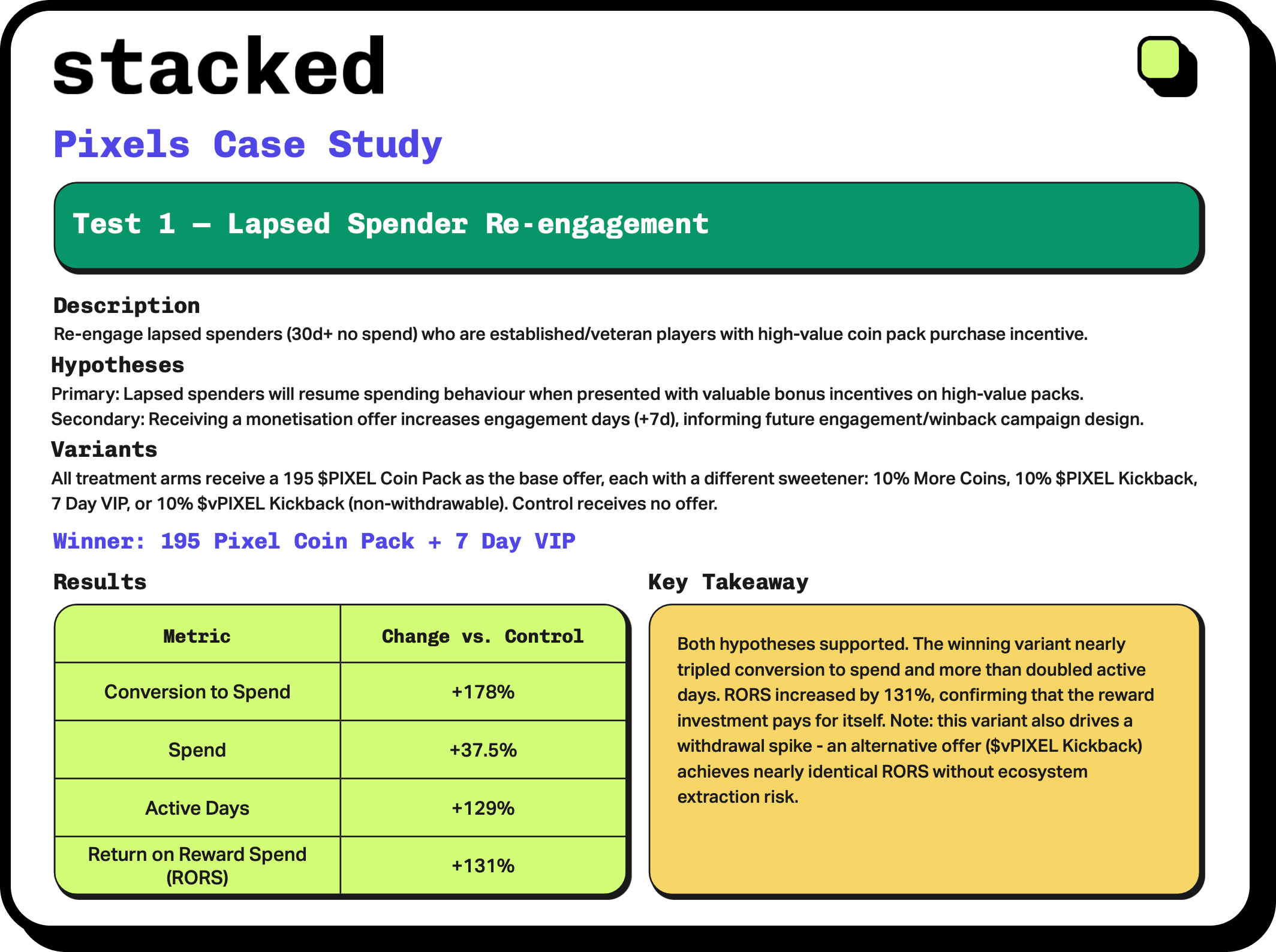
This is where Stacked starts to make sense to me, not as a feature sitting on top, but as the system that's doing that interpreting. Studios using Stacked get an AI game economist underneath everything something that can see why a cohort drops off between D3 and D7, where reward budget is quietly leaking, which mechanics actually correlate with players sticking around past day 30. Insight to action, inside the same system, no waiting. That's not a dashboard. That's a different category of tool.
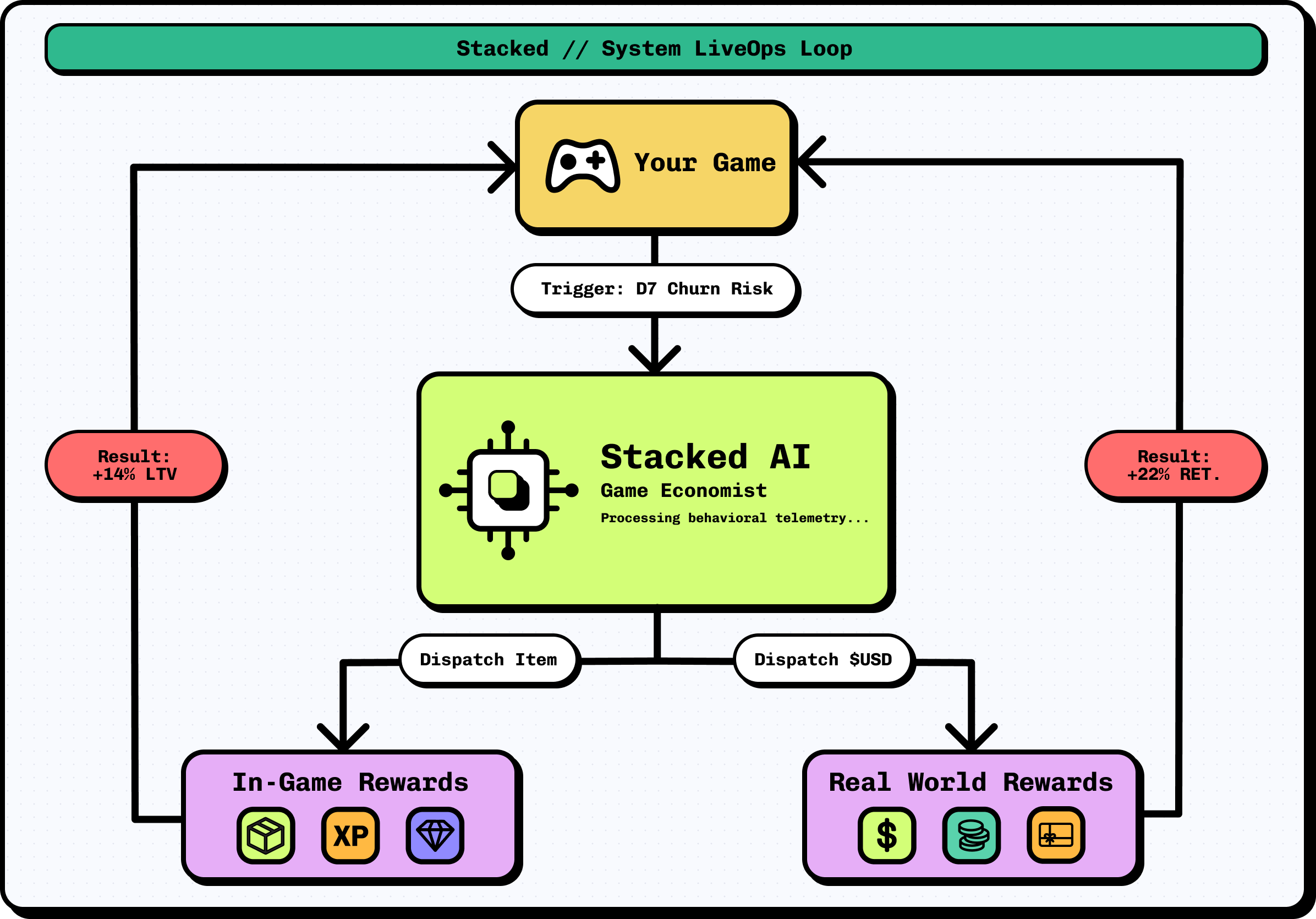
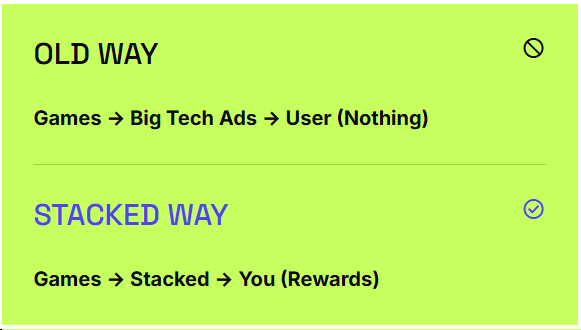
So you move, repeat, optimize a little, drift again...and somewhere in that loop, structure is being collected from you. Then it comes back as altered reward signals that quietly reshape what you do next. It stops feeling like equal participation. It starts feeling more like selective reinforcement building itself in real time...And somehow I dont mind...I dont find it unfer ,its actualy refreshing. Dig a whole and get diamond ,repeat...is the old way, be there actualy, get your self in the game in more meaningful way is the stacked way.
That's where PIXEL fits more deeply than I first thought. Not as the reward itself,but as the layer that evolves alongside how the system decides what deserves attention. And as Stacked opens beyond Pixels to external studios,$PIXEL moves from a single game token toward something with a much wider demand surface. More games plugging into the same engine means more places the token has to be.
The other part that hit me: the marketing budgets that studios used to hand to ad platforms are now being redirected directly to players who actually show up and engage. That's not a small shift. That's a fundamental change in where value flows inside a game economy.
Using Stacked they can do what used to take a whole team of people much easier and faster.
I still can't fully put my finger on what I'm feeling when I play... Whether this is just a more sophisticated reward loop or something closer to a behavior shaping engine that happens to look like a game.
But it was built in production. Not in a deck.
And that part I'm certain about.

