
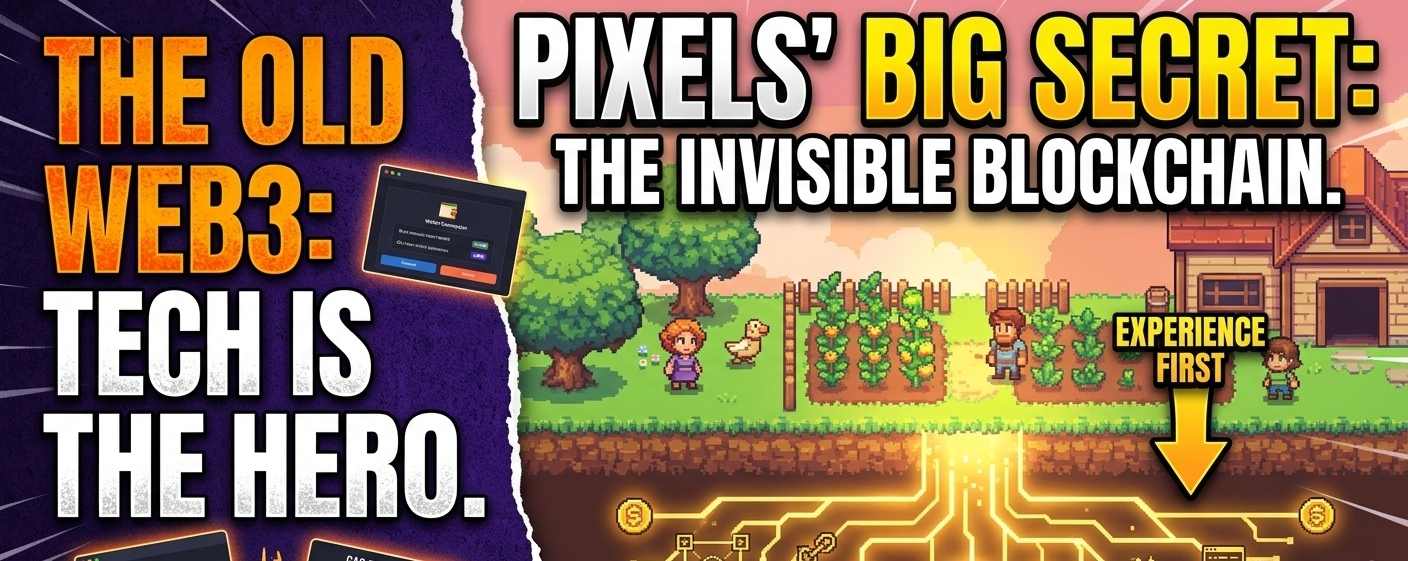
I keep thinking the most important shift in Pixels is not what it adds… but how it presents the blockchain itself.
In a lot of Web3 games, the chain feels like the main character. Wallets, transactions, tokens — everything is visible, and players are constantly reminded of it.
Pixels feels different to me.😮💨
The blockchain sits underneath.
You can enter the game without immediately dealing with wallets or tokens. You can move through the world, build routine, understand the system — and only later decide how much you want to engage with the on-chain layer.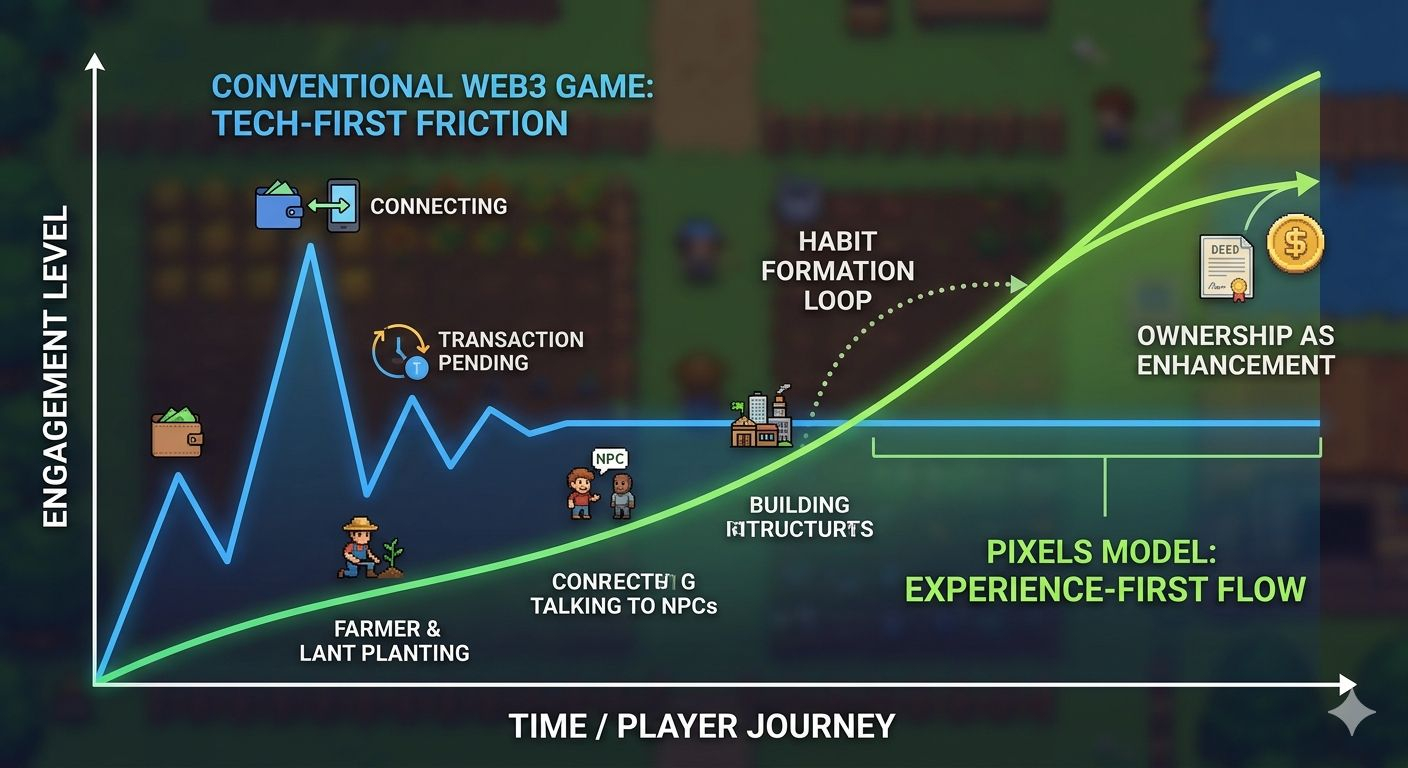
I think that matters.
Because when the technology becomes too visible, it starts shaping behavior before the experience has a chance to form.
Players begin by thinking about value instead of play.😉
Pixels seems to reverse that order.
Let the experience form first.
Let the habit build.
Then introduce ownership as something that enhances the system, not defines it.
I keep coming back to that idea of blockchain as infrastructure.🫶🏻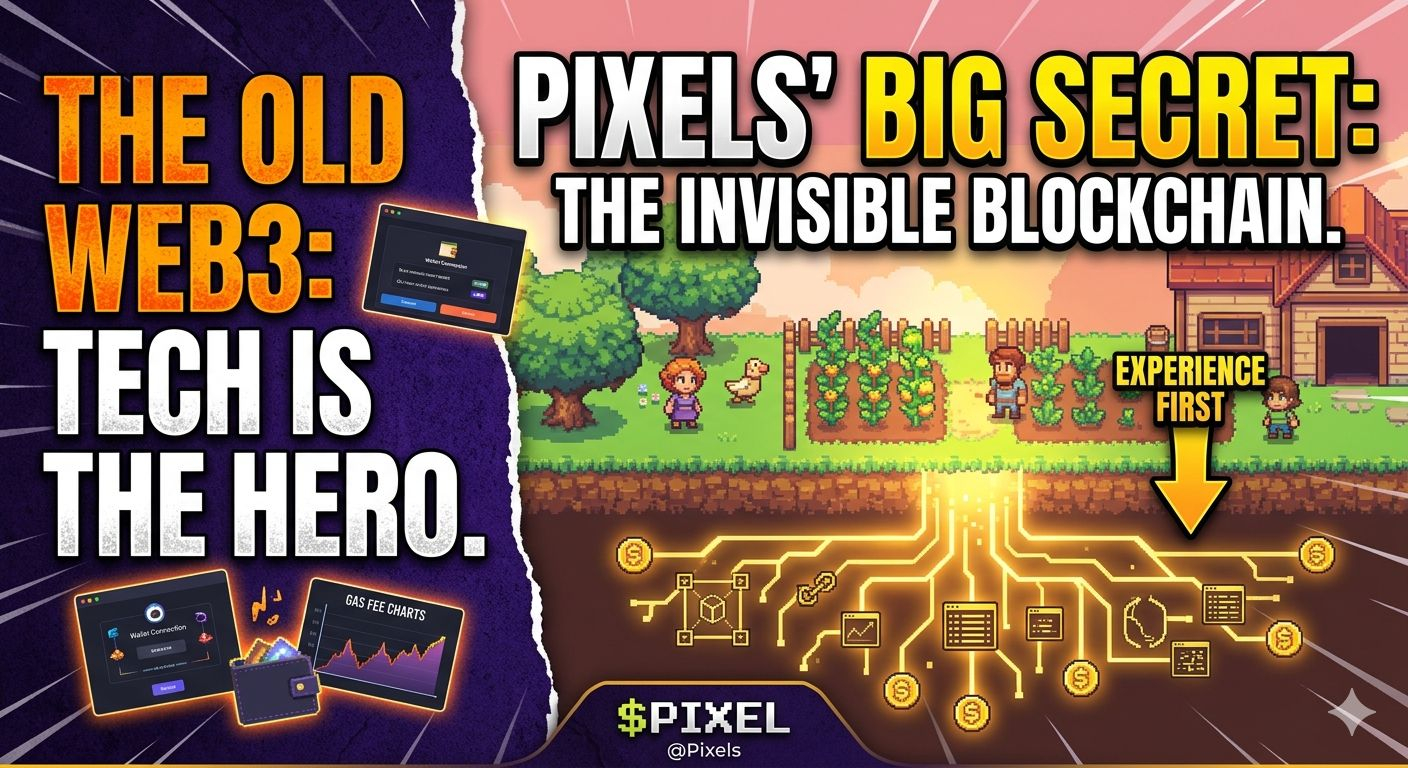
Not something you constantly interact with, but something that quietly supports what you are doing.
Of course, it is not completely invisible.
Ownership, trading, $PIXEL — they are still there.
But they feel more optional, more situational.
And I think that changes how the whole system is perceived.
Because when the blockchain stops acting like the identity of the game…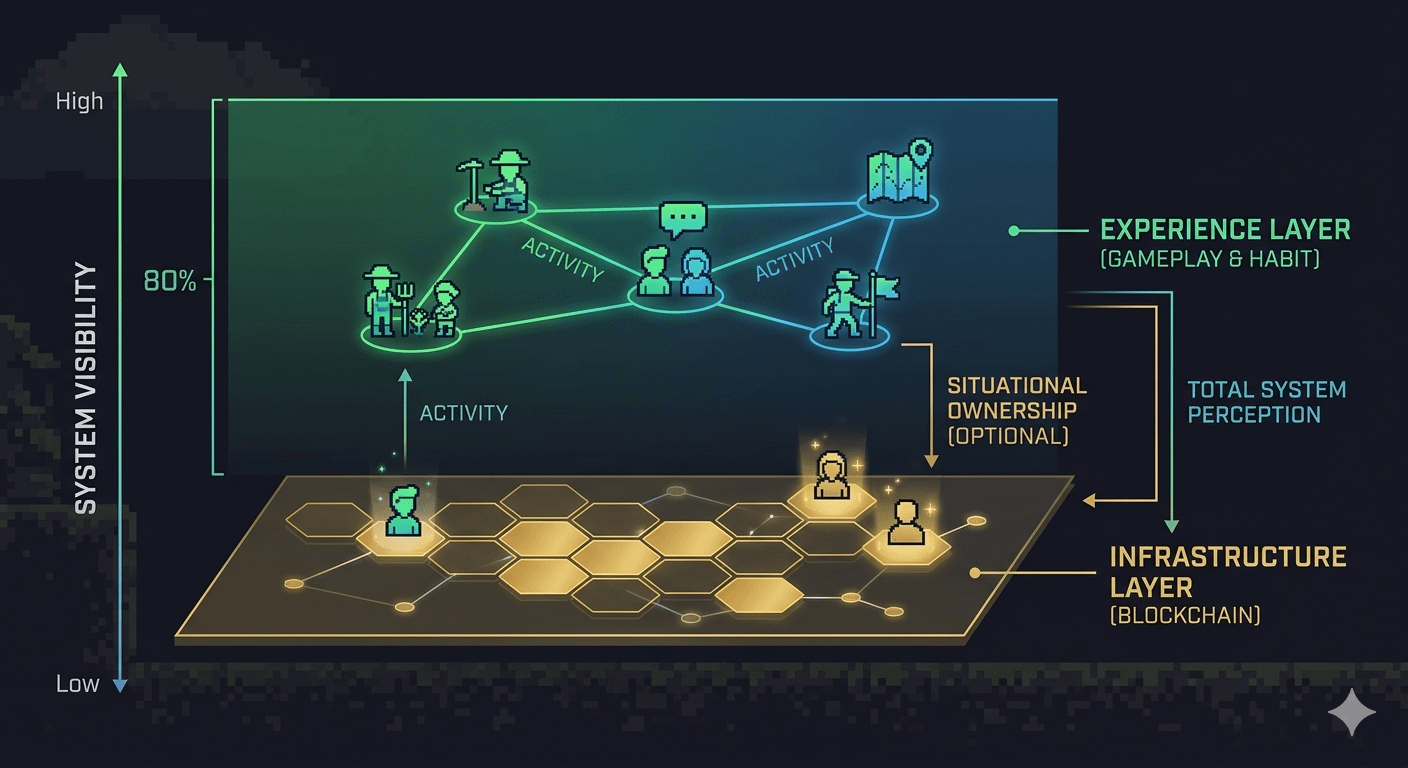
it has a better chance of becoming part of the environment instead.