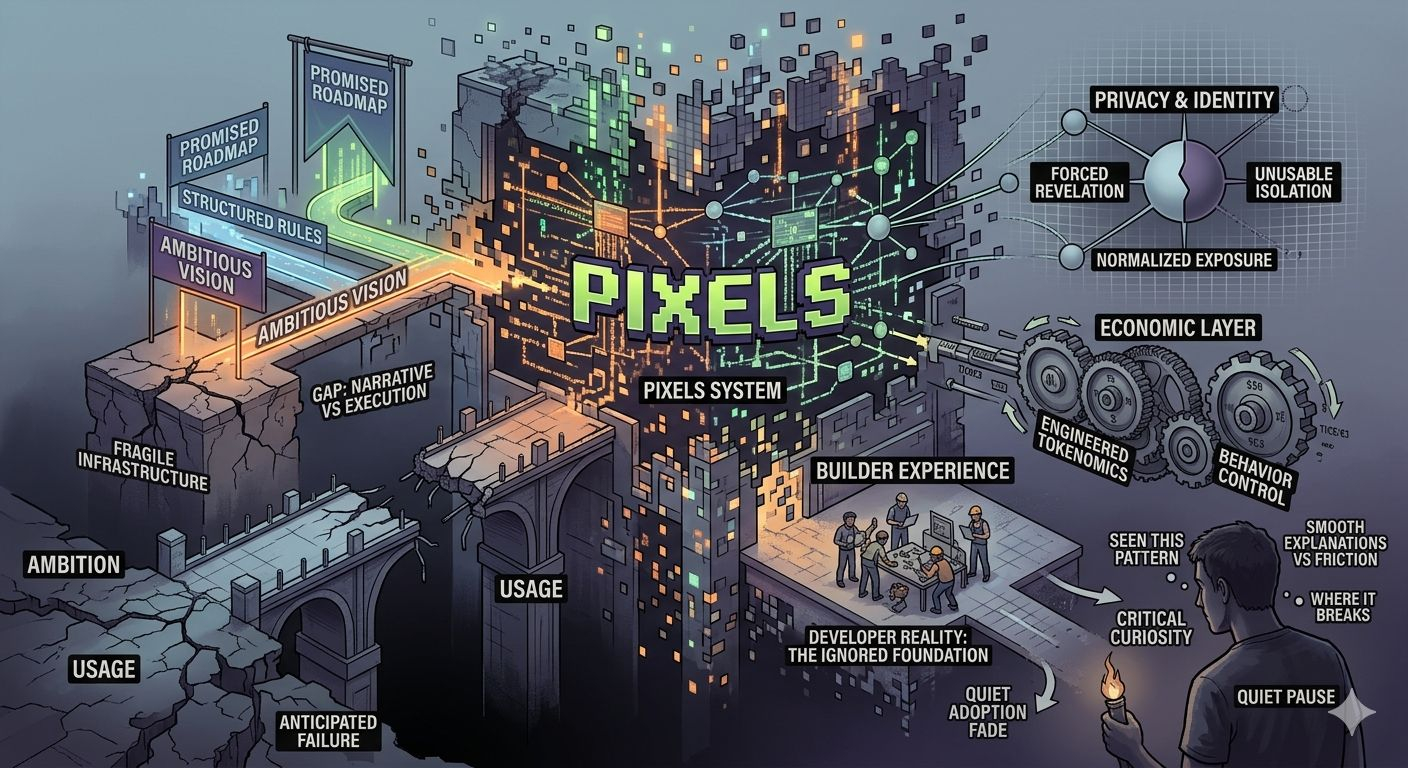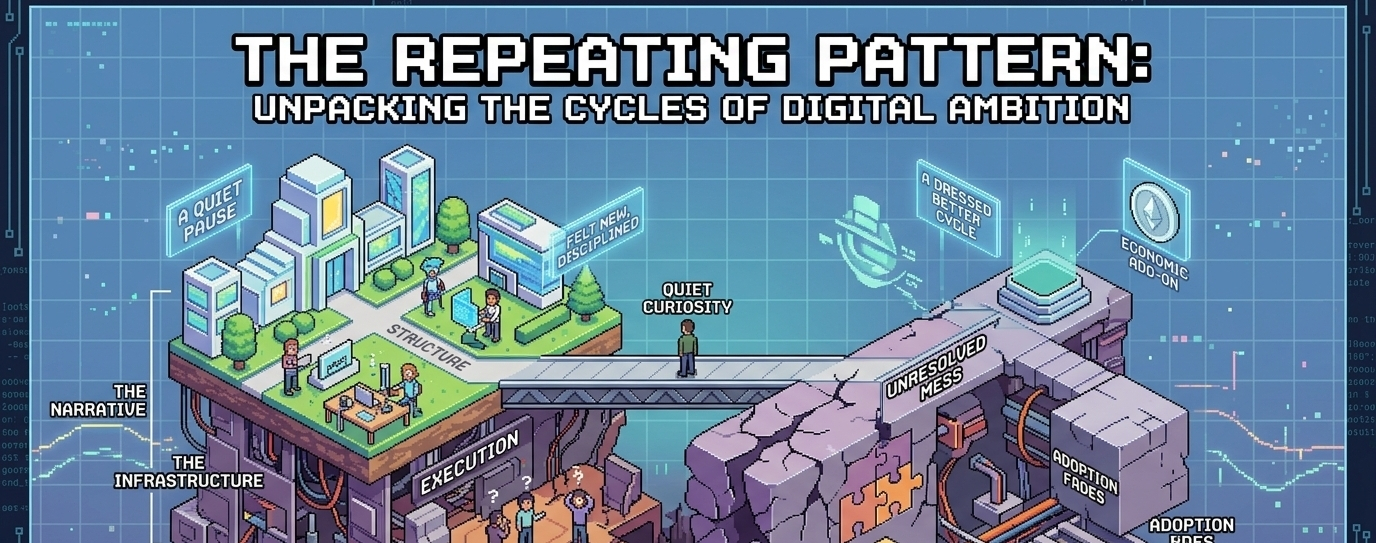
I keep catching myself circling back to the same thought whenever I look at something like Pixels, and it’s not excitement anymore, it’s more like a quiet pause. I’ve seen this pattern too many times. At first everything feels new, structured, disciplined, like someone finally figured out how to fix the chaos. But then I step back and ask myself why it feels familiar. Because it is. The language changes, the framing evolves, but the core story keeps repeating until it starts to lose meaning. Even when Pixels tries to position itself as something more than a game, I can’t help but wonder if I’ve already seen this cycle play out under a different name, just dressed better.
When I think about systems like Pixels, I notice how often I’m pushed into this uncomfortable choice between transparency and privacy. It’s never balanced. Either I’m expected to reveal more than I’m comfortable with, or I’m told that privacy matters while everything around me quietly suggests otherwise. Somewhere along the way, too much exposure became normal, almost expected. And I don’t remember agreeing to that. What bothers me more is how solutions that claim to protect privacy often go so far in the other direction that they stop being usable or even trustworthy. With Pixels, like many others, I find myself wondering if the system actually respects the user, or just manages them more efficiently.
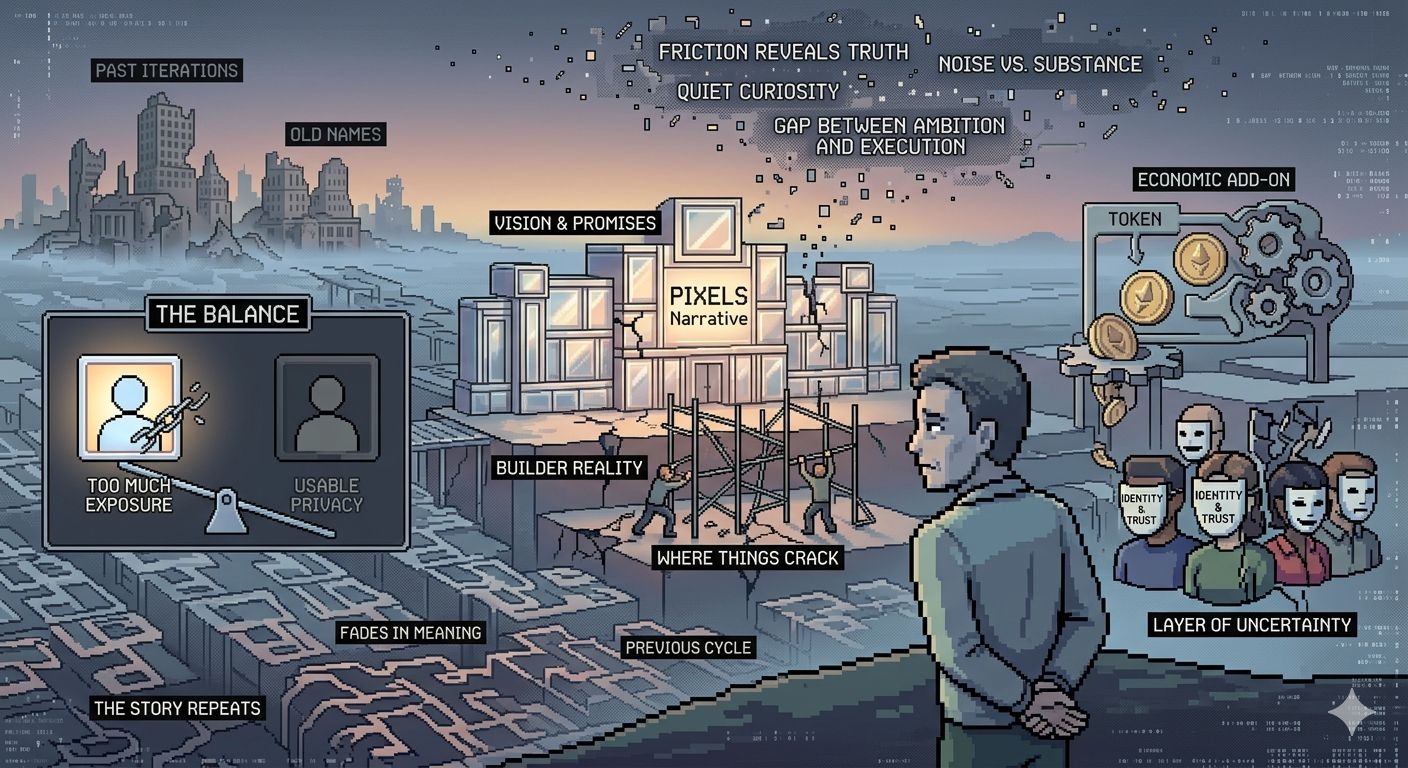
There’s also this constant feeling I get that projects like Pixels are built more for storytelling than for real use. Everything sounds right when you hear it explained. The structure, the rules, the intent behind them. It all makes sense in theory. But I’ve learned to pay attention to what happens under pressure, not what’s promised upfront. Infrastructure always sounds solid until it’s actually tested, and that’s where things usually start to crack. I don’t even need to see a failure anymore to anticipate it. The gap between what’s described and what actually holds up is something I’ve seen too often to ignore.
What I rarely hear enough about, even in something like Pixels, is the experience of the people actually building on top of it. Not the vision, not the roadmap, but the day-to-day reality. If that part is ignored, everything else eventually slows down. Adoption doesn’t fail loudly, it just quietly fades. And that’s the part that concerns me, because it doesn’t show up in announcements or updates. It shows up in what doesn’t get built, in what never quite takes off. It makes me question how much of the system is truly meant to be used versus simply presented.
Then there’s the part that always feels a bit forced to me, the economic layer. With Pixels, like many others, I can’t shake the feeling that the token side of things exists because it’s expected, not because it’s necessary. I’ve seen too many designs where the economics feel like an add-on rather than something organic. And when that happens, it doesn’t take long before it starts affecting everything else. It changes behavior, priorities, even the way people interact with the system. It stops feeling natural and starts feeling engineered.
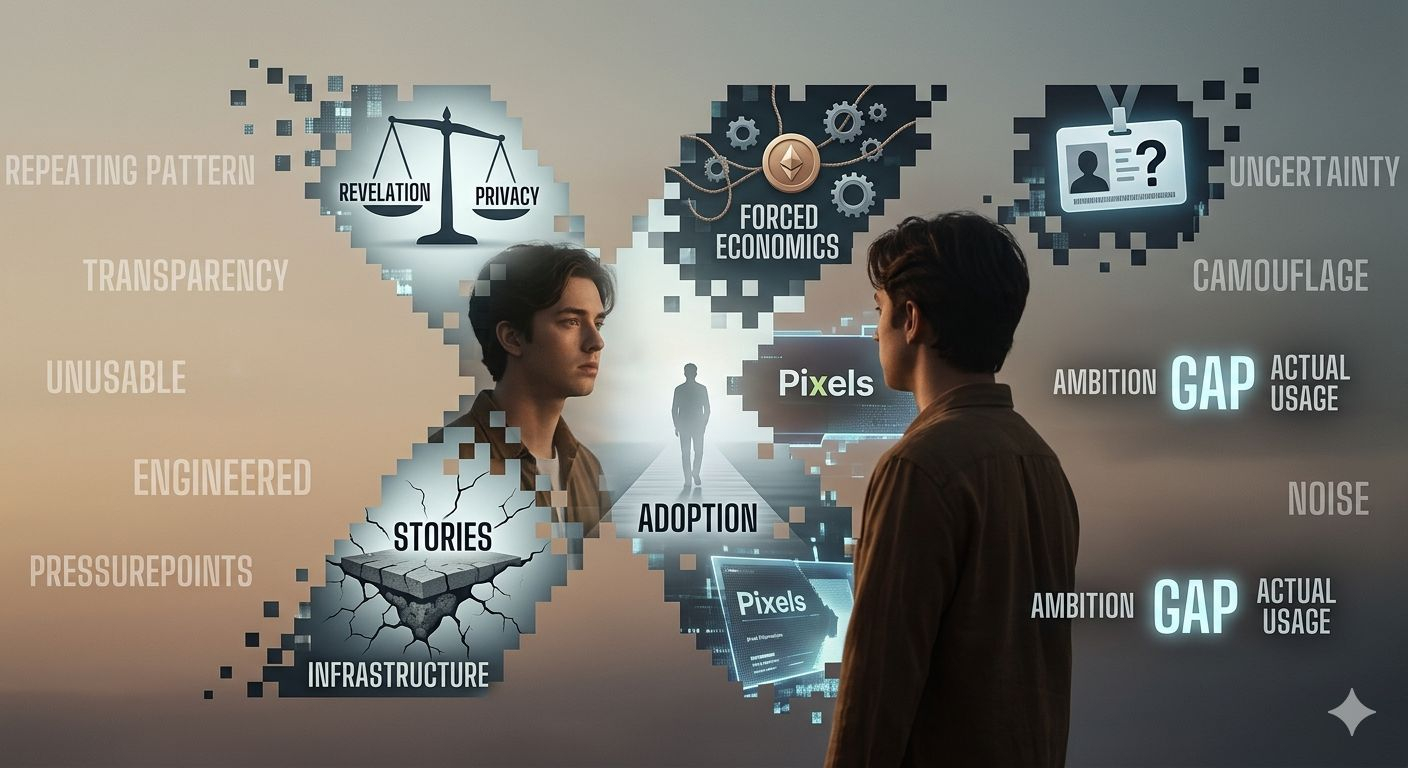
Identity and trust are another area where I keep running into the same unresolved mess, even when looking at something like Pixels. Systems try to define who is real, who is trustworthy, who belongs, but it never feels fully reliable. There’s always a layer of uncertainty. Verification sounds simple until it isn’t. Reputation sounds fair until it’s tested. And I’ve seen how quickly those systems can be misunderstood, misused, or simply fail to reflect reality. It makes me hesitant to take any of it at face value anymore.
What stands out to me the most, though, is the gap. That distance between ambition and actual usage that never really closes. Pixels talks like it’s building something sustainable, something structured, something long-term. And maybe it is trying. But I’ve seen enough to know that big ideas can sometimes act as camouflage for weak execution. Not intentionally, but effectively. The more polished the narrative becomes, the more cautious I get. Because I’ve learned that clarity doesn’t always mean truth, and confidence doesn’t always mean stability.
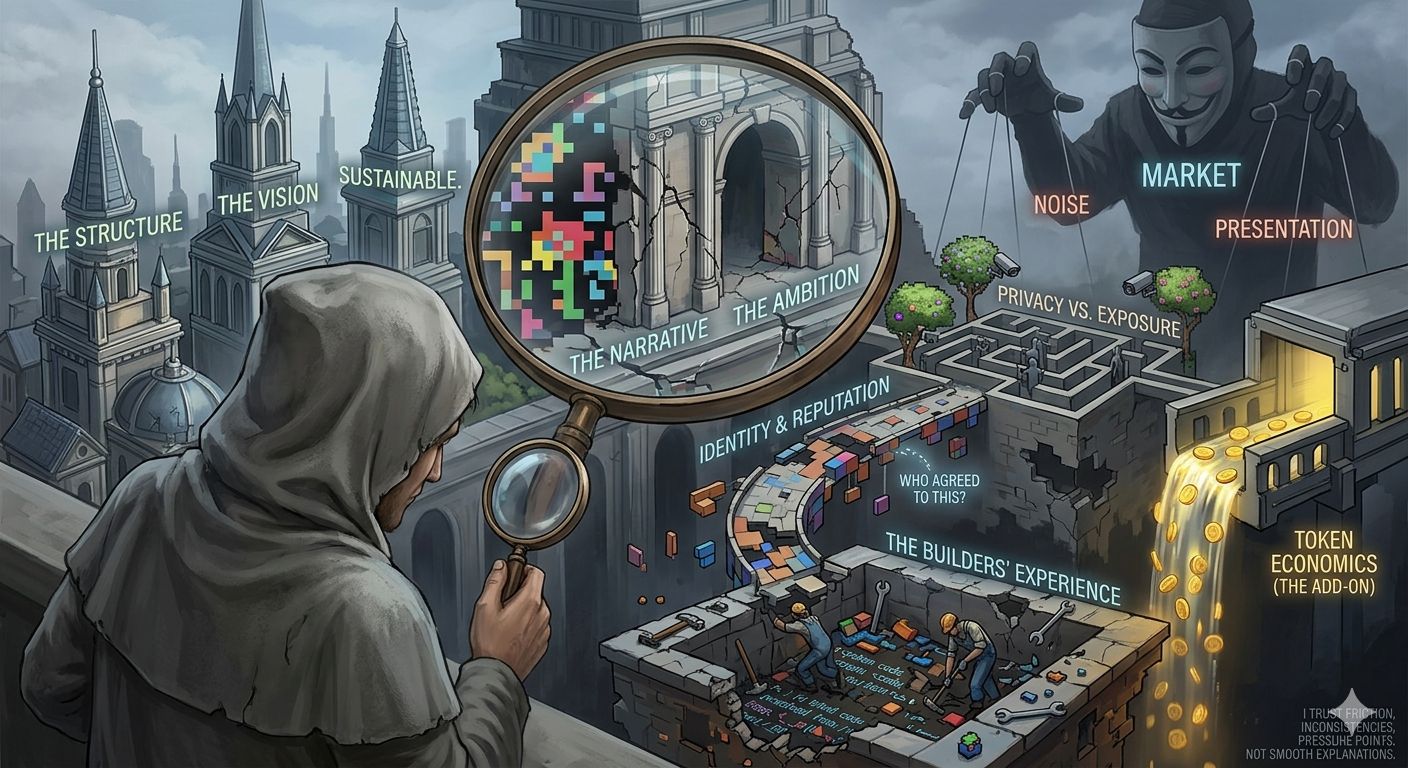
The market doesn’t really help either. It keeps rewarding noise, attention, and presentation over substance. So when I look at something like Pixels, I try to filter out how it sounds and focus on where it might break. Not because I want it to fail, but because that’s the only way I’ve found to understand what’s actually there. I don’t trust smooth explanations anymore. I trust friction, inconsistencies, pressure points. Those tend to reveal more than any announcement ever could.
And even with all of that, I’m still watching. Not with the same excitement, but with a kind of quiet curiosity. Because every now and then, something does push through the pattern. Something does hold up. I don’t know if Pixels will be one of those cases, and I’m not trying to decide that right now. I’m just paying attention, noticing what feels familiar, what feels off, and what, if anything, feels different this time.