


The growth of the Web3 economy has been fueled by global agencies, firms like Unfungible, AP Collection, Lunar Strategy, and Hype, which rely on a distributed network of international talent. However, while these agencies have embraced decentralized technology, the "last mile" of professional operations remains a challenge: on-chain payments.
Traditional cross-border payments are notoriously inefficient. Sending funds between countries often involves multi-day delays, high intermediary fees, and complex legal hurdles, especially when dealing with regions that face banking restrictions. While KYC (Know Your Customer) processes are essential for compliance, the traditional execution of these checks is often slow, non-inclusive, and fails to protect the sensitive data of the individuals involved.
In the Web2 world, global inclusivity is a significant hurdle for agencies. Traditional banking systems are not available everywhere, and sending money to certain regions can be nearly impossible or prohibitively expensive. This lack of access limits who agencies can hire and where they can expand, creating a fragmented workforce based on banking availability rather than talent.
The Transparency Paradox in Digital Payments
Blockchain technology offers a compelling alternative through instant, borderless settlement. A payment sent from France to another international destination, for example, can arrive in seconds rather than days. However, the issue with public blockchains is that they are entirely transparent. On a public ledger, the amount paid and the wallet addresses of the sender and receiver are visible to anyone with an internet connection.
This transparency creates a massive barrier for professional businesses. If an agency uses a standard public blockchain for payroll, they are essentially broadcasting their internal financial data to the entire world. Competitors can track their spending, and employees lose the right to keep their earnings private. This vulnerability is the primary reason many institutions have hesitated to fully commit to on chain financial operations.
Furthermore, platforms like Rise are already demonstrating the power of the programmable economy by making global payments more flexible. By making payroll programmable, costs are reduced and businesses gain more control over how and when money moves. With over $1B in lifetime volume and $400M in stablecoin payouts, infrastructure like Arbitrum provides the liquidity and fast execution needed to scale these global payments reliably.

The iExec Solution: Confidential Onchain Payments
The iExec Confidential Token resolves this conflict by providing a private on-chain payment rail that retains the efficiency of blockchain without the public exposure. By utilizing hardware-based security, iExec allows companies to encrypt the most sensitive details of a transaction:
Amount Encryption: Transaction values are shielded from the public. While the settlement happens instantly on the blockchain, external observers cannot see the specific amount being transferred. This prevent employer to disclose his employees' salaries to other internal employees, or to competitors & the whole world.
Global Inclusivity: Unlike Web2 systems, on-chain solutions are naturally inclusive. They allow agencies to reach talent in any corner of the globe instantly, ensuring that financial systems are open to everyone regardless of their local banking infrastructure.
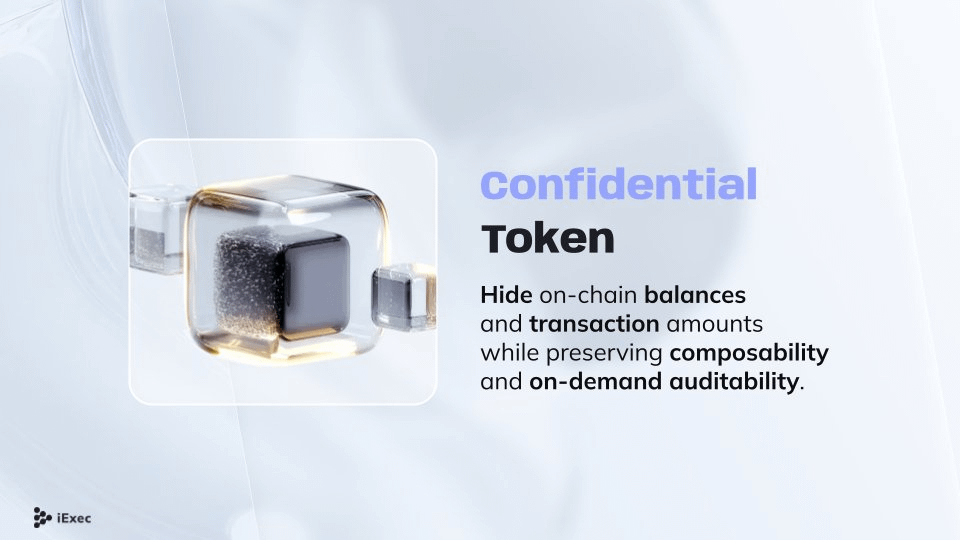
This technology allows for a truly borderless workforce. It makes global payroll technically possible, but what has been missing is confidentiality. Companies cannot run payroll on public rails if salaries, bonuses, and compensation structures are exposed. With iExec, payments can be settled onchain while keeping financial data private by default. That removes one of the main blockers to adopting web3 for real-world payroll.
Additionally, this confidential layer complements the rise of programmable money. When payments are both programmable and private, businesses can automate complex distribution logic, such as performance bonuses or vesting schedules, without exposing the underlying financial details to the public. This combination of automation and confidentiality is the key to a mature digital economy.
Compliance Through Selective Disclosure
The most critical feature for institutional adoption is Selective Disclosure. Privacy in business is not about total anonymity or confidentiality; it is about controlled access.
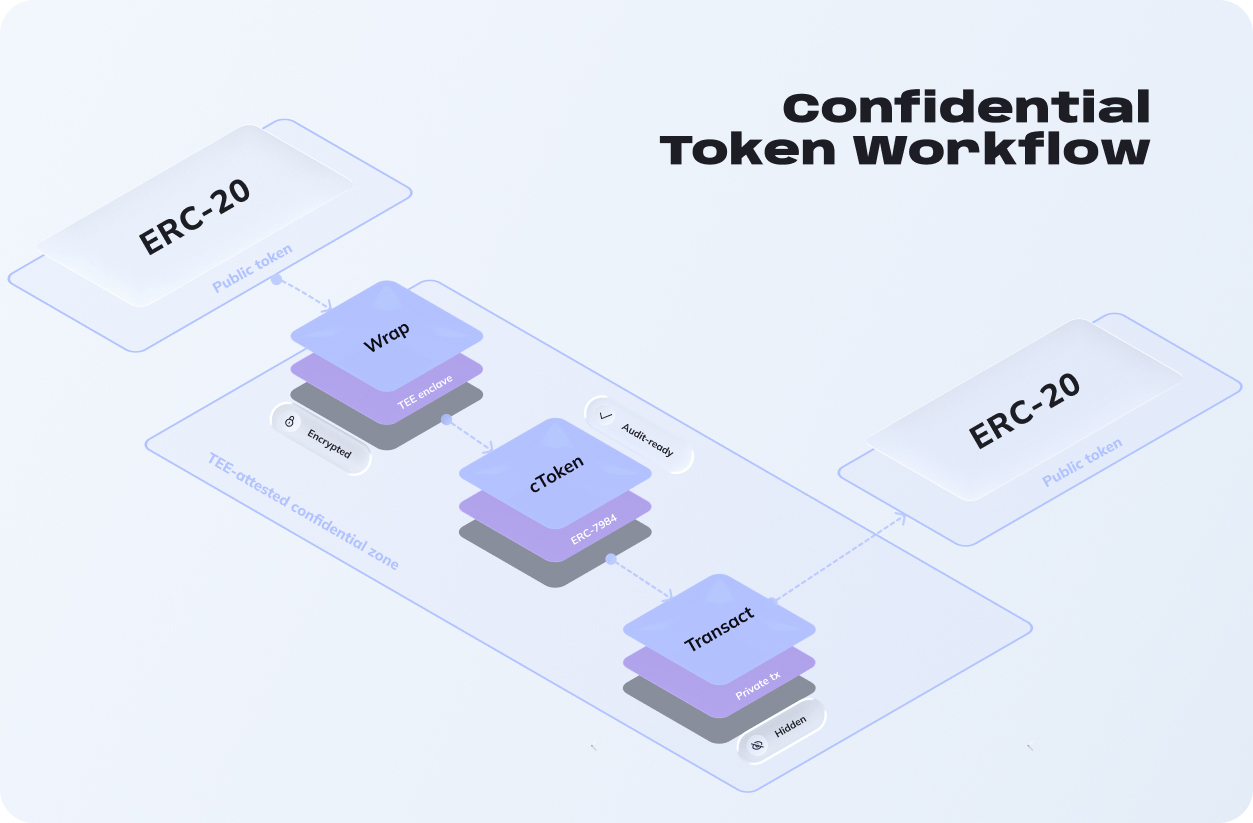
When it comes time for an employee or an employer to file taxes or undergo a financial audit, the system remains flexible. The employer wraps the tokens in a confidential layer before sending them. The employee, as the recipient, then holds the key to that information. They can choose to disclose specific transaction details to authorized third parties, such as tax authorities or mortgage lenders, without ever making that information public to the rest of the world.
This model allows for a perfect balance between personal privacy and regulatory responsibility. Institutions no longer have to choose between a black box that regulators hate and a glass house that exposes their secrets. Selective disclosure provides a middle ground where data is protected by default but accessible to the right people when it matters most.
By integrating these features, agencies can finally align their Web3 values with their professional requirements. It ensures that while the payment itself is decentralized and inclusive, the business logic remains proprietary and the employee's personal data remains their own. This is the bridge that allows decentralized finance to meet the high standards of global corporate compliance.
Conclusion: Professionalizing the Web3 Workforce
For leading agencies that represent the vanguard of the Web3 movement, the iExec Confidential Token provides the infrastructure necessary to run a professional global business. It allows for a payroll system that is instant, inclusive, and, most importantly, private. By bridging the gap between blockchain efficiency and corporate confidentiality, we are moving toward a future where on chain is the standard for every professional transaction.
The growth of the programmable economy, led by innovators like Rise and supported by the deep liquidity of networks like Arbitrum, proves that the demand for borderless payments is here. By adding a layer of confidentiality, iExec ensures that this growth is sustainable and professional. We are moving beyond the experimental phase of crypto and into a new era of secure, institutional grade global finance.
Experience how iExec is redefining the standards of digital payments.
➡️Read the Documentation: https://docs.iex.ec/
Explore the technical architecture behind Confidential Tokens and encryption.
➡️Watch the Demo: https://x.com/iEx_ec/status/2046250157487054872?s=20
See a live demonstration of confidential transfers and selective disclosure.
$RLC