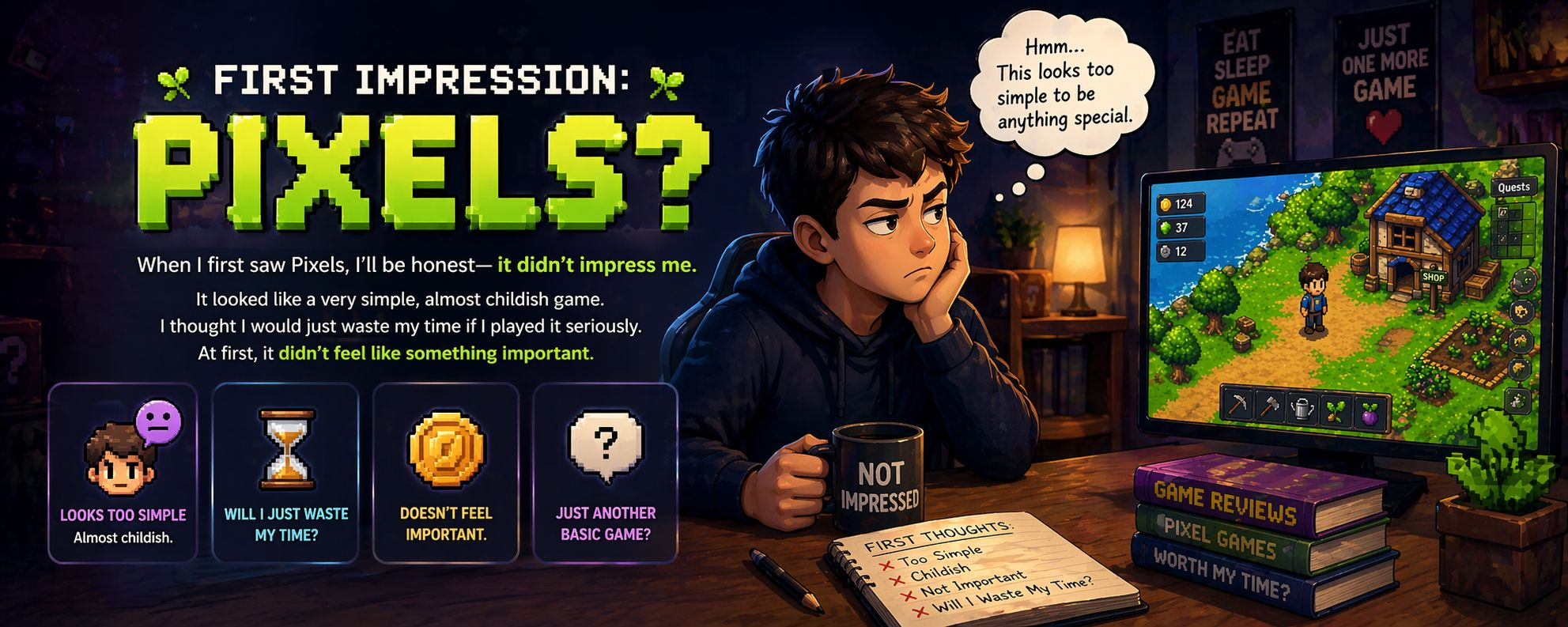

When I first saw Pixels, I’ll be honest—it didn’t impress me. It looked like a very simple, almost childish game. I thought I would just waste my time if I played it seriously. At first, it didn’t feel like something important.
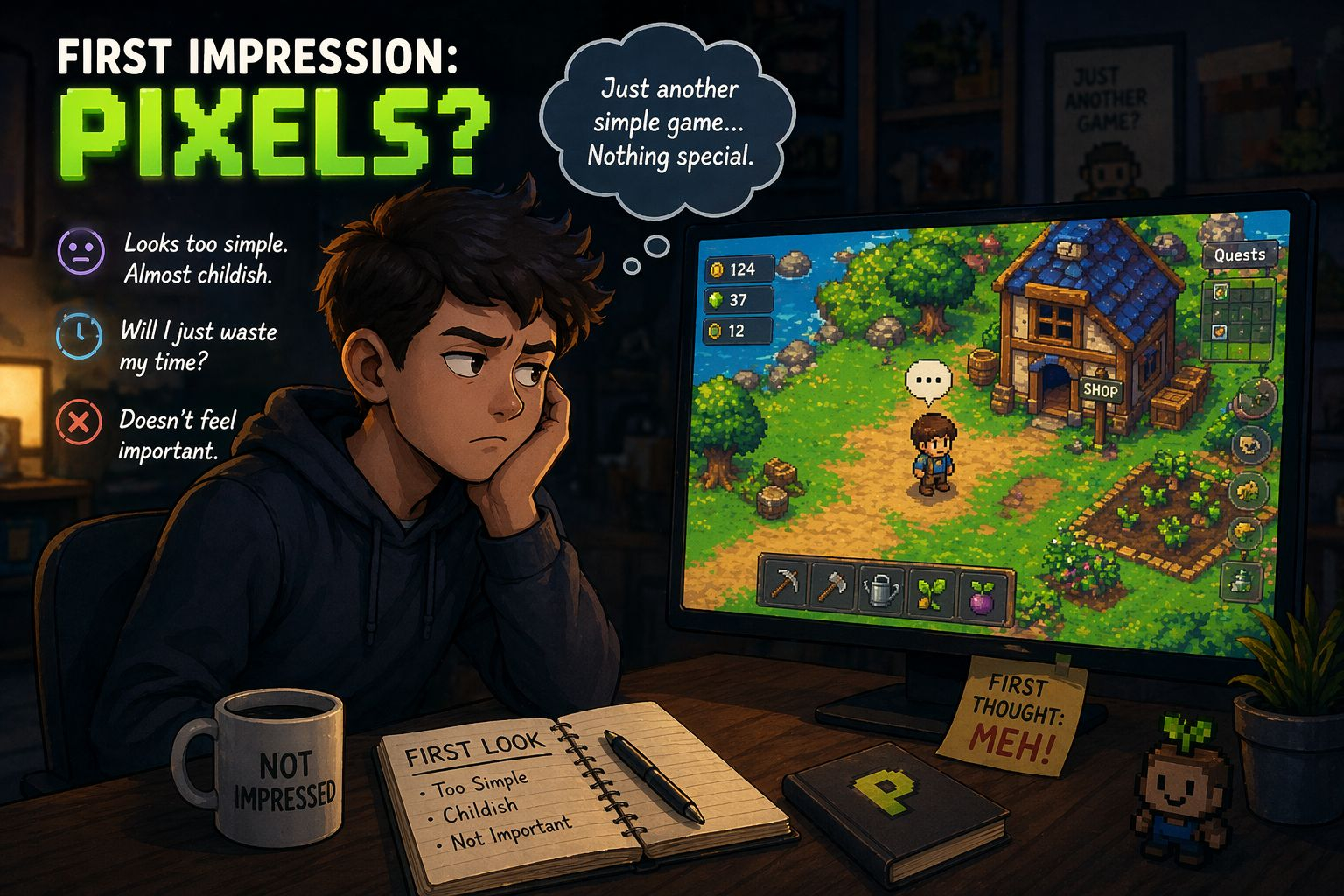
But I still gave it some time. Not because I loved it right away, but because something about it felt different. Slowly, my thinking started to change.
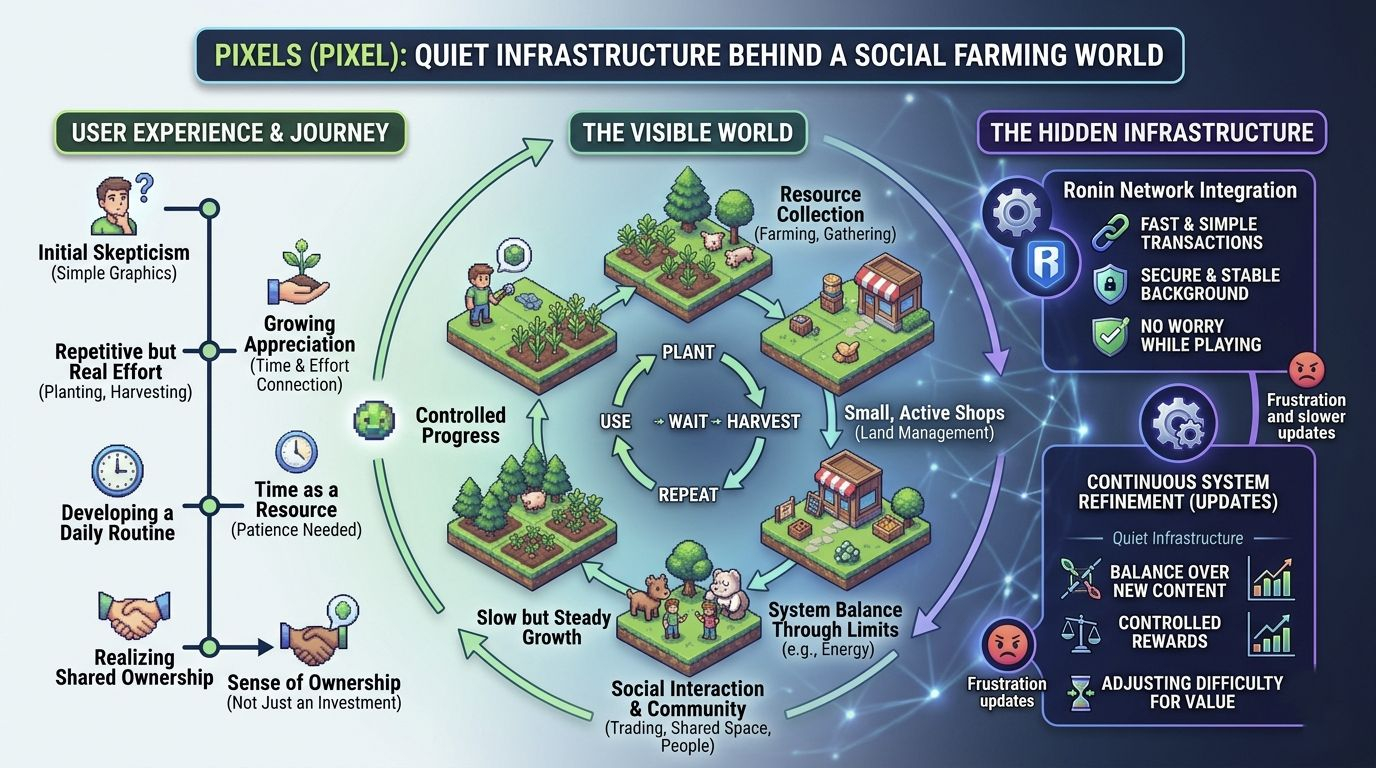
After spending more time in the game, I realized Pixels is not just about what you see on the surface. It’s about what is happening in the background. It is trying to fix a problem I have seen in many digital systems—the gap between time, effort, and ownership. Most of the time, I either play and own nothing, or I “own” something that doesn’t feel connected to my work. Pixels is trying to connect these things in a simple way.
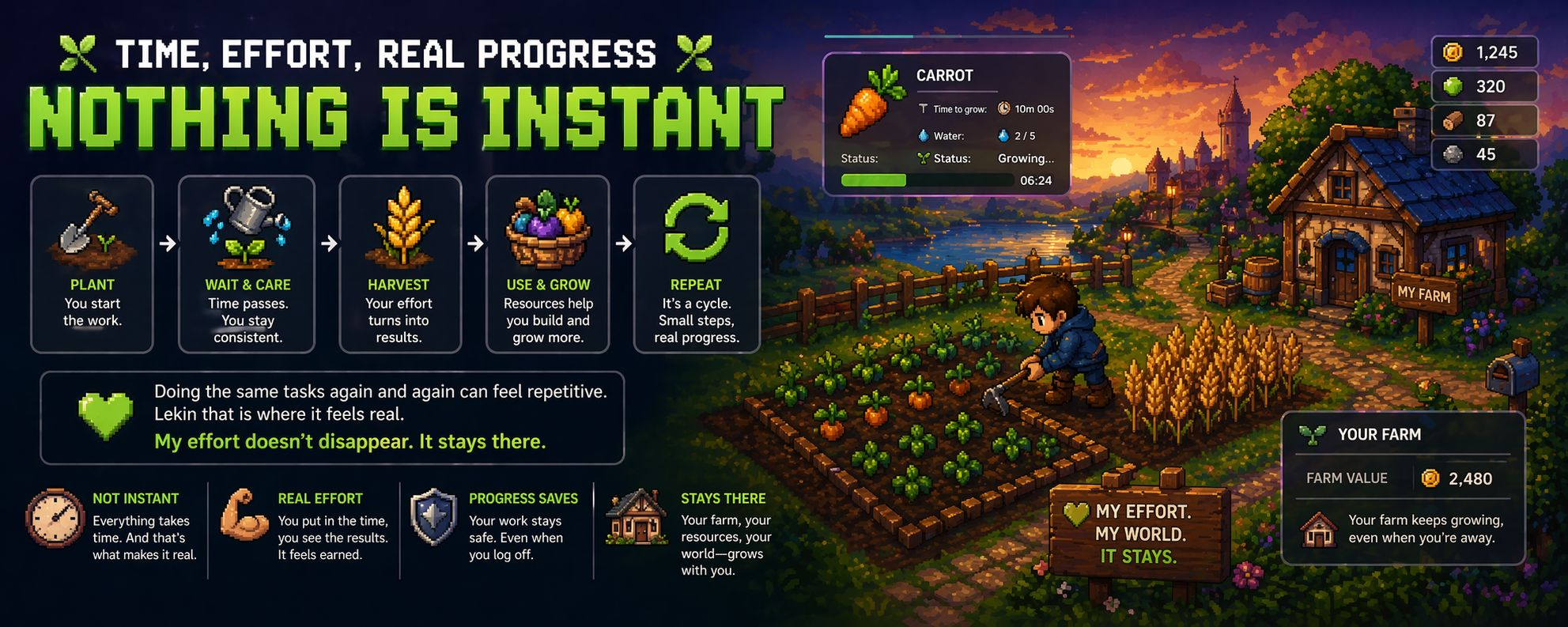
When I farm or collect resources, nothing is instant. I actually have to spend time doing it. And sometimes, it feels a bit tiring. Doing the same tasks again and again can feel repetitive. Lekin that is also where I start to notice something important—my effort begins to feel real. It doesn’t disappear when I leave the game. It stays there.
Ownership also feels different here. At first, I thought land was just another digital item. But later, it started to feel like something I manage, not just something I own. It feels less like an investment and more like a small shop in real life. A place you open every day, clean, and slowly grow. If I ignore it, nothing happens. If I stay active, it grows.
Another thing I noticed is that the game does not push its economy too much. I’m not always thinking about numbers or value. Instead, I feel the system through small limits—how long things take, how much I can do, and what I choose to focus on. Lekin it feels more like a daily routine than a strategy.
That routine is where the system becomes clear. Everything works in a cycle. I plant, wait, harvest, use, and repeat. It’s simple, but it feels controlled. Progress doesn’t come from one big action. It comes from showing up again and again.
About the technical side—people say the is fast, but for me, it’s more simple than that. I don’t really think about it while playing. Bas it just works in the background. I don’t feel worried that something will fail every time I do a small action.
I also noticed that recent updates are not just about adding new things. They are more about balance. Some parts are slower now, some rewards feel more controlled, and things are not as easy as before. Sometimes this can feel a bit frustrating. But maybe it is needed. If everything is too easy, the system loses its value.
At first, I didn’t care much about the social part of the game. I played alone. But slowly, I saw that other players actually matter. Trading, sharing space, and just seeing others around makes the world feel alive. It is not just about resources—it is also about people.
Still, I don’t think Pixels is perfect. Sometimes it feels slow. Sometimes it feels repetitive. And sometimes I wonder if my effort will really matter in the long run. These doubts are normal.
But even with all this, I keep coming back to it. Not because it promises something big, but because it feels stable in a quiet way.
The more I think about it, the more I see Pixels not just as a game, but as a system that is trying to stay balanced. It doesn’t rush. It doesn’t try too hard. It just grows slowly through small actions.
And maybe that is why my first opinion changed.