
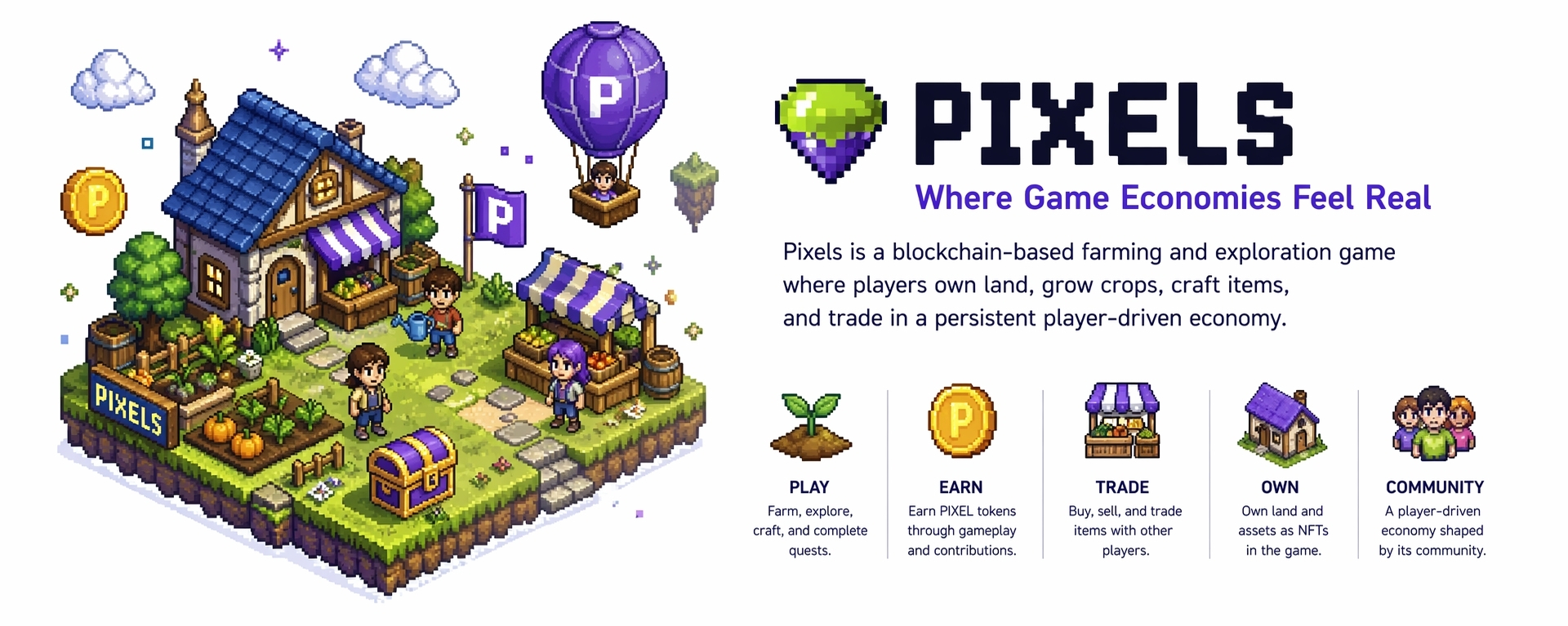

Pixels keeps pulling me back in a way I didn’t expect. Not because it’s loud or aggressively promising something new, but because it feels like one of those systems that might quietly reveal its truth over time. I’ve been watching how people move inside it, how they talk about it, how their behavior shifts once they realize there’s something tangible at stake.
At first glance, it looks simple—almost deliberately so. Familiar loops, light structure, nothing overwhelming. But I’ve been noticing how quickly that simplicity starts to carry weight. The moment a system begins attaching value to time, even loosely, everything changes. What felt like casual interaction starts turning into something more deliberate.
People don’t just log in anymore—they plan.
That’s usually where things begin to diverge from intention.
I’ve seen this pattern repeat across crypto more times than I can count. A project starts with a clean idea—participation equals reward, effort translates into value. It sounds reasonable, almost obvious. But once real people step in, the system doesn’t stay theoretical. It gets tested in ways no design document can fully anticipate.
With Pixels, I keep noticing how behavior starts to tighten over time. Early on, there’s exploration. People try things without thinking too much about efficiency. But slowly, that fades. The questions change. It becomes less about “what’s possible here?” and more about “what’s optimal?”
And optimization has a way of exposing everything.
Every shortcut, every imbalance, every incentive that leans slightly too far in one direction—it all gets discovered. Not intentionally at first, but inevitably. That’s just how people behave when there’s even a hint of value involved.
What makes this project interesting to me is that it doesn’t immediately collapse under that pressure. At least not yet. There’s a kind of restraint built into it. Progress isn’t instant. Rewards aren’t overwhelming. It doesn’t feel like it’s trying to flood the system with incentives just to keep attention.
That restraint feels important.
But I’m not entirely sure whether it’s a long-term design choice or just the current phase before things accelerate. Because in crypto, acceleration tends to come whether a system is ready or not. More users, more capital, more expectation—and suddenly, everything that felt stable starts shifting.
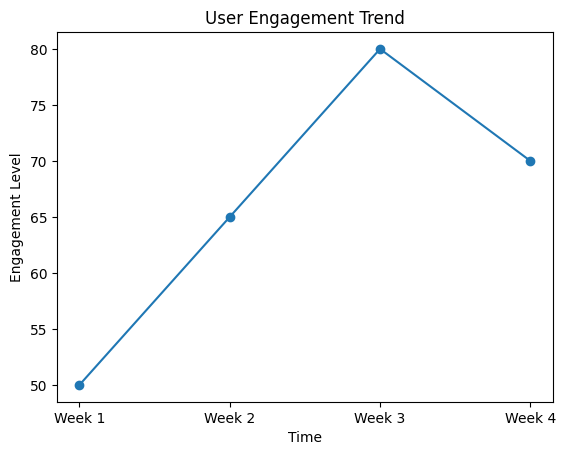
I’ve been paying attention to how people stay. Not just how they arrive, but what keeps them there. Because attraction is easy in this space. Retention is where things usually fall apart.
There’s a difference between someone showing up because they’re curious and someone staying because the system actually holds their attention. And then there’s a third layer—people staying because they feel they should, because leaving feels like missing out on something.
That last one is the most fragile.
With Pixels, I can’t fully tell yet which one is dominant. It feels like a mix. Some people seem genuinely engaged with the loop itself. Others treat it more like a process to optimize, something to manage rather than experience. And a lot of users seem to drift between those two modes without settling.
That in-between state is interesting, but it’s also unstable.
Because over time, systems tend to lean one way or the other. Either they become more like games—driven by engagement and intrinsic value—or they become more like machines—driven by output, efficiency, and extraction. Holding both at once is difficult, especially when real value is involved.
And that’s the part I keep circling back to.
The moment something starts to feel “real,” people stop treating it lightly. Time becomes measurable. Effort becomes comparable. Decisions start carrying weight beyond the immediate experience. Even enjoyment gets filtered through a different lens—one that quietly asks whether the time spent was “worth it.”
That question changes everything.
I’ve seen entire ecosystems shift because of it. Not overnight, but gradually. The tone changes first. Then the behavior. Then the structure starts adapting to that behavior, sometimes in ways that weren’t intended.
Pixels doesn’t feel like it’s there yet. But it feels like it’s approaching that threshold.
And I don’t think thresholds like that can be avoided. Only delayed, maybe softened. Eventually, every system that introduces real incentives has to confront what people do with them.
Some systems bend and stabilize. Others get stripped down to their most extractable form.
Right now, this one still feels open. Not fully defined. There’s room for different kinds of participation, different ways of engaging with it. That openness is probably its most interesting quality.
But openness doesn’t last forever.
At some point, patterns solidify. The most efficient behaviors become the dominant ones. The system starts to reflect not what it was designed to be, but what people have turned it into.
I’m still watching to see which direction it leans.
Not with urgency, just with that quiet sense that something here is still
forming—and that the real story hasn’t shown itself yet.