
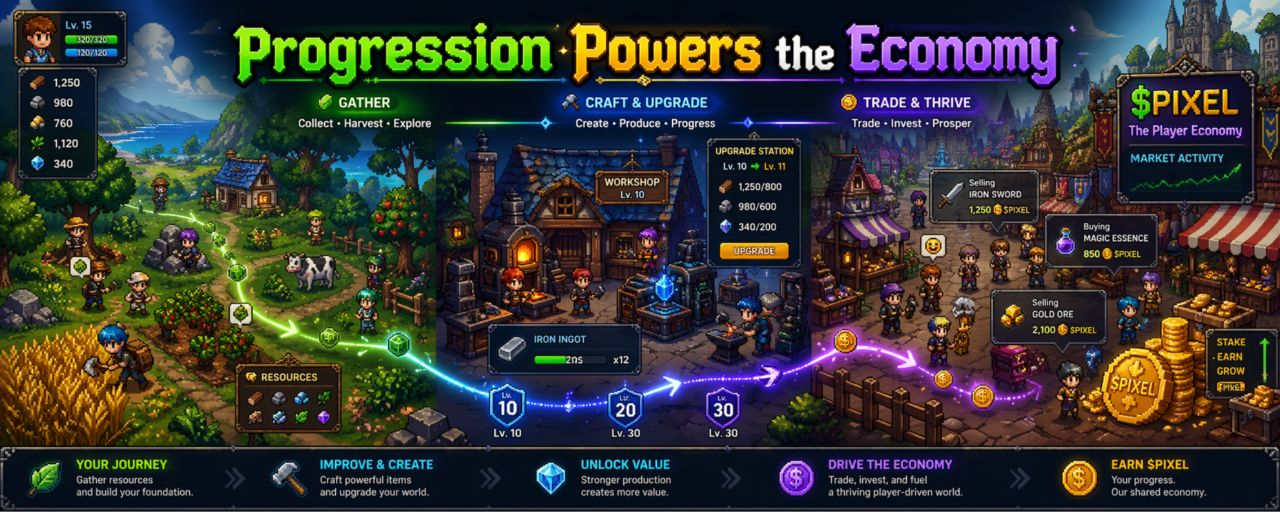

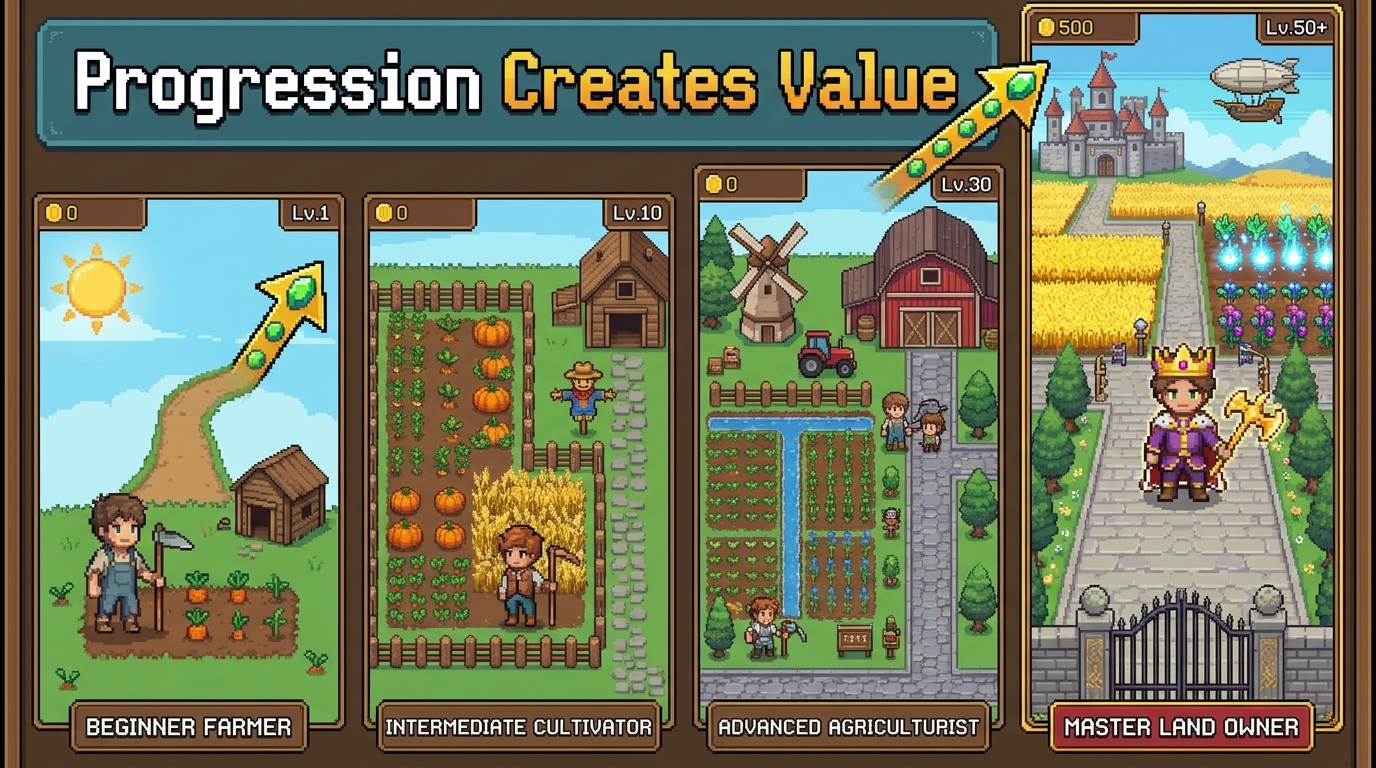
What makes a Web3 game last isn’t just token rewards — it’s whether progression itself creates value.
That’s what makes @Pixels interesting: gameplay progression, resource strategy, and the PIXEL economy are designed to work together.
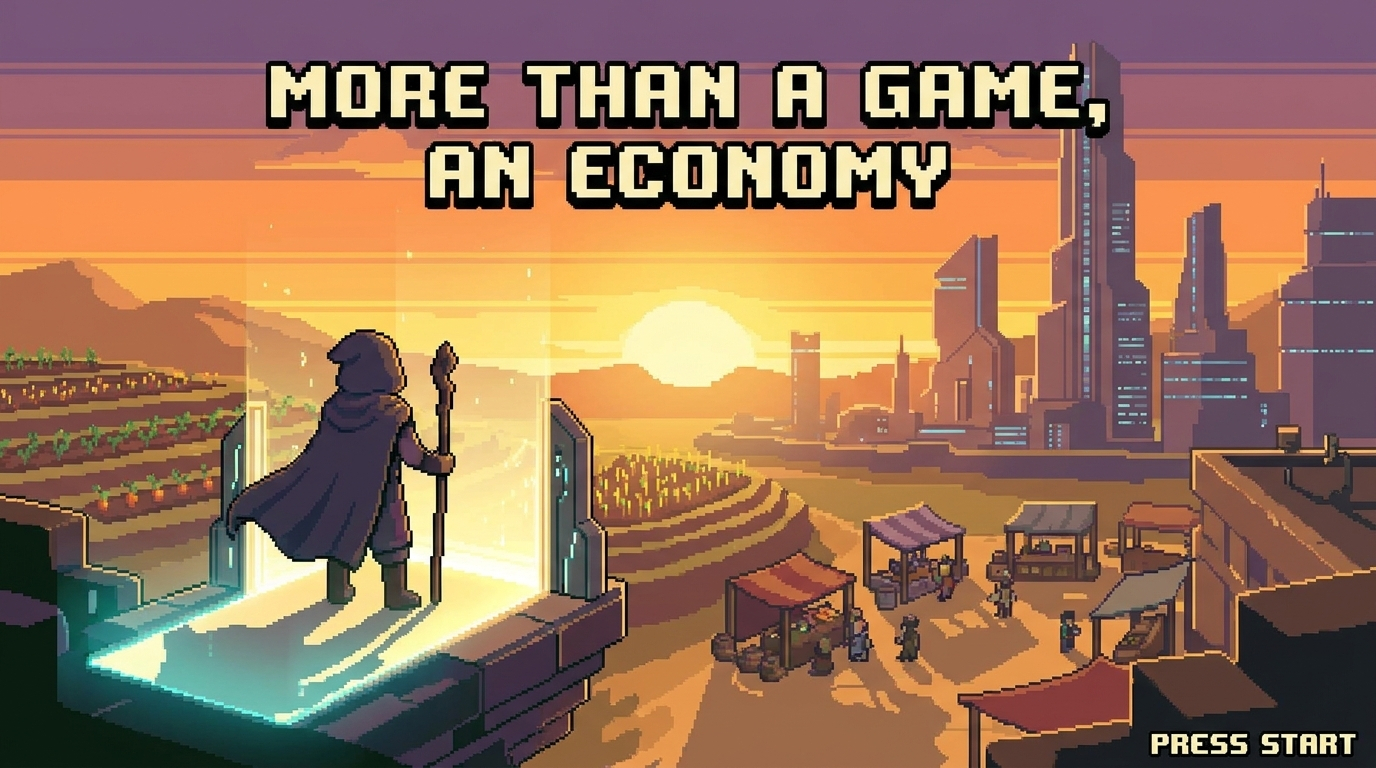
🌾 1. Progression Is More Than Leveling Up
In many games, progression is personal — you level up, unlock items, and move forward alone.
In @Pixels, progression feels different.
Advancing in the game often connects with production, resource management, and interaction with other players. Growth is not isolated; it contributes to a broader economy.
That changes progression from individual advancement into economic participation.
🪓 2. Resources Drive Strategic Gameplay
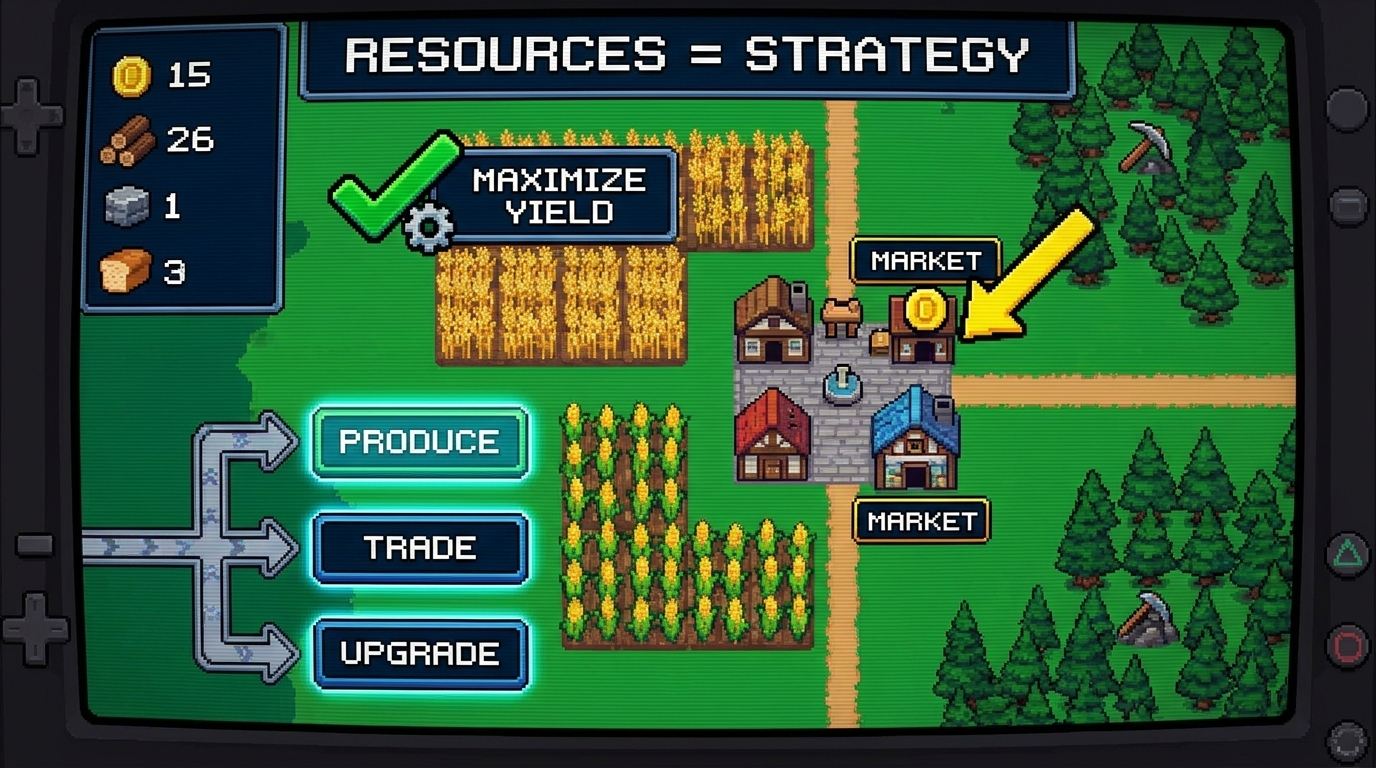
A major strength of Pixels is how resources are not just collectibles, but strategic assets.
Farming, gathering, and managing resources create decisions:
What to produce
What to use
What to trade
What to optimize
That introduces strategy into everyday gameplay.
Instead of repetitive reward loops, players interact with systems where efficiency and planning can matter.
And that makes the economy feel alive.
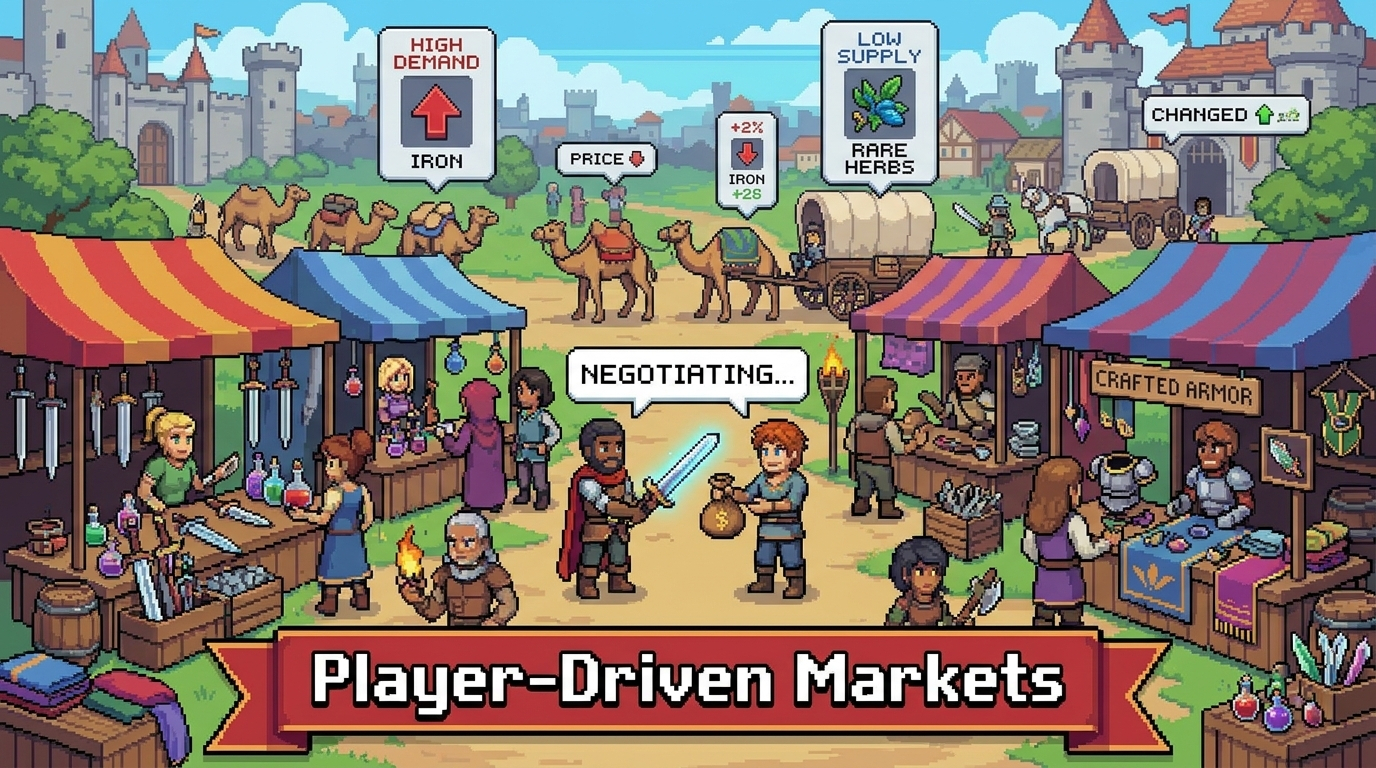
🏪 3. A Marketplace Shaped by Players
Another compelling part of @Pixels is how value can emerge through player activity.
As players produce goods, exchange resources, and participate in markets, the ecosystem feels increasingly player-driven rather than game-controlled.
That’s a powerful Web3 concept.
Instead of players simply consuming content, they help generate the economy itself.
This is where gameplay begins to resemble digital economic coordination.
🪙 4. PIXEL Connects Utility Across the System
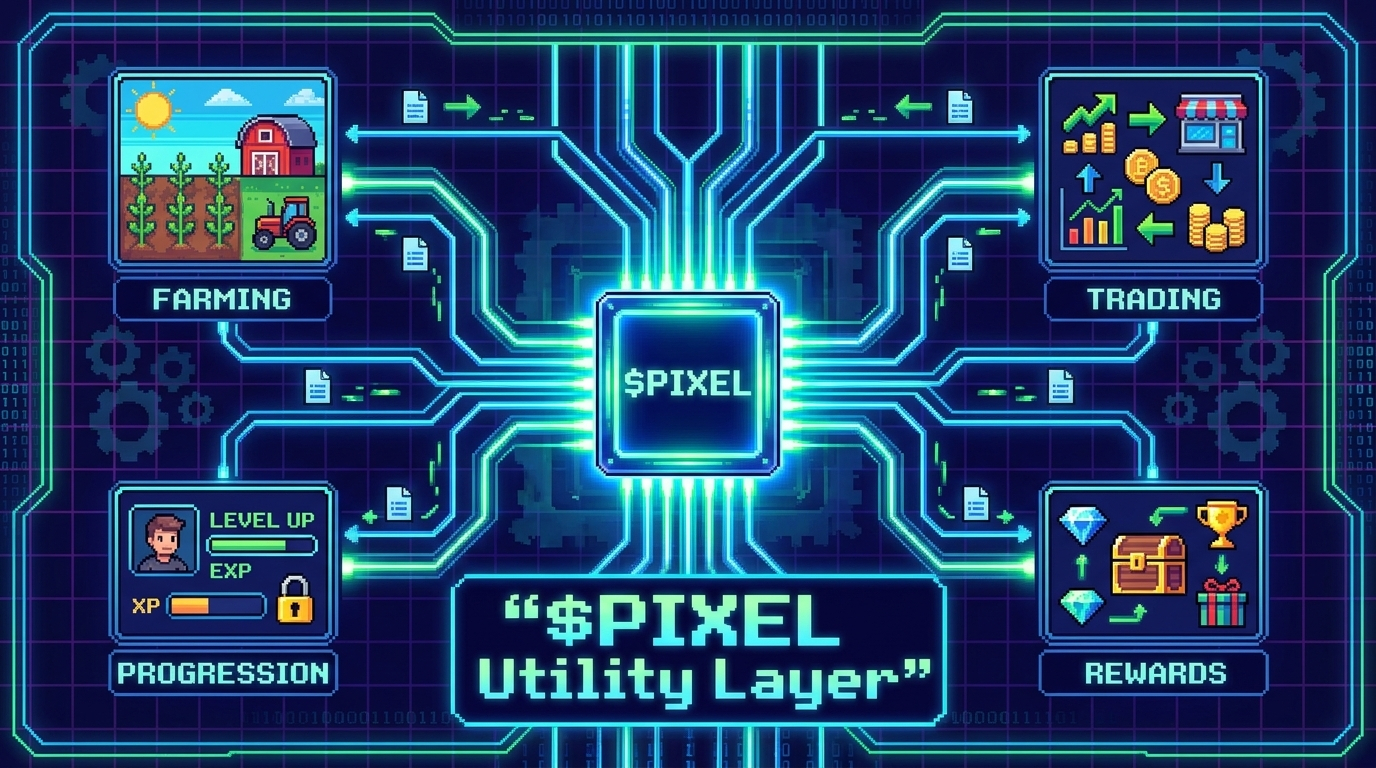
At the center of these mechanics is PIXEL.
Its role goes beyond rewards.
It supports interactions across progression, economic participation, and ecosystem incentives — helping connect gameplay layers into one structure.
That utility layer is important because it ties player activity to broader ecosystem growth.
The stronger participation becomes, the stronger network effects can become.
📈 5. Why This Matters for Web3 Gaming
A lot of blockchain games focus heavily on token narratives.
@Pixels feels notable because it emphasizes something deeper: game systems that can support durable participation.
That may be where long-term GameFi success comes from — not only speculation, but meaningful player economies.
And that’s why Pixels continues to stand out.
What makes @Pixels interesting isn’t just that it combines farming, strategy, and markets.
It’s that those systems work together to turn progression into economic activity.
That makes PIXEL more than a token and Pixels more than a game.
It starts to look like a player-powered digital economy.
Which part of @Pixels interests you most — progression, resource strategy, or the player-driven economy?
Curious how others see the future of $PIXEL 👇
