
i remember the first alert because it didn’t sound urgent. no siren, no cascade of failures—just a quiet 2 a.m. notification that something had asked for more permission than it should have needed. the system hadn’t slowed. blocks were still finalizing. throughput looked fine. if anything, everything looked fast. and that was the problem.
in the weeks leading up to it, the risk committee had been preoccupied with performance dashboards. transactions per second, latency curves, execution overhead—metrics that behave well in presentations. the auditors had signed off on throughput claims with the kind of language that feels precise until it isn’t. meanwhile, in a separate thread that never quite made it into the formal agenda, there were ongoing debates about wallet approvals—how many signatures a user should tolerate, what scope a session should inherit, and whether convenience was quietly widening the blast radius.
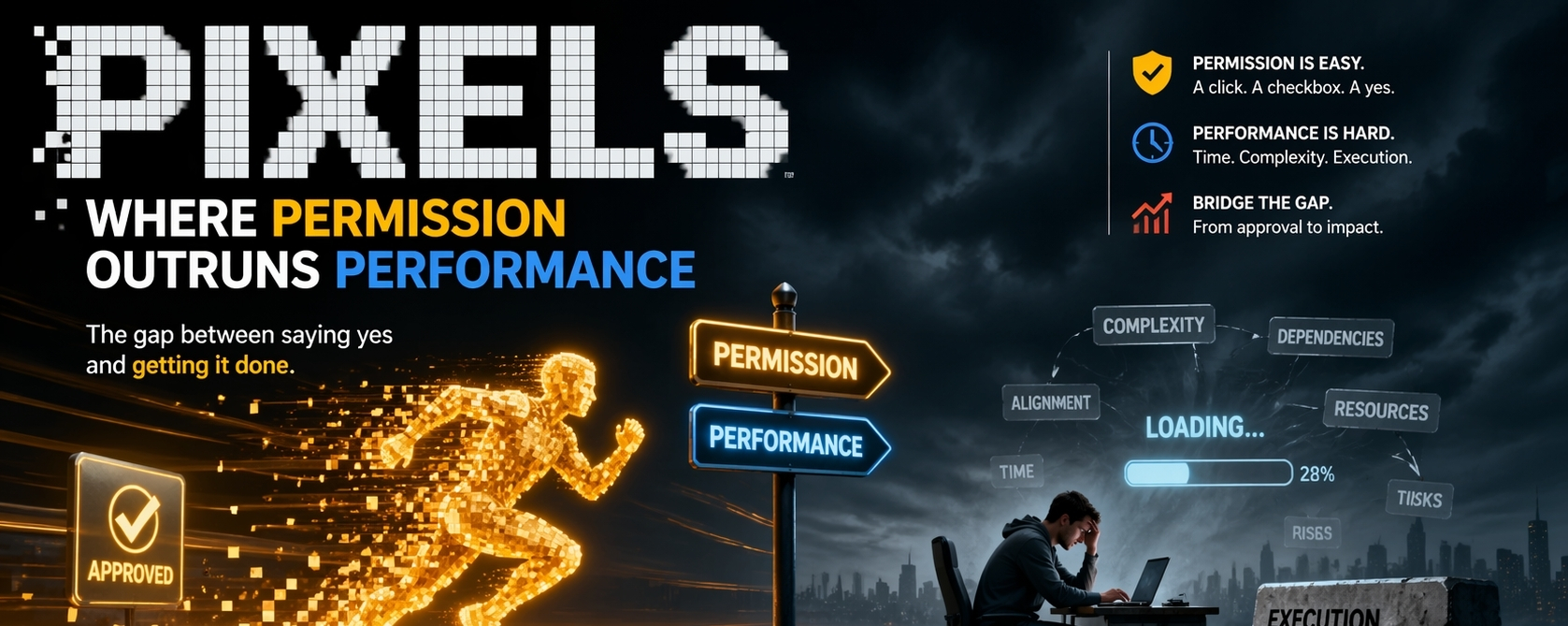
PIXELS didn’t fail that night. nothing catastrophic happened. but the alert forced a shift in posture. it reframed the question. not “how fast can we go,” but “what exactly are we allowing to happen, and for how long?”
i’ve come to think of PIXELS not as a game first, but as a controlled environment—an SVM-based high-performance layer one that insists on guardrails. speed is present, obviously. it has to be, given the cadence of a social, open-world system where farming, exploration, and creation all generate state changes that feel immediate to the player. but the architecture doesn’t pretend that speed is synonymous with safety. it treats speed as a capability that needs containment.
that containment shows up most clearly in PIXELS Sessions. the design is unromantic: enforced, time-bound, scope-bound delegation. no indefinite approvals, no silent escalation of privileges. a session exists for a purpose, within a boundary, and then it expires. the debates around it were tedious at first—how narrow is too narrow, how often is too often for re-authorization—but over time the logic settled in. most real failures don’t come from a chain being slow. they come from permissions that outlive their intent, or keys that are exposed longer than they should be.
i’ve seen systems with immaculate performance profiles unravel because a single approval was too broad. i’ve seen users trained into clicking through signatures until the distinction between safe and unsafe collapsed into habit. this is where PIXELS Sessions matters. it reduces the cognitive surface area. it aligns what a user thinks they’re authorizing with what the system will actually permit. it enforces a kind of honesty.
“Scoped delegation + fewer signatures is the next wave of on-chain UX.”
it’s not a slogan. it’s a constraint that emerges from watching how things break.
underneath that, the execution model is deliberately modular. high-frequency interactions—those that make the world feel alive—run above a conservative settlement layer that doesn’t rush to accommodate every spike in activity. execution can be fast, flexible, and even experimental, but settlement remains opinionated. it doesn’t yield easily. it says no when the conditions aren’t met, when the proofs don’t align, when the permissions don’t check out. that separation is where resilience lives.
there’s an understandable temptation to treat EVM compatibility as a defining feature. in practice, it’s more of a translation layer—a way to reduce tooling friction, to let developers bring familiar workflows without rewriting their entire mental model. it matters, but not for the reasons that make headlines. compatibility doesn’t secure a system; it just lowers the barrier to building on it.
what does secure a system is discipline around keys and permissions. PIXELS’ native token appears in this context less as an asset and more as security fuel. staking isn’t a yield narrative; it’s a statement of responsibility. you’re not just participating—you’re underwriting behavior, signaling trust, and accepting that your stake is entangled with the system’s integrity.
none of this eliminates risk. bridges, in particular, remain a fault line. moving value across domains introduces assumptions that no amount of local optimization can fully erase. you can harden contracts, audit code, simulate edge cases—but the moment you extend trust beyond a single environment, you inherit its fragility.
“Trust doesn’t degrade politely—it snaps.”
that line made its way into an internal memo after a particularly uncomfortable audit review. it stayed because it was accurate. there’s rarely a graceful slope from safe to unsafe. there’s a threshold, and once it’s crossed, the system doesn’t get a chance to negotiate.
what PIXELS does, quietly, is refuse to let that threshold be easy to reach. sessions expire. scopes are narrow. approvals are explicit. execution is fast, but settlement is conservative. the system is designed to interrupt you—not constantly, not obnoxiously, but at the exact moments where a silent assumption would otherwise slip through.
i’ve stopped looking at throughput charts as indicators of health. they tell you how much a system can do, not whether it should be doing it. the more interesting metric is how often the system declines to act. how often it forces a re-evaluation, a re-authorization, a pause.
because in the end, the incidents that matter aren’t the ones where everything slows down. they’re the ones where everything keeps working exactly as designed—only the design allowed too much.
a fast ledger that can say “no” doesn’t feel impressive in a demo. it feels inconvenient. it adds friction at the edges where users would prefer none. but that refusal is what prevents the most predictable failures. it’s what turns a late-night alert into a footnote instead of a postmortem.
and that’s the distinction i keep coming back to. speed is a property. safety is a posture. PIXELS chose the latter, even when it made the former slightly less pure.
